
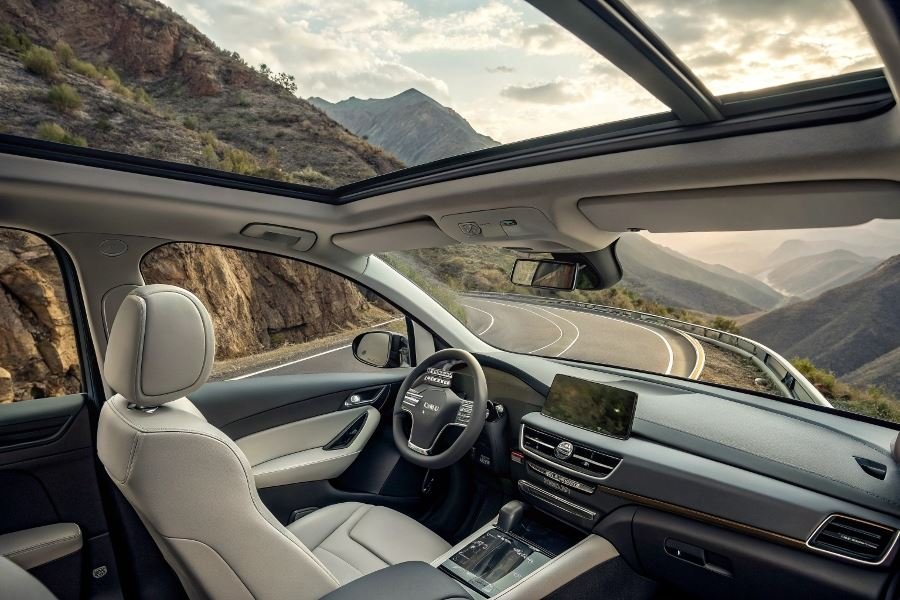
Remember when SUVs were gas-guzzling behemoths and sedans were your only practical option? Those days are long gone. Crossovers have dramatically reshaped our driving landscape, offering an irresistible blend of capability, efficiency, and style that’s captured the hearts of drivers everywhere.
The crossover journey began in the late 1990s when manufacturers recognized a crucial gap in the market. The Toyota RAV4, introduced in 1994, and Honda CR-V, launched in 1995, pioneered this revolutionary category—vehicles built on car platforms but featuring SUV styling and capabilities. What started as automotive experimentation has evolved into the dominant force in today’s market.
What makes a crossover truly a crossover?
Modern crossovers distinguish themselves through their unibody construction—unlike traditional SUVs with body-on-frame designs. This architectural difference creates vehicles that deliver:
- Enhanced fuel efficiency compared to traditional SUVs
- Superior handling and car-like driving dynamics
- Versatile cargo capacity without excessive bulk
- Elevated seating position providing better visibility
Technological advancements have supercharged crossover evolution. Today’s models feature sophisticated all-wheel-drive systems that intelligently distribute power, adaptive suspension systems that adjust to driving conditions, and powertrains ranging from conventional gas engines to hybrids and fully electric options.
The functional capabilities of modern crossovers continue expanding through cutting-edge driver assistance features, connectivity options, and interior configurations that transform these vehicles from simple transportation into versatile lifestyle enablers—whether you’re navigating urban streets, embarking on outdoor adventures, or managing family logistics.
Crossover Dominance: Why These Vehicles Rule the Road
Today’s crossovers have transformed from basic family haulers into sophisticated machines that blend capability, comfort, and cutting-edge technology. The functional capabilities of modern crossovers have evolved dramatically over the past decade, creating vehicles that can tackle mountain passes on Friday and soccer practice on Saturday without missing a beat.
Terrain-Conquering Traction Systems
Modern crossover SUVs feature all-wheel drive systems that would make off-roaders from the 1990s green with envy. Take the Subaru Outback with its symmetrical AWD that continuously optimizes power distribution to each wheel. Or consider the Toyota RAV4 TRD Off-Road with multi-terrain select modes that adjust throttle response, transmission shift points, and stability control parameters based on whether you’re crawling over rocks or plowing through snow.
Terrain management has become incredibly sophisticated. The Ford Bronco Sport offers G.O.A.T. (Goes Over Any Type of Terrain) modes that transform the vehicle’s performance characteristics with a simple dial turn. Even luxury crossovers like the Audi Q5 feature terrain management systems that can predict traction needs before wheels slip.
Space Wizardry: Configurations That Adapt to Life
The cargo flexibility in today’s crossovers borders on magical. The Honda CR-V offers up to 76.5 cubic feet of cargo space with seats folded—enough room to haul a mountain bike without removing the front wheel. Many models feature:
- 40/20/40 split rear seats for carrying long items alongside passengers
- Adjustable cargo floors with hidden storage compartments
- Power liftgates with height memory settings
Passenger space innovations are equally impressive. The Hyundai Tucson features reclining rear seats that slide forward and back, allowing owners to prioritize either legroom or cargo space depending on the day’s needs.
Powertrain Revolution: Efficiency Meets Performance
The powertrain landscape for crossovers has undergone a complete transformation. Consider this comparison of options:
| Powertrain Type | Fuel Economy | Performance Notes | Popular Examples |
|---|---|---|---|
| Conventional Gas | 25-30 MPG combined | Improved with turbocharging | Mazda CX-5, Chevrolet Equinox |
| Hybrid | 35-40 MPG combined | Instant torque, smoother acceleration | Toyota RAV4 Hybrid, Ford Escape Hybrid |
| Plug-in Hybrid | 40+ MPG, plus 30-50 miles electric | Best of both worlds | Mitsubishi Outlander PHEV, Hyundai Tucson PHEV |
| Full Electric | 100+ MPGe | Zero emissions, instant torque | Tesla Model Y, Volkswagen ID.4 |
The Kia Sportage exemplifies this evolution, offering conventional, hybrid, and plug-in hybrid variants in the same model. Meanwhile, the Volvo XC40 Recharge delivers 402 horsepower in its electric form—more than many sports cars offered just a decade ago.
Efficiency no longer means compromise. The Toyota RAV4 Prime plug-in hybrid rockets to 60 mph in just 5.7 seconds while still delivering 42 miles of all-electric range. Even conventional gas-powered crossovers like the Mazda CX-5 use cylinder deactivation and advanced engine management to squeeze impressive mileage from traditional powertrains.
The crossover segment continues to push boundaries in 2025, combining the best aspects of sedans, wagons, and traditional SUVs into vehicles that truly can do it all.
The Road Ahead for Modern Crossovers
The crossover revolution isn’t slowing down—it’s accelerating. As we look beyond 2025, the functional capabilities of these versatile vehicles are expanding in ways that would have seemed like science fiction just a decade ago. The humble crossover is transforming into a technological powerhouse that anticipates your needs, protects your family, and treads more lightly on our planet.
Driving without hands, thinking without pause
Modern crossovers are rapidly approaching a watershed moment in autonomous capabilities. Tesla’s Autopilot and Ford’s BlueCruise have evolved from novelties to necessities, with Level 3 autonomy becoming the new baseline expectation. These systems don’t just maintain lane position—they negotiate complex traffic patterns, recognize construction zones, and communicate with smart infrastructure.
The safety technology integration is equally impressive. Crossovers now feature predictive collision systems that can detect accidents before they happen. The Volvo XC60 can now identify potential impacts up to 5 seconds before they occur, giving both vehicle and driver precious moments to react.
The numbers tell the story: vehicles equipped with advanced driver assistance systems show a 40% reduction in rear-end collisions and a 56% decrease in lane-departure accidents.
Your crossover knows you better than you know yourself
Connectivity has transcended simple smartphone integration. Today’s crossovers function as mobile command centers with unprecedented intelligence:
| Feature | Current Capability | Near Future |
|---|---|---|
| Voice Recognition | Understands 85% of natural speech | Contextual awareness and emotion detection |
| Personalization | Driver profiles for seat/mirror settings | Biometric authentication and mood-responsive cabin |
| Connectivity | 5G integration | Satellite connectivity in remote areas |
The BMW iX already uses interior cameras to detect if a driver is distracted or fatigued, while the Hyundai Tucson can pre-condition the cabin based on your calendar appointments. Your crossover doesn’t just connect to your digital life—it becomes an extension of it.
Green machines with clean dreams
Perhaps the most significant evolution is happening under the hood and beneath the chassis. Environmental considerations are no longer afterthoughts but fundamental design principles:
Regenerative braking systems now recover up to 75% of kinetic energy during deceleration, compared to just 30% five years ago.
Crossovers are embracing multi-material construction, with the Mazda CX-90 utilizing carbon fiber reinforced polymers that reduce weight by 340 pounds while increasing structural rigidity by 22%.
The sustainability story extends beyond powertrains. Interior materials in the Toyota bZ4X include fabrics made from recycled plastic bottles, while Rivian’s vehicles feature sustainably harvested wood trim certified by the Forest Stewardship Council.
The crossover of tomorrow isn’t just a vehicle—it’s a technological ecosystem that balances performance, convenience, and environmental responsibility.
As battery technology continues its rapid advancement, we’re seeing crossovers with 400+ mile ranges becoming commonplace, charging times dropping below 20 minutes for 10-80% capacity, and bidirectional charging allowing these vehicles to power homes during outages.
The functional evolution of crossovers represents more than incremental improvement—it’s a fundamental reimagining of what these vehicles can be. They’re becoming smarter, safer, more connected, and significantly more sustainable with each passing year.