
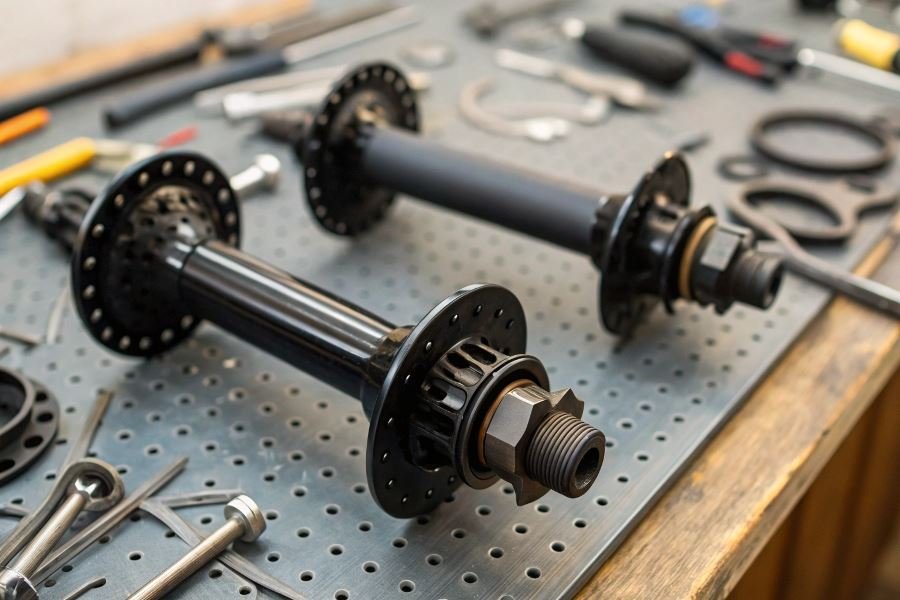
Ever wondered why some cyclists obsess over those small cylindrical components hidden in their bike frames? That seemingly insignificant part—the bottom bracket—is actually the unsung hero of your riding experience, the literal axis around which your pedaling power revolves.
The bottom bracket serves as the critical interface between your cranks and frame, housing the bearings that allow smooth rotation while withstanding enormous forces. Since Thun introduced the first cartridge bottom bracket in 1981, we’ve witnessed an explosion of “standards” that’s anything but standardized. From the classic BSA threaded to Press-Fit 30, BB386EVO, and T47—each promising revolutionary improvements while creating compatibility headaches for riders everywhere.
What makes bottom bracket compatibility so challenging? It’s a complex interplay of factors: shell width, shell diameter, bearing type, axle diameter, and even the specific frame material. A carbon frame designed for a press-fit system simply won’t accept a threaded bottom bracket without significant modification. Meanwhile, crank manufacturers develop their own axle systems that may or may not play nicely with your frame’s bottom bracket.
This compatibility maze affects everything from maintenance costs to performance. The wrong combination can lead to creaking, premature wear, or even catastrophic failure during those crucial sprint finishes or mountain descents. Understanding these connections isn’t just for mechanics—it’s essential knowledge for anyone serious about their ride quality and longevity.
Bottom Bracket Compatibility: The Hidden Nexus of Bicycle Performance
When cyclists obsess over frame materials or groupset choices, they often overlook the humble bottom bracket—the critical interface where power transfer begins. Understanding compatibility between bicycle systems and different types of bottom brackets isn’t just technical trivia; it’s essential knowledge that can save you from expensive mistakes and unlock performance potential.
The compatibility of bicycle systems with different types of bottom brackets represents one of cycling’s most frustrating yet fascinating engineering challenges. What appears simple—a spindle rotating in bearings—becomes a maze of standards, measurements, and proprietary systems that can make or break your build. Let’s dive into this mechanical wonderland and make sense of the chaos.
Threaded Bottom Bracket Systems: The Classic Approach
Threaded bottom brackets remain the gold standard for reliability and ease of maintenance. The BSA (British Standard Cycle) thread—also called English threading—dominates with its 1.37″ x 24 TPI specification. This standard has powered everything from Tour de France winners to weekend warriors since well before carbon fiber existed.
Italian threading offers a slightly larger diameter (36mm x 24 TPI) and lacks the reverse threading on the drive side that BSA employs. While beautiful Italian frames often feature this standard, its popularity has waned as global standards converge.
The newer T47 standard (47mm x 1mm pitch) represents the best of both worlds—the larger diameter of press-fit systems with the mechanical security of threads. T47 has gained significant traction since its introduction by Chris King and Argonaut Cycles in 2015.
| Standard | Diameter | Thread Pitch | Shell Width | Notes |
|---|---|---|---|---|
| BSA/English | 1.37″ (34.8mm) | 24 TPI | 68/73mm | Drive side reverse-threaded |
| Italian | 36mm | 24 TPI | 70mm | Both sides right-hand thread |
| T47 | 47mm | 1mm | 68/73/86.5mm | Available in internal/external variants |
Press-Fit Systems: Engineering Promise and Practical Challenges
Press-fit bottom brackets emerged as frame manufacturers sought stiffer, lighter interfaces. BB30, developed by Cannondale, features bearings pressed directly into the frame with a 30mm spindle diameter—a significant upgrade from the 24mm spindle of many threaded systems.
PF30 evolved from BB30, adding nylon cups that press into the frame. This addressed some installation issues but created its own set of challenges with potential creaking when tolerances aren’t perfect.
BB86/92 (developed for Shimano cranksets) uses a wider shell with smaller bearings, creating a system that’s become standard on many carbon frames. The numbers reference the shell width: 86.5mm for road bikes and 91.5mm for mountain bikes.
The primary challenge with press-fit systems isn’t their design concept but rather the precision required during manufacturing. Even microscopic frame tolerance issues can result in the dreaded bottom bracket creak that drives cyclists mad.
Conversion Options: Bridging Incompatible Worlds
When your dream crankset doesn’t match your frame’s bottom bracket standard, adapters come to the rescue. These clever solutions range from simple spacers to complete replacement systems.
For example, thread-together bottom brackets from Wheels Manufacturing and Praxis Works convert press-fit frames to accept threaded bottom bracket components. These systems essentially create a threaded interface inside your press-fit frame.
Going the other direction, adapters like those from Problem Solvers allow you to run BB30 cranksets in frames designed for narrower spindles.
The key to successful conversion lies in understanding the fundamental measurements:
- Spindle diameter
- Shell width
- Bearing placement
With the right adapter, nearly any crankset can work with any frame—though sometimes with weight or performance penalties that purists might find unacceptable.
Remember that while adapters solve immediate compatibility issues, they’re rarely as elegant as native solutions. When building your dream bike, starting with compatible components will always deliver the best results.
Mastering Bottom Bracket Compatibility
When it comes to bicycle maintenance and upgrades, bottom bracket compatibility can make the difference between a smooth-running dream machine and a frustrating mechanical nightmare. Let’s dive into the practical knowledge you need to navigate this complex component with confidence.
Smart upgrade decision making
Making informed compatibility decisions starts with knowing your frame’s specifications. Document your current setup before making any changes. Take photos and measurements of your existing bottom bracket, noting shell width, diameter, and threading pattern.
When upgrading, consider these critical factors:
- Frame shell width (68mm, 73mm, BB30, etc.)
- Crankset spindle diameter and length
- Chainline requirements
- Q-factor preferences
- Intended riding conditions
The most expensive bottom bracket isn’t always the best choice—compatibility trumps premium features every time.
Avoid the common pitfall of focusing solely on the bottom bracket itself. The entire drivetrain system must work in harmony. A Shimano crankset paired with the wrong bottom bracket can create clearance issues or premature wear, even if it technically “fits.”
For vintage frames, adapters from companies like Wheels Manufacturing can bridge compatibility gaps, but always verify the adapter’s specifications against both your frame and desired crankset.
Bottom bracket evolution on the horizon
The bicycle industry continues to evolve, with bottom bracket standards following suit. Several trends are reshaping compatibility considerations:
-
Convergence of standards – Major manufacturers are gradually moving toward more universal solutions, with T47 threaded standards gaining popularity as a “best of both worlds” option combining the benefits of press-fit diameter with threaded reliability.
-
Material innovations – Composite bearing seats and advanced polymer interfaces are reducing creaking issues in press-fit systems, addressing one of their primary drawbacks.
-
Tool-free designs – Emerging systems aim to simplify maintenance with hand-adjustable components, eliminating the need for specialized tools.
The industry’s push toward electronic drivetrains is also influencing bottom bracket design, with more systems incorporating wire routing channels and battery storage solutions.
Finding solutions to compatibility puzzles
When faced with compatibility challenges, these resources prove invaluable:
Technical documentation:
- Manufacturer specification sheets
- Park Tool repair guides
- Sheldon Brown’s comprehensive bicycle information
Digital tools:
- Bottom bracket identification apps
- Online compatibility calculators
- 3D printable measurement gauges
Community knowledge:
- Local bike shop expertise
- Cycling forums like Bike Forums
- Manufacturer customer support
| Compatibility Issue | Recommended Solution | Typical Cost |
|---|---|---|
| Press-fit creaking | Tolerance-specific adapters | $30-60 |
| Threaded to press-fit conversion | Frame-specific adapter cups | $45-120 |
| Spindle diameter mismatch | Bearing replacement kit | $25-80 |
| Shell width discrepancy | Spacer kit with precise measurements | $15-30 |
Remember that compatibility isn’t just about making components fit—it’s about creating a system that performs optimally under your specific riding conditions. The most successful upgrades consider the entire bicycle as an integrated system rather than focusing on individual parts in isolation.
By understanding these compatibility principles, you’ll make smarter purchasing decisions and enjoy more time riding instead of wrenching.