
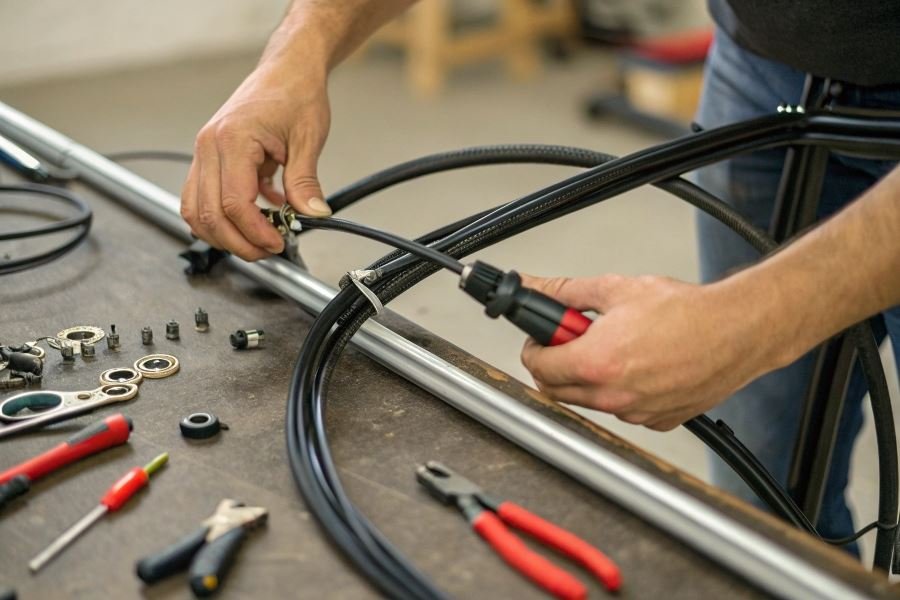
Ever watched a cyclist smoothly glide to a perfect stop while you’re still wrestling with your squeaky brakes? That moment when you’re barreling downhill and your heart races because you’re not 100% confident in your stopping ability? That’s exactly why we need to talk about brakes.
Choosing the right brakes for your bicycle isn’t just about performance—it’s about staying alive. While that sounds dramatic, the reality is that your braking system is your primary safety feature when you’re cruising at 25mph on two wheels. For beginner cyclists especially, understanding brake options can feel overwhelming, but it doesn’t have to be.
Today’s bicycle market offers several braking systems, each with distinct advantages. Rim brakes remain popular for their simplicity and lightweight design, while disc brakes have revolutionized stopping power, especially in wet conditions. The lesser-known coaster brakes (the ones where you pedal backward to stop) still appear on some cruisers and kids’ bikes.
“The right brakes don’t just stop your wheels—they give you the confidence to ride faster and explore further.”
Your brake selection should consider three critical factors:
- Your riding environment – Urban commuting requires different stopping power than mountain trails
- Weather conditions – Frequent rain? Disc brakes might be your best friend
- Your mechanical comfort level – Some systems are easier to maintain than others
Understanding these fundamentals will transform how you approach cycling, giving you the confidence to focus on the joy of the ride rather than the anxiety of stopping.
Brakes That Match Your Ride: Choosing by Style and Terrain
When you’re pedaling through city streets or bombing down mountain trails, your brakes aren’t just components—they’re your lifeline. The right stopping power can transform your riding experience from nerve-wracking to confidence-inspiring.
For beginners looking to upgrade their bikes, understanding how to choose brakes for a bicycle for a beginner cyclist starts with matching your braking system to where and how you ride. Different environments demand different technologies, and what works perfectly in dry conditions might fail spectacularly in the rain.
Urban Jungle Braking
City riding presents unique challenges: sudden traffic stops, slick road surfaces, and constant start-stop riding. For urban environments:
- Disc brakes (particularly hydraulic) offer superior stopping power and modulation in traffic situations
- Rim brakes remain popular for their simplicity and lower maintenance in clean city conditions
- Dual-pivot caliper brakes provide excellent balance of power and weight for commuter bikes
Urban riders benefit from brakes with consistent performance and minimal hand fatigue during frequent stops. Shimano Tiagra or 105 level components offer excellent value for city commuters without breaking the bank.
Trail Blazing Brake Selection
Off-road riding demands more from your braking system:
Mountain Terrain Brake Recommendations
| Terrain Type | Recommended Brake | Key Benefit |
|---|---|---|
| Smooth Trails | Mechanical Disc | Reliable, easy maintenance |
| Technical Descents | Hydraulic Disc (4-piston) | Maximum stopping power |
| Cross-Country | Hydraulic Disc (2-piston) | Lightweight, sufficient power |
| Muddy Conditions | Hydraulic Disc with larger rotors | Consistent performance when dirty |
Trail riders should consider rotor size carefully—larger rotors (180-203mm) dissipate heat better during long descents than smaller options (140-160mm).
Weather-Ready Braking
Mother Nature doesn’t care about your component choices, but you should:
- Wet conditions favor disc brakes dramatically, with hydraulic systems maintaining nearly 100% efficiency while rim brakes can lose up to 70% stopping power
- Winter riders should consider sealed hydraulic systems that resist freezing
- Desert dwellers need brakes that handle heat buildup without fade during long descents
The difference between rim and disc brakes in the rain isn’t just noticeable—it’s the difference between stopping confidently and hoping for the best.
Rider Weight and Usage Considerations
Physics doesn’t lie—heavier riders need more stopping power:
- Riders over 180 pounds should consider 4-piston calipers for additional braking force
- Loaded touring bikes benefit from disc brakes with larger rotors (180mm minimum)
- Lighter riders (under 150 pounds) can often use smaller rotors without compromise
SRAM Guide brakes offer adjustable reach and contact points, making them ideal for riders with smaller hands or those who need precise brake feel customization.
The frequency of your rides also matters—weekend warriors can often get by with mechanical disc brakes that are easier to maintain at home, while daily commuters benefit from the sealed, consistent performance of hydraulic systems despite their higher initial cost.
Remember that upgrading brakes isn’t just about performance—it’s about confidence. When you trust your stopping power, you’ll ride faster, tackle more challenging terrain, and ultimately have more fun on two wheels.
Stopping Power: The Ultimate Guide to Bicycle Brakes for Beginners
Rim Brakes: The Classic Choice
Rim brakes have been the stalwart of cycling for decades, and for good reason. These brakes use pads that grip directly against your wheel’s rim when you squeeze the lever. Their simplicity makes them a fantastic entry point for newcomers to cycling.
Advantages that shine: Rim brakes are significantly lighter than their disc counterparts, often weighing 150-200 grams less per set. This weight difference matters when you’re pushing yourself up hills. They’re also incredibly easy to inspect—one glance tells you if your pads need replacing. When maintenance time comes, adjustments require basic tools and minimal technical knowledge.
Budget-friendly brilliance: A quality set of Shimano V-brakes costs around $30-50, compared to $100+ for entry-level disc systems.
Where rim brakes fall short: Performance degrades significantly in wet conditions, as water creates a slippery film between pads and rim. They also generate more heat during prolonged descents, which can lead to tire blowouts in extreme cases.
Rim brakes excel on road bikes and casual commuters in dry climates. If your riding involves mostly flat terrain and fair weather, these brakes offer reliable stopping power without unnecessary complexity.
Disc Brakes: Modern Stopping Mastery
Disc brakes represent the evolution of bicycle stopping technology, using a rotor attached to the wheel hub and calipers that squeeze this rotor when you brake.
Mechanical Disc Brakes
Mechanical disc brakes use a cable to transfer force from lever to caliper—similar to rim brakes but with different contact points.
Perfect middle ground: These brakes offer improved stopping power over rim brakes while maintaining mechanical simplicity. The Avid BB5 ($60-80) provides excellent value for beginners with straightforward adjustment and reliable performance.
Maintenance consideration: Cable tension requires periodic adjustment as cables stretch, typically every 2-3 months of regular riding.
Hydraulic Disc Brakes
The premium option uses fluid to transfer force, creating consistent, powerful braking with minimal finger effort.
Weather-defying performance: Rain, mud, snow—hydraulic discs maintain nearly identical stopping power regardless of conditions. The modulation (control between light and hard braking) is unmatched, giving beginners confidence on steep descents.
Entry-level systems like Shimano MT200 ($120-150) offer tremendous value despite the higher initial investment.
The drawback: Maintenance requires specialized tools and occasionally professional service for bleeding the hydraulic lines.
Essential Brake Maintenance for Longevity
| Maintenance Task | Rim Brakes | Disc Brakes |
|---|---|---|
| Pad inspection | Every 500 miles | Every 1,000 miles |
| Adjustment frequency | Monthly | Quarterly |
| Cleaning requirements | Wipe rims weekly | Clean rotors monthly |
| Average pad lifespan | 1,500-2,000 miles | 2,000-3,000 miles |
The 10-second brake check: Before every ride, squeeze each brake lever firmly. It should stop before touching the handlebar and feel consistent throughout the pull. If it feels spongy or bottoms out, immediate adjustment is needed.
Never neglect these warning signs: Squealing brakes often indicate contaminated pads or rotors. Pulsing or grabbing sensations typically mean warped rotors or uneven pad wear.
Pro maintenance tip: Keep brake surfaces pristine. For rim brakes, use alcohol wipes on rims monthly. For disc systems, avoid touching rotors with bare fingers—oils transfer easily and compromise performance.
Regardless of which system you choose, regular maintenance ensures reliable stopping power when you need it most. Your brakes represent your primary safety system—treat them accordingly, and they’ll keep you confidently in control on every ride.