
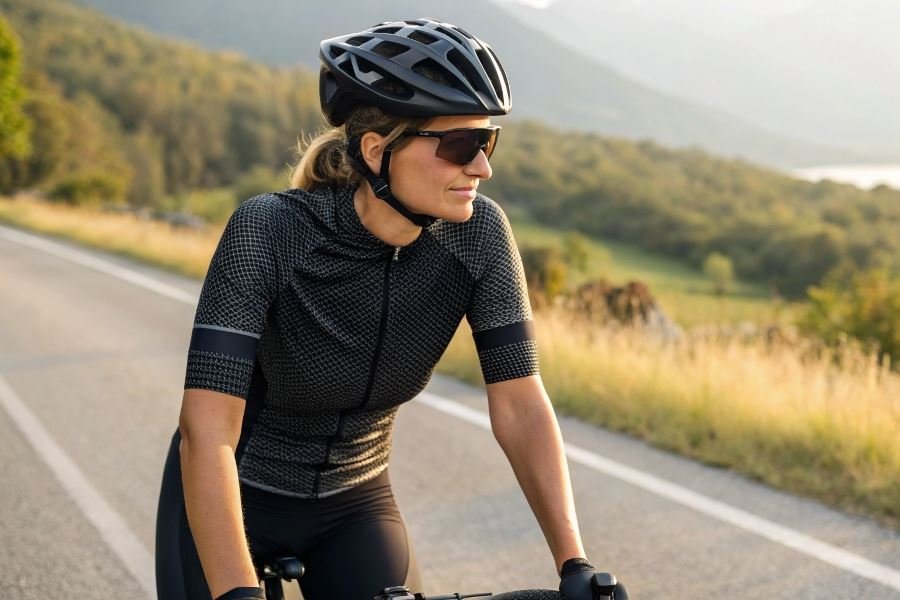
Ever wondered why some cyclists breeze through torrential downpours while others look like they’ve been swimming in their gear? The secret isn’t superhuman endurance—it’s smart fabric technology.
When you’re pushing through mile 40 with sweat pouring down your back, or descending at 35mph with wind cutting through your jersey, the materials touching your skin become your most critical equipment. The difference between premium technical fabrics and basic cotton can mean the difference between personal records and miserable bailouts.
Selecting the right cycling clothing materials isn’t just about comfort—it’s about performance engineering. Your body is a complex machine that generates enormous heat during exertion while simultaneously requiring protection from external elements. The best cycling apparel works as a second skin, managing this delicate balance through advanced material science.
Weather dictates everything in the cycling world. A material that performs brilliantly in Arizona’s dry heat might fail catastrophically in Seattle’s persistent drizzle. This is why serious cyclists build wardrobes around three critical performance factors:
- Moisture management: How effectively fabrics wick sweat away from skin
- Temperature regulation: Insulation in cold conditions versus breathability in heat
- Protection elements: Wind resistance, waterproofing, and UV blocking capabilities
The evolution of cycling textiles has transformed what’s possible on two wheels. Materials that once existed only in aerospace applications now form the foundation of performance cycling gear, creating possibilities that would have seemed like science fiction to riders just a generation ago.
Conquering the Cold: Essential Materials for Winter Cycling
When temperatures plummet, your cycling wardrobe becomes your first line of defense against the elements. The difference between an exhilarating winter ride and a miserable slog often comes down to the materials touching your skin. Let’s dive into the fabric technology that keeps the dedicated cyclist rolling through the frostiest months.
Selecting the best materials for cycling clothing in different weather conditions requires understanding how each layer functions in a system. Winter cycling isn’t just about bundling up—it’s about strategic layering with performance fabrics that manage moisture while preserving heat.
Base Layer Battleground: Merino vs. Synthetics
Your base layer is mission-critical—it’s where comfort begins or ends. The eternal debate between merino wool and synthetic fabrics continues to divide the cycling community.
Merino wool delivers exceptional performance with natural temperature regulation. This miracle fiber from merino sheep can absorb up to 30% of its weight in moisture while still feeling dry against skin. What sets merino apart is its remarkable ability to retain warmth even when wet—something synthetic materials simply cannot match.
The natural antimicrobial properties of merino mean you can wear it for multiple rides without the dreaded funk that synthetic materials develop.
Synthetic base layers from brands like Craft and Under Armour offer compelling alternatives with superior moisture-wicking capabilities and faster drying times. These polyester-based fabrics use engineered structures to pull sweat away from your body and disperse it for rapid evaporation.
| Material | Warmth When Wet | Odor Resistance | Drying Speed | Durability |
|---|---|---|---|---|
| Merino Wool | Excellent | Outstanding | Moderate | Good |
| Synthetic | Poor | Fair | Excellent | Excellent |
Mid-Layer Magic: Insulation Innovation
The mid-layer is your thermal engine, trapping warm air close to your body while allowing excess heat and moisture to escape.
Fleece remains the gold standard for cycling mid-layers. Modern micro-fleece from Polartec offers remarkable warmth-to-weight ratios while maintaining breathability. The brushed interior creates thousands of tiny air pockets that trap body heat without excessive bulk.
Thermal fabrics with hollow-core construction represent the cutting edge of insulation technology. These engineered materials, like those used in Castelli’s Thermoflex line, trap warm air within hollow fibers while allowing moisture vapor to escape.
Down alternatives have revolutionized cold-weather cycling gear. Synthetic insulations like PrimaLoft and Thinsulate provide warmth even when compressed or damp—crucial advantages over natural down for cycling applications where compression and moisture are inevitable.
Outer Shell Supremacy: Weather Protection That Breathes
Your outer layer must perform the seemingly contradictory tasks of blocking wind and water while allowing internal moisture to escape.
Windproof membranes like Gore’s WINDSTOPPER® create an impenetrable barrier against cold air while maintaining surprising breathability. These tightly woven fabrics or laminated membranes prevent the wind-chill effect that can rapidly sap body heat during high-speed descents.
Waterproof-breathable technologies have transformed winter riding. Materials like Gore-Tex and eVent use microscopic pores that are smaller than water droplets but larger than water vapor molecules—keeping rain out while letting sweat escape. The latest generation of these fabrics offers dramatically improved breathability over earlier versions.
Softshell fabrics strike the perfect balance for many winter conditions, offering moderate water resistance with superior breathability and stretch. These materials excel during high-output rides where sweat management becomes as important as weather protection.
The science behind cycling clothing materials continues to advance, making winter riding more comfortable than ever for those willing to invest in quality gear engineered for the elements.
Beat the Heat: Cycling Fabrics That Keep You Cool
When the mercury rises, your cycling gear becomes your first line of defense against performance-sapping heat. The difference between a great ride and a miserable slog often comes down to what you’re wearing. Let’s dive into the materials that will keep you pedaling strong when temperatures soar.
Synthetic Fabrics That Work Overtime
Modern moisture-wicking synthetics have revolutionized hot-weather cycling. Unlike cotton (which becomes a soggy, chafing nightmare), polyester and nylon blends actively transport sweat away from your skin to the outer surface of the fabric where it can evaporate.
Polyester leads the pack for hot-weather performance with its exceptional moisture management and quick-drying properties. Brands like Pearl Izumi have developed proprietary polyester blends that can move moisture at astonishing rates—up to 30% faster than standard athletic fabrics.
The magic happens at the fiber level, where specially engineered cross-sections create capillary action that pulls sweat outward.
Nylon adds durability and stretch while maintaining excellent wicking capabilities. Many premium jerseys use a strategic blend:
| Material | Benefits | Best For |
|---|---|---|
| Polyester | Superior wicking, lightweight, quick-drying | Base layers, jerseys |
| Nylon | Durability, abrasion resistance, stretch | Bibs, shorts, reinforced areas |
| Elastane/Spandex | Compression, shape retention | Component in shorts, jerseys (5-20%) |
Ventilation That Breathes New Life
Strategic ventilation can make even the hottest rides bearable. Mesh panels placed at sweat-heavy zones create airflow highways that dramatically improve cooling.
Engineered mesh has evolved far beyond simple holes in fabric. Today’s performance meshes feature variable density patterns that maximize airflow while maintaining structure. Rapha and other premium brands use body-mapping technology to place different mesh densities precisely where you need them most—typically under arms, down the center of the back, and along the sides.
The best ventilation systems work like natural air conditioning, creating a microclimate that can be up to 4°F cooler than standard jerseys.
Some cutting-edge designs incorporate 3D-structured fabrics that hold the material slightly away from your skin, creating constant airflow even when you’re not moving fast enough to generate wind.
Sun Protection and Active Cooling
Modern cycling fabrics don’t just manage sweat—they actively protect and cool.
UPF-rated fabrics (Ultraviolet Protection Factor) shield your skin from harmful rays. Look for materials with UPF 30-50+ ratings, which block 97-98% of UV radiation. Castelli and other forward-thinking manufacturers now incorporate UV protection directly into the fiber, ensuring it won’t wash out over time.
The cooling technology race has produced some remarkable innovations:
- Xylitol-infused fabrics that create a cooling sensation when activated by sweat
- Phase-change materials that absorb and store heat when you’re hot
- Ceramic-printed fabrics that reflect infrared radiation away from your body
These technologies can create a noticeable cooling effect of 3-5°F compared to standard fabrics—a difference you’ll definitely feel when climbing that exposed mountain pass in August.
The best hot-weather cycling kit combines all these elements in a system that works together to keep you cool, comfortable, and protected when the heat is on.