
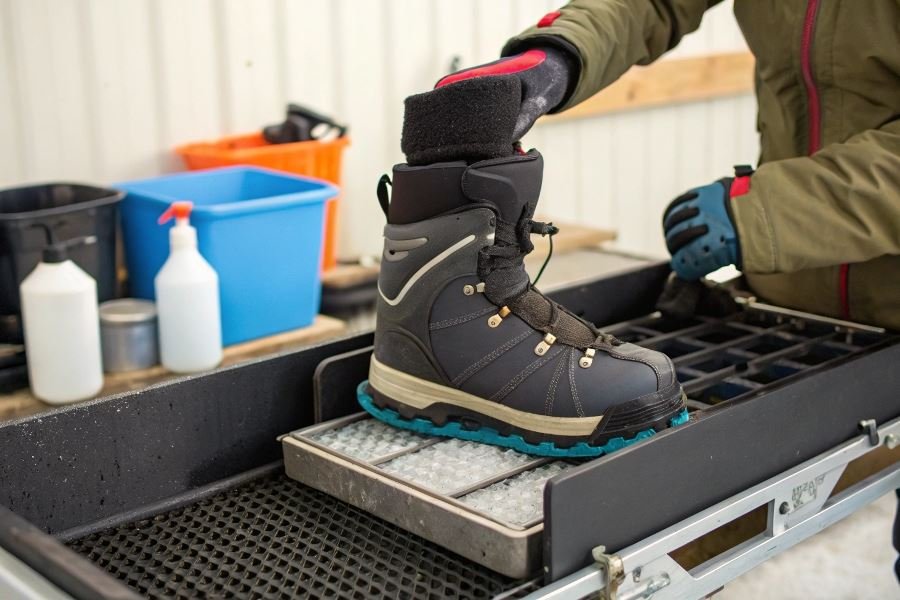
Ever watched a pro snowboarder effortlessly carve through fresh powder and wondered what their secret is? While skill plays a major role, here’s something they won’t tell you on the highlight reels: their gear is meticulously maintained. Your boots are the critical connection between your body and your board – neglect them, and you’re literally undermining every move you make on the mountain.
Think about it: snowboard boots endure extreme conditions, from freezing temperatures to moisture saturation, all while supporting your full weight through high-impact maneuvers. Quality care isn’t just about protecting your investment (though $300-600 boots certainly deserve some TLC); it’s about maintaining the responsive performance that keeps you safe and comfortable during those epic slope sessions.
The difference between a mediocre ride and an exceptional one often comes down to how your boots perform. When properly maintained, they deliver consistent flex, reliable support, and crucial thermal protection – elements that deteriorate rapidly without proper attention.
Your essential care routine doesn’t require professional expertise, just consistency:
- Thorough drying after each use
- Regular cleaning to remove damaging salt and grime
- Strategic storage during off-seasons
- Proactive liner maintenance
- Prompt hardware checks and repairs
Master these fundamentals, and you’ll not only extend your boots’ lifespan by seasons but also maintain that “fresh out of the box” performance that makes every run worth the climb.
Daily Boot Care: Extending Your Snowboard Boots’ Life
Let’s face it—your snowboard boots take a serious beating on the mountain. That $300+ investment deserves some TLC if you want them to last beyond a single season. Proper daily maintenance isn’t just about preserving your gear; it’s about maintaining performance when you need it most. The right care routine for snowboard boots can extend their lifespan significantly while keeping them comfortable and responsive.
Drying: Your First Defense Against Destruction
Nothing kills snowboard boots faster than trapped moisture. After each riding session, remove the liners completely from your boots. This crucial step allows both the shell and liner to dry properly from the inside out.
Never place boots directly on heaters, radiators, or in clothes dryers! Extreme heat warps materials, breaks down adhesives, and can permanently deform your boots. Instead:
- Use a boot dryer designed specifically for snow sports gear (DryGuy Force Dry) that circulates ambient-temperature air
- If no dryer is available, stuff boots with newspaper, replacing it every few hours
- Position boots upside down in a well-ventilated area away from direct heat sources
- Allow 24-48 hours of drying time between consecutive riding days
Pro tip: Boot dryers that use UV light provide the added benefit of killing odor-causing bacteria while drying.
Material-Specific Cleaning Techniques
Different boot materials require different cleaning approaches:
Leather Exteriors
- Brush off dry snow and dirt with a soft-bristled brush
- Wipe with a damp cloth using minimal water
- Apply leather conditioner twice per season to prevent cracking
- Never use harsh detergents or solvents on leather
Synthetic Shells
- Clean with mild soap and warm water
- Use an old toothbrush for stubborn dirt in crevices
- Rinse thoroughly but quickly to minimize water exposure
- Allow to air dry completely before storage
Liners and Footbeds
- Remove footbeds and liners after each use
- For odor control, spray with boot-specific antimicrobial spray
- For deep cleaning (limit to 1-2 times per season):
- Hand wash with mild soap
- Rinse thoroughly
- Air dry completely (24+ hours)
| Boot Component | Cleaning Frequency | Products to Use | Products to Avoid |
|---|---|---|---|
| Outer Shell | After visible soiling | Mild soap, water | Bleach, solvents |
| Liners | Daily spray, deep clean 1-2x/season | Antimicrobial spray, mild soap | Harsh detergents |
| Footbeds | Weekly | Antimicrobial spray | Machine washing |
Strategic Storage: Between Rides and Off-Season
How you store your boots between sessions dramatically affects their longevity:
Between Riding Days:
- Ensure boots are completely dry
- Keep liners removed until both shell and liner are 100% dry
- Store in a cool, dry place away from direct sunlight
- Use boot trees or stuff with acid-free paper to maintain shape
- Leave buckles and laces loosened to prevent stress on closure systems
Off-Season Storage:
- Clean thoroughly and ensure completely dry
- Apply appropriate conditioners to leather components
- Insert boot trees or acid-free paper to maintain shape
- Store in breathable boot bags—never in airtight plastic containers
- Keep in climate-controlled environment (avoid attics, garages, or damp basements)
- Check periodically for mold or pest issues
Remember that proper boot care isn’t just about preservation—it directly impacts your performance and comfort on the mountain. Five minutes of maintenance after each ride can add years to your boot’s functional lifespan and save you hundreds of dollars in premature replacements.
Seasonal Snowboard Boot Maintenance That Matters
When the last powder day fades and spring mud season arrives, most riders hastily stash their gear until next winter. Big mistake. Your snowboard boots—arguably the most critical connection between you and your board—deserve better treatment. Proper seasonal maintenance not only preserves your investment but ensures those boots perform at their peak when the first flakes fall again.
End-of-season deep cleaning ritual
After your final session, resist the urge to toss those boots into storage. Instead, start with a thorough cleaning:
- Remove the liners completely
- Hand wash liners with mild soap and lukewarm water
- Extract insoles and wash separately
- Clean shell interiors with a damp cloth and mild detergent
- Use a soft brush for exterior dirt and salt stains
The most common boot-killer isn’t riding hard—it’s storing wet boots that develop mold and deteriorate from the inside out.
Allow everything to dry completely at room temperature—never use direct heat sources like heaters or hair dryers, which can warp materials and break down adhesives. Once dry, apply a conditioning product specifically designed for your boot’s outer material. Burton and ThirtyTwo both offer excellent conditioners that prevent cracking and maintain flexibility.
Addressing wear points before they become problems
Inspect these critical areas that commonly fail:
Lacing systems: Whether you ride traditional laces, BOA, or speed-zone systems, check for fraying, rust, or sticking points. BOA cables often need replacement every 1-2 seasons depending on use. Most manufacturers offer replacement kits that cost far less than new boots.
Liner compression: Measure the thickness of your liner padding, particularly around the ankle and heel. If you’re noticing significant pack-out (more than 30% compression), consider replacement liners from Intuition or Remind Insoles rather than entirely new boots.
Sole integrity: Examine the outsole for separation from the boot shell, particularly at the toe and heel. Small separations can be repaired with Shoe Goo before they become catastrophic failures.
Professional maintenance vs. replacement
When to seek professional help versus shopping for new boots:
| Issue | Professional Fix | Replace Boots |
|---|---|---|
| Worn BOA cables | Yes ($20-40) | No |
| Shell cracks | Sometimes | Usually |
| Packed-out liners | Yes ($80-150) | No |
| Sole separation | Yes (under 1″) | Yes (extensive) |
| Broken buckles | Yes | No |
Most specialty snowboard shops offer maintenance services during the off-season at reduced rates. REI provides excellent boot repair services, often with quick turnaround times during summer months.
The average high-quality snowboard boot should last 100-150 riding days with proper care. If you’re approaching this threshold and experiencing multiple issues simultaneously, replacement becomes more economical than repairs.
Store your fully maintained boots in a cool, dry place with boot trees or stuffing to maintain shape. Some riders use silica gel packets inside boots to ensure any residual moisture doesn’t cause problems during the off-season.
When winter returns, your diligence will be rewarded with boots that perform like they should—responsive, comfortable, and ready for another season of sending it.