
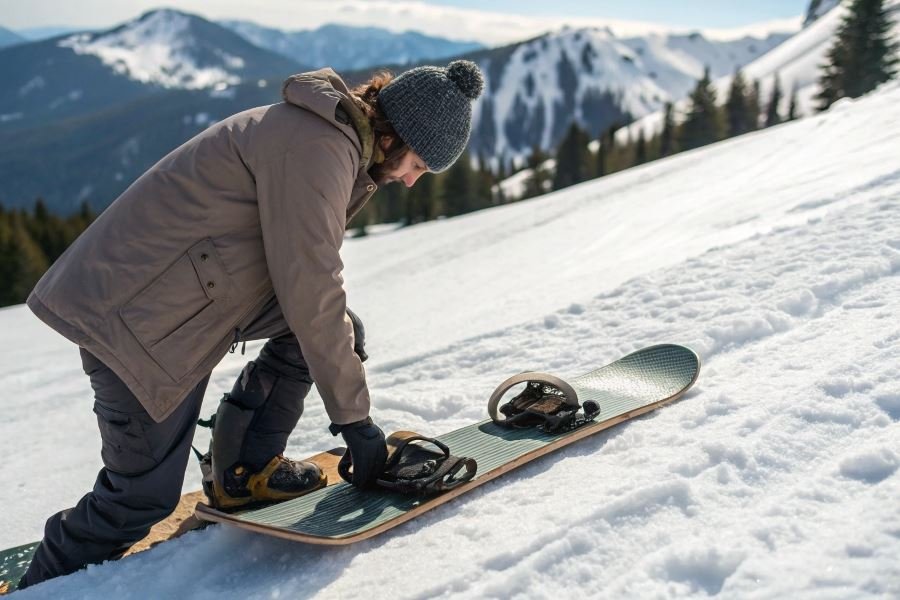
Ever stood atop a snow-covered hill and wondered which board beneath your feet would deliver the ultimate rush? The choice between snowskates and snowboards isn’t just about equipment—it’s about defining your winter identity.
Snowboarding burst onto the winter sports scene in the late 1960s when Sherman Poppen created the “Snurfer” for his daughter, eventually evolving into the modern snowboard we know today. By the 1998 Nagano Olympics, snowboarding had cemented its place in mainstream winter sports. Snowskates, meanwhile, emerged as skateboarding’s winter cousin in the 1990s, combining skateboard decks with snow-friendly bases.
The fundamental divide
Snowboards offer edge control and stability with bindings that secure your feet to the board, allowing for high speeds and aerial maneuvers. Snowskates, with their binding-free design, deliver a freestyle experience that feels more like skateboarding on snow—nimble, technical, and accessible from your backyard to the slopes.
Making your winter choice
When deciding between these winter companions, consider:
- Learning curve: Snowskates offer quicker initial progress but limited advanced terrain options; snowboards require more upfront commitment but unlock virtually any mountain.
- Terrain access: Snowboards excel on groomed runs and powder, while snowskates shine in terrain parks and urban settings.
- Investment: Entry-level snowskates typically cost $100-200, while snowboard setups start around $400-600.
- Transportation ease: Snowskates fit in most backpacks; snowboards require dedicated carrying solutions.
Your perfect winter ride ultimately depends on your personal style—are you seeking big mountain adventures or creative, skateboard-inspired expression in the snow?
Performance Showdown: Snowskate vs Snowboard
When winter blankets the slopes with fresh powder, the age-old debate resurfaces among snow enthusiasts. Comparing snowskate vs snowboard performance factors reveals distinct experiences that cater to different riding preferences, skill levels, and terrain choices. Let’s dive into what makes each option shine in its own right.
Beginner-Friendly or Steep Learning Curve?
The learning curve between these winter toys presents perhaps their starkest contrast. Snowskates offer a gentler introduction for newcomers, especially those with skateboarding experience. Without bindings to master, you can simply step on and off—a psychological advantage that shouldn’t be underestimated.
First-day success rates:
- Snowskate: Most riders can cruise basic slopes within 2-3 hours
- Snowboard: Typically requires 2-3 days before comfortable linking turns
For snowboards, the initial learning phase involves more falls and frustration. The fixed stance and edge control techniques create a steeper learning curve that demands commitment. However, this investment pays dividends once mastered.
“Snowskates offer instant gratification while snowboards promise greater long-term performance potential.”
The binding-free design of snowskates means you’re never trapped during falls—a significant confidence booster for beginners. Meanwhile, Burton and other snowboard manufacturers have developed specialized beginner boards with forgiving flex patterns that help flatten the learning curve.
Conquering Different Terrains
Terrain versatility creates another fascinating dimension in the snowskate versus snowboard comparison. Snowboards dominate in deep powder and high-speed carving scenarios, where their larger surface area and fixed bindings provide superior float and edge control.
Snowskates excel in:
- Park features with skateboard-inspired obstacles
- Compact urban environments
- Gentle slopes with groomed surfaces
Snowboards command:
- Backcountry powder runs
- Steep technical descents
- High-speed carving on groomed runs
The limitations become apparent in challenging conditions. Snowskates struggle in deep snow and on steep terrain where the lack of bindings creates control issues. Conversely, snowboards can feel cumbersome in tight spaces where quick dismounts might be necessary.
Trick Potential and Style Expression
The trick arsenals available to riders create perhaps the most exciting difference between these winter disciplines.
Snowskate trick potential draws heavily from skateboarding, with flips, shuvits, and technical footwork taking center stage. The ability to manipulate the board with your feet rather than body weight creates a distinctly technical riding style that emphasizes precision.
Snowboard trick progression focuses more on aerial maneuvers, spins, and grabs that utilize the entire body. The fixed stance enables bigger jumps and more dramatic rotations that snowskates simply can’t match.
| Aspect | Snowskate Advantage | Snowboard Advantage |
|---|---|---|
| Technical tricks | Superior flip variety | Better spin potential |
| Jump height | Limited (2-3 feet typical) | Substantial (10+ feet possible) |
| Style expression | Skateboarding-inspired | Surfing/freestyle hybrid |
| Creativity | Urban-inspired adaptability | Big mountain expression |
Riding style differences extend beyond tricks. Snowskate riders often adopt a more playful, spontaneous approach—treating the mountain as a creative playground. Snowboarders typically embrace either freestyle expression or aggressive carving depending on their equipment and preferences.
The beauty lies in how each option creates its own distinctive winter experience, with passionate communities developing around both disciplines.
Making Your Choice: Snowskate vs Snowboard
When winter blankets the landscape with fresh powder, the age-old question emerges: should you grab a snowskate or strap into a snowboard? Both offer unique thrills, but your perfect winter companion depends on your goals, terrain preferences, and experience level. Let’s break down the best scenarios for each and help you make that crucial decision.
When to Choose a Snowskate
Snowskates shine in specific winter scenarios that play to their unique strengths:
Urban winter playgrounds: If you’re drawn to handrails, steps, and creative city spots dusted with snow, the Ambition Snowskates and similar models offer skateboard-like maneuverability that’s perfect for street-style tricks.
Quick sessions: When you’ve got just 30 minutes to squeeze in some winter fun, snowskates win hands down. No binding adjustments or boot changes—just grab and go.
Snowskates are the ultimate winter cross-training tool for skateboarders looking to maintain skills during the off-season.
Budget considerations: With most quality snowskates ranging from 150−300, they’re significantly more affordable than a complete snowboard setup that can easily exceed $800.
Transportation convenience: Snowskates easily fit in car trunks, on bus racks, or even backpacks, making them ideal for spontaneous winter adventures.
When to Choose a Snowboard
Snowboards dominate in these scenarios:
Deep powder days: When fresh snow measures in feet rather than inches, the flotation and speed of boards from Burton or Lib Tech create an unmatched surfing sensation that snowskates simply can’t deliver.
High-speed thrills: If velocity is your addiction, snowboards offer superior stability and control at speeds that would make snowskates wobble dangerously.
All-mountain versatility: From groomed runs to tree lines to terrain parks, a properly chosen snowboard handles diverse conditions with confidence.
| Terrain Type | Snowboard Advantage | Snowskate Advantage |
|---|---|---|
| Powder | Superior flotation | N/A |
| Groomed runs | Higher speed | Easier transport |
| Park features | Bigger air | Skateboard-like tricks |
| Urban spots | N/A | More maneuverable |
Long riding days: The secure foot attachment of bindings reduces fatigue during full-day mountain sessions, unlike snowskates which demand constant balance adjustments.
Recommendations Based on Your Profile
For beginners:
- Start with a snowboard if you’re seeking traditional mountain experiences
- Choose a snowskate if you have skateboarding experience or prefer lower-consequence learning
For intermediate riders:
- Consider adding both to your winter arsenal—snowboard for mountain days, snowskate for neighborhood sessions
For advanced winter enthusiasts:
- Match your tool to your goal: snowboards for backcountry adventures and big mountain lines, snowskates for creative urban riding and skill development
For families:
- Snowskates offer an excellent entry point for kids with their lower learning curve and reduced injury potential
- Snowboards become appropriate as children develop strength and coordination for longer sessions
The beauty of winter sports lies in their diversity. Many dedicated snow enthusiasts eventually own both, using snowboards for epic mountain days and snowskates for quick local sessions. Your perfect choice ultimately depends on your personal goals, available terrain, and the specific type of winter fun that makes you smile the widest.