
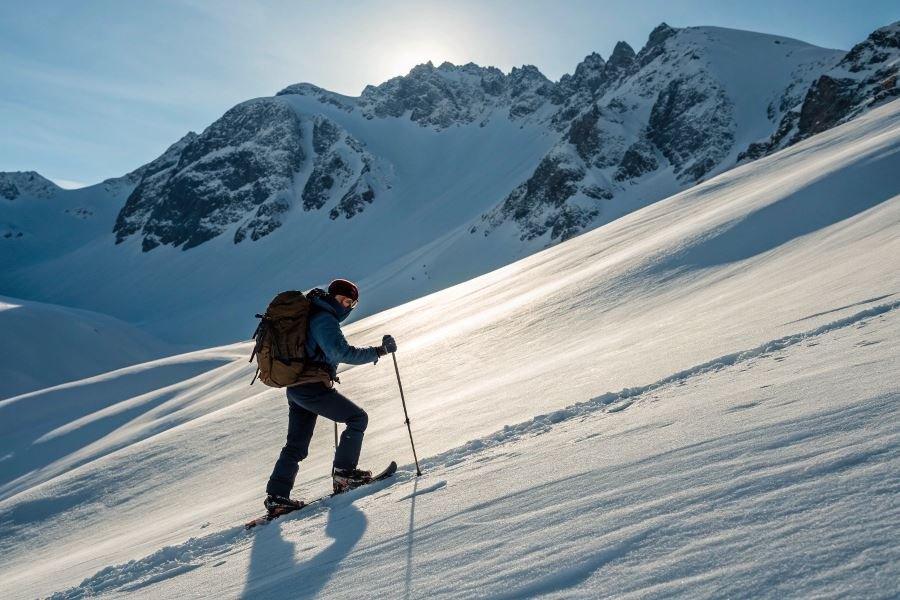
Ever stood at the edge of untouched powder, watching it glisten in the morning sun, and wished you could venture beyond the boundaries of the resort? That’s where splitboarding comes in – your ticket to freedom in the winter wilderness.
Splitboarding has exploded in popularity over the past decade, with sales increasing by over 40% since 2018. But what exactly is this magical contraption? A splitboard is essentially a snowboard that separates into two ski-like halves for uphill travel, then reconnects to form a solid snowboard for the descent. Unlike traditional snowboards that keep you bound to lifts and groomed runs, splitboards let you access terrain that most riders only dream about.
The benefits go far beyond just accessing remote powder stashes. Splitboarding offers a full-body workout, deeper connection with nature, and the profound silence of backcountry solitude. There’s something transformative about earning your turns – that satisfaction of reaching a summit under your own power before enjoying the untouched descent.
Key factors to consider before buying
Before dropping your hard-earned cash on your first setup, consider these crucial elements:
- Your riding style and experience level: Are you an aggressive rider or more laid-back? Your snowboarding background significantly influences your splitboard choice.
- Terrain preferences: Deep powder objectives require different specifications than mixed conditions.
- Physical fitness: Be honest about your uphill capabilities when selecting weight and dimensions.
- Budget considerations: A complete setup includes more than just the board (bindings, skins, safety gear).
Remember that splitboarding isn’t just about the gear – it’s about developing backcountry skills and avalanche awareness that will keep you safe in unpatrolled terrain.
Essential Factors for Your First Splitboard
When venturing into the backcountry, your splitboard becomes your trusted companion through powder fields and technical terrain. Choosing the right one can make the difference between an epic adventure and a frustrating slog. Let’s dive into what truly matters when selecting your first splitboard.
Finding Your Perfect Size and Shape
The foundation of how to choose a splitboard for beginners starts with understanding sizing and shape. Unlike traditional snowboards, splitboards typically run 3-5cm longer than your resort board to provide better float in deep snow and stability during ascents.
Effective edge plays a crucial role in your riding experience. A longer effective edge delivers more stability at high speeds and better edge hold on firm snow, while a shorter edge offers increased maneuverability for tight tree runs.
Shape considerations include:
- Directional shapes – Most splitboards feature directional designs with a setback stance and tapered shape (wider nose, narrower tail) for optimal powder performance
- Camber profiles – Traditional camber provides edge control on hardpack, while rocker sections in the nose enhance float in powder
For beginners, a versatile all-mountain directional shape with moderate taper strikes the ideal balance between uphill efficiency and downhill performance.
Flex Patterns That Match Your Style
Flex rating significantly impacts how your splitboard performs in various conditions:
| Flex Rating | Characteristics | Best For |
|---|---|---|
| Soft (1-3) | Forgiving, easy to maneuver | Beginners, freestyle-oriented riders |
| Medium (4-7) | Balanced response and forgiveness | All-mountain versatility, most riders |
| Stiff (8-10) | Maximum response, stability at speed | Advanced riders, steep terrain, high speeds |
A medium flex (5-6) provides the ideal starting point for most beginners. This offers enough forgiveness to build confidence while maintaining the torsional stiffness needed for efficient skinning and edge hold on firm snow.
Construction Materials Matter
The materials in your splitboard determine its durability, weight, and performance characteristics:
Core materials form the foundation of your board:
- Poplar – Lightweight, moderate durability, found in budget-friendly options
- Paulownia – Extremely lightweight, good for longer tours
- Bamboo – Excellent strength-to-weight ratio, lively feel
- Carbon fiber reinforcements – Adds stiffness without weight, but increases price
Base materials affect your glide and durability:
- Extruded bases – Lower maintenance, more affordable, slower
- Sintered bases – Faster, more durable, but require regular waxing
For beginners, a splitboard with a poplar/paulownia blend core and sintered base offers the best balance of performance, durability, and value. Brands like Jones Snowboards, Burton, and Lib Tech offer excellent entry-level options with these specifications.
Remember that weight becomes increasingly important as your tours get longer. While premium ultralight construction might seem excessive initially, you’ll appreciate those saved ounces after hours of skinning. However, durability should never be sacrificed for weight savings when you’re learning the ropes.
By focusing on these essential factors—appropriate sizing, versatile flex, and quality construction—you’ll set yourself up for success in the backcountry from day one.
Top Splitboard Setups That Won’t Break Your Spirit or Bank
Entry-Level Packages That Deliver
Let’s cut straight to the chase—your first splitboard setup doesn’t need to cost as much as a used car. The market has evolved dramatically since splitboarding went mainstream around 2010, and beginners now have solid options that won’t require a second mortgage.
The Jones Solution Splitboard paired with Spark R&D Arc Bindings consistently tops recommendation lists for good reason. At $899 for the board and $385 for the bindings, you’re getting professional-grade performance with enough forgiveness for the learning curve. The Solution’s directional shape and medium flex make it versatile across varying snow conditions—exactly what you need while figuring out this whole uphill-downhill dance.
For those watching pennies even more closely, the Voilé Spartan Ascent (799)pairedwith * *[KarakoramPrimeConnect](https : //www.karakoram.com/shop/prime − connect/) * *bindings(429) offers tremendous value. Voilé has been in the splitboard game since the beginning, and their boards are legendarily durable—many riders report using the same Voilé setup for 7+ seasons of regular backcountry missions.
The dark horse recommendation? The Weston Backwoods Splitboard (899)with * *[UnionExpeditionFC](https : //www.unionbindingcompany.com/products/expedition − fc) * *bindings(449). This combo delivers exceptional float in powder while maintaining surprising edge control on hardpack—crucial versatility for backcountry adventures.
Must-Have Accessories Beyond Board and Bindings
Your splitboard is just the beginning. Here’s what else you absolutely need:
| Accessory | Purpose | Price Range |
|---|---|---|
| Climbing Skins | Provides traction for uphill travel | $150-200 |
| Adjustable Poles | Support during ascent, collapsible for descent | $100-150 |
| Avalanche Safety Gear (Beacon, Probe, Shovel) | Non-negotiable backcountry safety | $350-500 |
| Splitboard-specific Backpack | Carries gear, often with board-carry system | $150-250 |
Never skimp on avalanche safety equipment. The BCA Tracker S Avalanche Beacon (299)offersintuitiveoperationwhensecondscount.Pairitwiththe * *[BCAStealthProbe](https : //backcountryaccess.com/en − us/p/stealth − probe) * *(80) and BCA RS EXT Shovel ($75) for a complete safety kit.
For climbing skins, Pomoca Climb 2.0 ($189) offers the ideal balance of grip and glide for beginners. They’re also remarkably durable, which matters when you’re learning the sometimes-frustrating art of skin application and removal.
Budget Reality and Long-Term Perspective
Let’s be brutally honest about costs. A complete beginner splitboard setup typically runs $1,500-2,500 when factoring in all necessary components. That’s a significant investment, but consider this: a single guided backcountry day can cost $400-600, while a season of splitboarding might deliver 20+ days of pristine powder turns.
The real value equation: A quality splitboard setup amortized over 5 seasons equals roughly $10-15 per backcountry day—less than the price of a burger and beer at the resort lodge.
Where to save? Start with last season’s models (30-40% discounts are common) or demo sales in spring. Many specialty retailers like Evo offer complete package discounts when purchasing full setups.
Where to splurge? Bindings and safety gear. Quality bindings dramatically improve transition efficiency and downhill performance, while safety equipment is, well, your life insurance policy in the backcountry.
Remember that unlike resort gear that takes constant abuse from lift lines and crowded slopes, properly maintained splitboard equipment can last 5-7 seasons of regular use—making that initial investment considerably more palatable when viewed through the lens of powder days per dollar spent.