
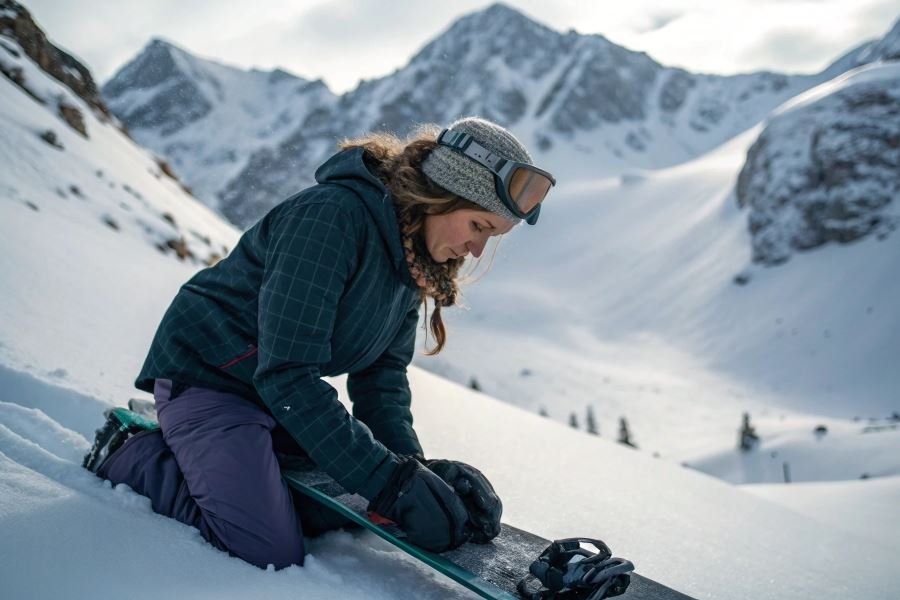
Ever stood atop a pristine mountain, gazing at untouched powder stretching beyond the resort boundaries? That’s the siren call of backcountry riding—and women’s splitboards are your ticket to freedom.
A splitboard is essentially a snowboard that separates into two ski-like pieces for uphill travel, then reconnects for downhill riding. But women’s splitboards aren’t just men’s boards painted pink. They’re precision-engineered tools designed specifically for female anatomy and riding styles. The differences? Women typically have a lower center of gravity, narrower shoulders, and different muscle distribution—all factors that influence how a board responds.
Women’s splitboards generally feature softer flex patterns, narrower waist widths, and shorter overall lengths compared to their unisex counterparts. This isn’t about “dumbing down” equipment—it’s about optimizing performance for different body types.
Finding your perfect match
Selecting the right splitboard involves balancing several crucial factors:
- Riding style: Are you charging steep lines or floating through powder?
- Terrain preferences: Will you tackle technical mountaineering or mellow tours?
- Physical attributes: Your height, weight, and strength all matter
- Experience level: Beginners benefit from more forgiving designs
The ideal women’s splitboard amplifies your strengths while supporting areas where you need assistance. Think of it as finding a dance partner who anticipates your every move—when the connection is right, you’ll feel it immediately.
Remember: the backcountry demands respect and preparation. The perfect splitboard is just one piece of a comprehensive approach to safe, exhilarating adventures beyond the boundaries.
Essential Features of Women’s Splitboards
When venturing into the backcountry, having the right equipment isn’t just about comfort—it’s about performance and safety. Women’s splitboards have evolved dramatically over the past decade, with manufacturers finally recognizing that female riders need more than just “shrink it and pink it” versions of men’s gear. Understanding what to pay attention to when choosing a women’s splitboard can make the difference between an epic powder day and a frustrating slog through the backcountry.
Size and Flex Tailored for Women
Women’s splitboards are engineered with specific anatomical considerations in mind. Typically, women have a lower center of gravity and different weight distribution compared to men of similar height. This translates to boards that are:
- Narrower in waist width – Accommodating smaller foot sizes while maintaining edge control
- Shorter overall length – Providing better maneuverability without sacrificing float
- Softer flex patterns – Offering responsiveness at lower rider weights
The ideal size for a women’s splitboard generally runs 3-7cm shorter than what you’d ride in a traditional snowboard. A rider who normally chooses a 156cm solid board might find her sweet spot in a 150-153cm splitboard.
| Rider Weight (lbs) | Recommended Length (cm) | Flex Rating |
|---|---|---|
| 100-125 | 138-144 | Soft (3-4) |
| 125-150 | 144-152 | Medium-Soft (4-5) |
| 150-175 | 152-158 | Medium (5-6) |
| 175+ | 158+ | Medium-Firm (6-7) |
Shape and Profile for Every Mountain
The terrain you’ll be riding dictates the optimal shape and profile of your splitboard. Modern women’s splitboards come in three primary profiles:
- Camber dominant – Provides superior edge hold and precision on hardpack and steeps
- Rocker dominant – Excels in deep powder with enhanced float and maneuverability
- Hybrid profiles – Combines elements of both for versatile all-mountain performance
For riders exploring varied terrain, directional shapes with setback stances offer the best of both worlds—stability at speed and float in powder. True twins are rare in splitboarding but benefit riders with freestyle aspirations.
“The shape of your splitboard should reflect your riding style and the terrain you’ll encounter most frequently,” notes professional splitboarder Kimmy Fasani. “A board with a more pronounced nose rocker will keep you floating in deep snow, while camber underfoot maintains the precision needed for technical descents.”
Binding Systems That Won’t Let You Down
The interface between board and bindings represents perhaps the most critical component of any splitboard setup. Three primary systems dominate the market:
- Spark R&D – Known for lightweight, durable designs with excellent adjustability
- Karakoram – Offers premium active joining technology for a solid ride feel
- Voilé – Provides reliable, affordable options with proven durability
Most women’s splitboards come with the universal puck system, compatible with all major binding brands. However, some premium models feature brand-specific mounting patterns that optimize performance but limit compatibility.
When selecting bindings, consider:
- Highback height and flexibility – Shorter highbacks often better accommodate women’s calf anatomy
- Strap configuration – Look for designs that distribute pressure evenly across smaller boot sizes
- Weight – Every ounce matters on the ascent; lightweight systems reduce fatigue
The transition from touring to riding mode should be intuitive and efficient—practice at home before heading into the backcountry. Your binding system should inspire confidence, not frustration, especially when conditions turn challenging.
Remember that the perfect women’s splitboard balances uphill efficiency with downhill performance, matching your specific body mechanics and riding preferences. The investment in quality equipment pays dividends in backcountry experiences for years to come.
Making Your Final Splitboard Decision: Performance, Recommendations, and Care
When you’re standing at the precipice of purchasing a women’s splitboard, the final decision can feel as daunting as staring down a steep backcountry line. Let’s break through that paralysis and get you on the perfect board for your adventures.
Balancing performance with your wallet
Finding the sweet spot between performance and price doesn’t have to be an exercise in compromise. The splitboard market has matured significantly since the early days when options were limited and prices astronomical.
Today’s mid-range boards (700 − 900)oftenpacktechnologythatwaspremium − onlyjustafewyearsago.Entry − leveloptions(500-650) have become increasingly capable, while high-end models ($1000+) offer specialized features for specific riding styles and conditions.
The most expensive splitboard isn’t necessarily the right one for you. The best board is the one that matches your riding style, terrain preferences, and progression goals.
Consider your frequency of use—occasional backcountry explorers might opt for versatile, mid-range options, while those logging 30+ days in the backcountry might justify the investment in premium materials that enhance durability and performance.
Top performers across skill levels
Beginner-Friendly Champion: Jones Solution Splitboard
The Solution offers predictable handling with a directional shape that forgives mistakes while still allowing for progression. Its medium flex pattern provides stability without overwhelming newer riders, and the mellow magnetraction edges deliver confidence on varied snow conditions.
Intermediate All-Terrain Master: Burton Family Tree Hometown Hero Splitboard
This versatile performer balances playfulness with stability. The directional camber profile delivers excellent edge hold on steeps while maintaining float in powder. The board’s responsive flex pattern rewards proper technique without punishing minor form lapses.
Advanced Powder Specialist: Weston Riva Splitboard
Designed by and for women charging hard, the Riva features an aggressive directional shape with significant taper for unmatched float. Its stiff flex pattern and carbon stringers deliver precision edge control at high speeds, while the setback stance maximizes power transfer on technical terrain.
Extending your investment through proper care
Your splitboard represents both a significant financial investment and your ticket to backcountry freedom. Proper maintenance ensures peak performance and longevity.
Seasonal maintenance essentials:
- Apply a fresh coat of wax before storage
- Inspect and repair edge damage promptly
- Store in a cool, dry place away from direct sunlight
- Keep hardware tightened but not over-torqued
Field maintenance kit components:
- Multi-tool with appropriate bits for binding hardware
- Skin wax for emergency application
- Small repair kit (epoxy, metal edge piece, p-tex)
- Spare hardware (especially pivot pins and clips)
Post-tour routine:
- Thoroughly dry skins before storage
- Remove snow and moisture from board and hardware
- Inspect connection points for wear or damage
- Address minor edge burrs before they worsen
By balancing your performance needs with budget considerations, selecting a board appropriate for your skill level, and implementing a consistent maintenance routine, you’ll maximize both enjoyment and value from your women’s splitboard investment. The backcountry awaits!