
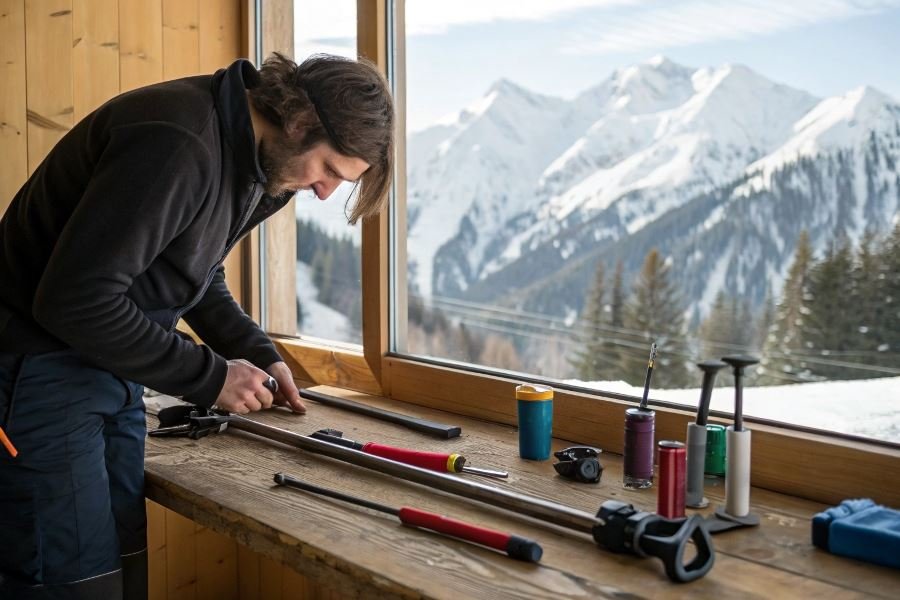
Ever watched a skier lose control after a pole snapped at a crucial moment? That split-second equipment failure can mean the difference between an exhilarating run and a painful tumble. Your ski poles aren’t just accessories—they’re critical performance tools deserving proper attention.
Think of ski pole maintenance as performance insurance. These essential extensions of your arms provide balance, timing, and power throughout your winter adventures. Yet many skiers meticulously maintain their skis while neglecting the very tools that help control them. Proper care not only extends your poles’ lifespan but maintains their functionality when you need it most.
Material matters: Care tailored to your poles
Modern ski poles typically feature aluminum, carbon fiber, or composite constructions—each with unique care requirements:
- Aluminum poles: Durable workhorses that resist impact but can bend under extreme pressure. Check regularly for bends that compromise structural integrity.
- Carbon fiber poles: Prized for their lightweight performance but vulnerable to impact fractures. Inspect for hairline cracks, especially near basket connections.
- Composite poles: Offering balanced performance characteristics requiring vigilance for both bending and cracking issues.
Warning signs: When your poles are crying for help
Your poles communicate their condition if you know what to look for:
“The subtlest signs often precede catastrophic failure. Learn to listen to what your equipment is telling you.”
Watch for these red flags:
- Hairline cracks near basket or grip connections
- Visible bending or warping of the shaft
- Loose baskets or grips that wobble
- Worn straps showing fraying or loss of elasticity
- Compromised tips with visible metal core exposure
Regular inspection becomes second nature once incorporated into your pre-season and post-adventure routines. Your vigilance transforms these simple tools into reliable companions for seasons to come.
Essential Ski Pole Maintenance for Maximum Longevity
Let’s face it—ski poles take a beating on the mountain. They’re plunged into snow, dragged across ice, and occasionally used as impromptu weapons against unruly lift lines (we’ve all been tempted). But with proper care, your trusty poles can last for many seasons of powder days and groomers.
Knowing how to care for ski poles to extend their lifespan isn’t just about saving money—it’s about maintaining reliable equipment that performs when you need it most. Whether you’re rocking aluminum workhorses or ultralight carbon fiber racing sticks, these maintenance practices will keep your poles in prime condition season after season.
Material-Specific Cleaning Techniques
Different pole materials demand different cleaning approaches:
Aluminum Poles: These workhorses of the ski world are relatively low-maintenance but still need attention.
- Wipe down with warm, soapy water after use
- Remove salt residue (especially important if you ski near roads)
- Check for bends or dents that might compromise structural integrity
- Use a soft cloth to dry completely before storage
Carbon Fiber Poles: These lightweight performance poles require gentler handling.
- Never use harsh chemicals or abrasives
- Clean with mild soap and lukewarm water only
- Inspect carefully for hairline cracks or splinters
- Avoid high heat when drying
Composite Poles: These blend durability with performance but need specific care.
- Clean with damp cloth and mild detergent
- Check connection points for wear
- Inspect for delamination where materials join
- Dry thoroughly to prevent internal moisture damage
Strategic Storage Solutions
Your poles’ off-season hibernation matters as much as in-season care:
During Season Storage:
- Store upright when possible to prevent warping
- Keep away from heat sources (car trunks, fireplaces)
- Use pole straps to bundle them together
- Never leave damp or wet
| Storage Don’ts | Storage Do’s |
|---|---|
| Leaning against wall | Use dedicated rack |
| Storing in car trunk | Keep in climate-controlled space |
| Stacking heavy items on poles | Store vertically or horizontally supported |
| Leaving in direct sunlight | Keep in dry, cool location |
Off-Season Protection:
- Clean thoroughly before extended storage
- Apply light coat of silicone spray to metal components
- Store horizontally in a cool, dry place
- Use a ski pole bag from Black Diamond or Leki for extra protection
Basket and Grip Maintenance
These critical contact points need special attention:
Basket Care:
- Remove caked snow/mud after each use
- Check for cracks or tears regularly
- Replace damaged baskets before they affect performance
- Consider seasonal basket swaps (powder baskets for deep days, smaller race baskets for hardpack)
Grip Maintenance:
- Clean cork grips with mild soap and water
- Rejuvenate rubber grips with specialized rubber cleaner
- Check strap connections for wear
- Replace worn straps before they fail on the mountain
Remember that small maintenance steps throughout the season prevent major failures when you’re miles from the lodge. A quick inspection before each ski day can save you from that dreaded mid-run equipment failure.
With these maintenance practices, your ski poles will remain faithful companions through countless powder days, providing reliable support when you’re charging down your favorite runs or exploring new terrain.
Advanced Care Strategies for Ski Poles That Last
Component Replacement Mastery
Ski poles take a beating on the mountain, but knowing when and how to replace worn components can dramatically extend their lifespan. The basket—that circular piece at the bottom of your pole—typically needs replacement every 1-2 seasons if you’re hitting the slopes regularly. When baskets start cracking or become loose, it’s time for action.
Basket replacement is surprisingly simple: Heat the connection point with a hair dryer for 30-45 seconds until the plastic softens, then twist off the old basket. Apply a small amount of epoxy to the new basket’s connection point and twist firmly onto the pole shaft. Let it set for 24 hours before use.
Grips and straps show wear differently—look for compressed foam, tears in straps, or failing velcro. Most Black Diamond and Leki poles feature replaceable components that simply screw off or pop out. Keep a grip replacement kit in your maintenance arsenal—they typically cost $15-25 and can make decade-old poles feel factory fresh.
DIY Repair Techniques That Work
Minor damage doesn’t mean retirement for your trusty poles. Small shaft dents can often be gently worked out using a wooden dowel and careful pressure. For aluminum poles with slight bends, place the pole on a flat surface and apply gentle, even pressure to straighten—never attempt this with carbon fiber poles, which will snap rather than bend.
For hairline cracks in composite poles, a high-quality epoxy designed for sporting equipment can provide a temporary fix:
- Clean the area thoroughly with alcohol
- Apply epoxy in thin layers
- Wrap with fiberglass tape while wet
- Allow 48 hours to cure completely
For grip repairs, hockey tape offers excellent temporary fixes for worn areas, while heat-shrink tubing (available at hardware stores) can create a more permanent solution for exposed foam.
The Retirement Decision
Even with meticulous care, ski poles eventually reach the end of their useful life. Here are the non-negotiable signs it’s time for new equipment:
| Warning Sign | Aluminum Poles | Carbon Fiber Poles |
|---|---|---|
| Critical Damage | Deep dents or severe bends | Any visible cracks or splinters |
| Shaft Integrity | Rattling or loose sections | Soft spots or visible fiber exposure |
| Grip Failure | Irreparable separation from shaft | Core rotation within grip |
Most quality ski poles should last 5-8 seasons with proper care, though professional-level carbon fiber poles from manufacturers like Swix might serve you for a decade with proper maintenance.
When shopping for replacements, consider how technology has evolved. Modern poles offer significant weight reductions and improved ergonomics compared to models from even five years ago. The investment in new equipment—typically $80-150 for quality recreational poles—pays dividends in performance and comfort.
Remember: Retiring poles before catastrophic failure prevents mid-mountain emergencies. That hairline crack you’ve been monitoring could become a complete break at the worst possible moment. When in doubt, bring your poles to a professional ski technician for assessment—most shops offer free evaluations that could save you from a ruined powder day.