
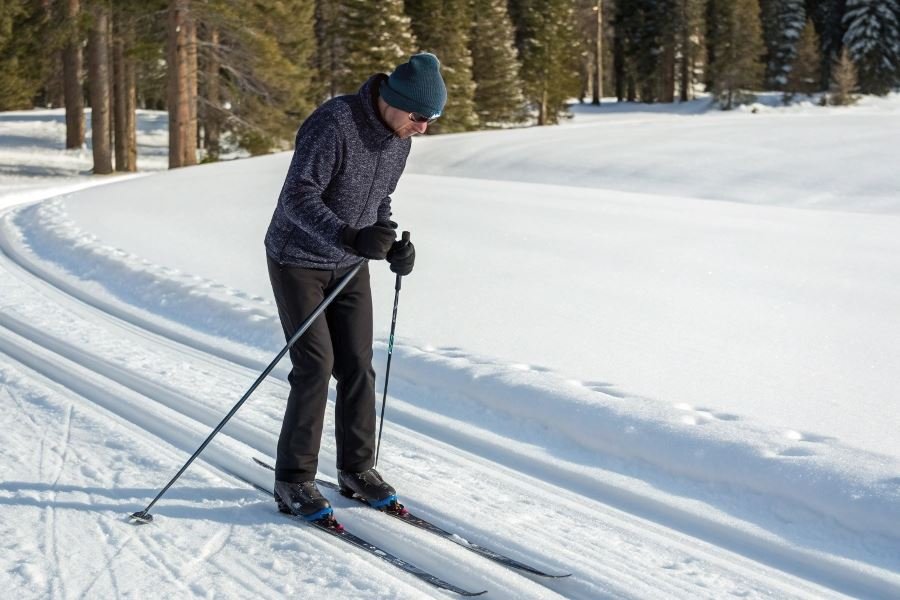
Ever stood in a ski shop, overwhelmed by endless options while snow-covered trails beckon? The right pair of universal cross-country skis can transform your winter experience from frustrating to exhilarating!
Universal cross-country skis represent the Swiss Army knife of Nordic skiing equipment. These versatile performers are specifically designed to handle a wide range of snow conditions and terrain types without requiring you to own multiple specialized pairs. Think of them as the “one ski quiver” solution that delivers reliable performance whether you’re gliding along groomed tracks, exploring untracked wilderness, or tackling varied conditions during a single outing.
The versatility advantage
The beauty of universal cross-country skis lies in their adaptability. While specialized skis excel in specific conditions (racing skis for speed, backcountry skis for deep powder), universal models offer impressive performance across diverse environments. This versatility stems from their thoughtful design compromises:
- Width profile: Typically 65-70mm underfoot—wider than racing skis but narrower than backcountry models
- Moderate camber: Provides sufficient grip for climbing yet maintains glide efficiency
- Balanced flex pattern: Responsive enough for groomed trails while stable enough for variable terrain
Universal vs. specialized: Key differences
Universal skis differ from their specialized counterparts in several crucial ways:
| Feature | Universal Skis | Racing Skis | Backcountry Skis |
|---|---|---|---|
| Width | Medium (65-70mm) | Narrow (40-45mm) | Wide (70-110mm) |
| Weight | Moderate | Lightweight | Heavier |
| Edge control | Moderate | Minimal | Enhanced |
| Terrain suitability | Varied | Groomed tracks | Off-trail |
For recreational skiers who enjoy mixing up their winter adventures without investing in multiple pairs, universal cross-country skis deliver the perfect balance of performance, versatility, and value.
Essential Factors for Universal Cross-Country Ski Selection
Finding the perfect pair of universal cross-country skis can transform your winter adventures from exhausting slogs to effortless glides across pristine snow. The right skis become an extension of your body, responding to your movements with precision and grace.
When exploring how to choose universal cross-country skis, three critical factors stand out: length, width, and camber profile. These elements work together to create the perfect balance between stability, control, and performance across varying snow conditions. Let’s dive into what makes these factors so crucial for your skiing experience.
Matching Ski Length to Your Body
Ski length isn’t just about your height—it’s about creating the optimal relationship between your body and the snow beneath you.
| Height Range | Weight Range | Recommended Ski Length |
|---|---|---|
| Under 5’3″ (160cm) | Under 130 lbs (59kg) | 170-180cm |
| 5’3″-5’7″ (160-170cm) | 130-160 lbs (59-73kg) | 180-190cm |
| 5’7″-6’0″ (170-183cm) | 160-190 lbs (73-86kg) | 190-200cm |
| Over 6’0″ (183cm) | Over 190 lbs (86kg) | 200-210cm |
The classic formula suggests skis should reach somewhere between your wrist and the top of your head when standing upright. However, your weight plays an equally important role. Heavier skiers need longer skis to distribute weight properly and prevent excessive sinking into snow.
Too short? You’ll sacrifice stability and glide efficiency. Too long? You’ll struggle with maneuverability, especially in tight forest trails or technical terrain.
Width Wisdom for Varied Conditions
Ski width directly impacts your ability to handle different snow conditions and terrain types.
Universal cross-country skis typically feature a width between 65-75mm at the widest point (the shovel), narrowing to 55-65mm underfoot. This moderate width profile offers versatility across conditions.
Narrower skis (under 65mm at the shovel) excel on groomed tracks and provide superior speed on firm snow, but they’ll sink in soft powder.
Wider skis (over 70mm at the shovel) offer better flotation in fresh snow and ungroomed terrain, providing stability at the cost of some speed on packed surfaces.
The sweet spot for truly universal performance? 68-70mm at the shovel with 60-62mm underfoot. This configuration balances track performance with off-track capability, making it ideal for skiers who regularly encounter both conditions.
Camber Profile: The Hidden Performance Key
Perhaps the most technical yet crucial aspect of ski selection is the camber profile—the subtle arch built into the ski that determines how it interacts with snow.
Universal cross-country skis feature a “double camber” design:
- A primary camber runs the length of the ski, providing spring and energy return
- A pocket camber in the middle section creates the grip zone for classic technique
When standing on properly sized skis with your weight evenly distributed, you should be able to slide a business card under the middle section—this is your grip zone. When you shift your weight to one ski (as in the classic diagonal stride), the pocket camber flattens, allowing the grip zone to contact snow.
Too stiff a camber means difficult kick in classic technique but excellent glide. Too soft delivers easy kick but compromised glide and stability.
For universal skis, look for a moderate camber that flattens appropriately under your weight. Fischer and Rossignol offer excellent universal options with balanced camber profiles suitable for varied techniques and conditions.
By carefully considering these three essential factors—length, width, and camber—you’ll find universal cross-country skis that perform admirably across techniques and conditions, making every snow-covered trail an opportunity for adventure.
Matching Skis to Skills: Your Ultimate Guide to Universal Cross-Country Selection
Finding the perfect pair of universal cross-country skis isn’t just about grabbing whatever’s on sale—it’s about matching technology to your abilities and ambitions on the snow. Let’s dive into the nitty-gritty of selecting skis that will elevate your winter adventures, whether you’re just starting out or looking to push your limits.
Skill-Based Ski Selection
Beginner-Friendly Features
Newcomers to the sport need forgiving equipment that builds confidence. Look for:
- Wider skis (65-70mm) that provide greater stability
- Shorter lengths (your height minus 20-30cm)
- Softer flex patterns that don’t require perfect weight distribution
- Waxless bases with fish scales for hassle-free grip
The Fischer Adventure 62 excels here with its 62mm waist and progressive sidecut that makes turning intuitive rather than intimidating.
Intermediate Performance Characteristics
As your technique improves, your equipment should evolve:
- Medium width (60-65mm) balancing stability and glide
- Standard length (your height minus 10-20cm)
- Medium flex that responds to proper technique
- Combination skin/waxless bases for versatility
Intermediate skiers benefit from equipment that rewards proper technique while still offering forgiveness when fatigue sets in during longer outings.
Advanced Specifications
Skilled skiers should seek:
- Narrower profiles (55-60mm) for enhanced glide efficiency
- Full-length (your height minus 5-10cm)
- Stiffer flex requiring precise weight transfer
- Waxable bases for customized performance in varying conditions
Binding and Boot Compatibility
Choosing the right binding system is crucial for performance and enjoyment. The three primary systems each offer distinct advantages:
| Binding System | Pros | Cons | Best For |
|---|---|---|---|
| NNN (New Nordic Norm) | Widespread availability, lightweight | Less power transfer | Recreational to intermediate |
| SNS (Salomon Nordic System) | Excellent control, two-axis rotation | Limited boot options | Performance-oriented skiers |
| Prolink/NNN Compatible | Universal compatibility, good power | Slightly heavier | All-around versatility |
Boot Compatibility Considerations:
- Always match your binding system to your boots
- Higher cuffs provide more ankle support for hills and turns
- Insulation ratings matter—look for comfort down to at least -10°F for winter versatility
- Waterproof breathable membranes like Gore-Tex are worth the investment
Top Universal Cross-Country Models Worth Your Money
Budget-Friendly Excellence: Rossignol Evo OT 65 ($299)
These versatile skis feature a 65mm waist, waxless base, and moderate sidecut that performs admirably on both groomed trails and light backcountry terrain. The steel edges provide confidence on descents without adding excessive weight.
Mid-Range Marvel: Salomon Escape 64 ($399)
With its progressive sidecut and Densolite core, the Escape delivers remarkable versatility. The S-Cut profile enhances turning ability while maintaining straight-line stability. Compatible with multiple binding systems for maximum flexibility.
Premium Performance: Atomic Vantage 75 C ($549)
For those willing to invest, the Vantage offers carbon fiber reinforcement for responsive flex, a versatile 75mm waist, and Atomic’s HRZN Tech tip for improved flotation in varied snow conditions. The All-Terrain rocker profile transitions seamlessly between groomed and ungroomed surfaces.
Remember that the best universal cross-country skis aren’t necessarily the most expensive—they’re the ones that match your current ability while providing room to grow as your skills develop. The perfect pair should feel like a natural extension of your movement, not equipment you’re fighting against.