
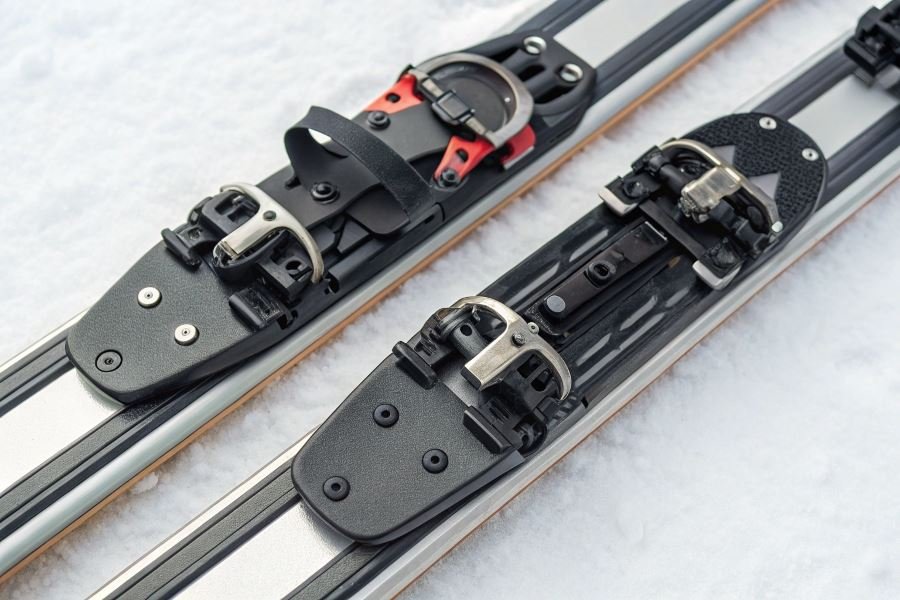
Ever wondered why some skiers can’t share boots? The answer lies in those small mechanisms connecting your boots to your skis!
Cross-country skiing has evolved dramatically since its origins as essential winter transportation. While most enthusiasts focus on selecting the perfect skis or boots, the humble binding system often remains an overlooked hero in this equation. These critical connectors not only secure your feet to your skis but fundamentally influence your technique, power transfer, and overall experience on the snow.
Two titans have dominated the cross-country binding landscape for decades: the New Nordic Norm (NNN) developed by Rottefella in 1985, and the Salomon Nordic System (SNS) introduced by Salomon. These incompatible systems have essentially split the cross-country skiing world into two distinct camps, creating what many call the “great binding divide.”
“Choosing between NNN and SNS is like deciding between iOS and Android – once you commit, you’re essentially locked into an ecosystem.” – Cross Country Skier Magazine
The differences between these systems might seem subtle at first glance, but they significantly impact performance. NNN bindings feature two parallel ridges that mate with corresponding channels in compatible boots, while SNS utilizes a single, wider ridge system. This fundamental design difference affects stability, control, and power transmission through each stride.
Why does your binding choice matter so profoundly? Beyond the obvious compatibility issues with boots, your binding selection influences:
- Power transfer efficiency during both classic and skating techniques
- Torsional stability when navigating challenging terrain
- The natural flex pattern of your ski
- Your ability to upgrade or replace components as technology advances
For both recreational skiers and competitive athletes, understanding these binding systems isn’t just about equipment compatibility—it’s about optimizing your entire skiing experience.
NNN vs SNS Bindings: The Ultimate Cross-Country Showdown
When it comes to cross-country skiing, the connection between your boot and ski can make or break your experience on the trails. Types of bindings for cross-country skis: NNN vs SNS represent the two dominant systems that have shaped nordic skiing for decades, each with passionate advocates and distinct characteristics that influence everything from your stride to your equipment choices.
The Technical DNA of NNN and SNS
New Nordic Norm (NNN) bindings, developed by Rottefella, feature a distinctive dual-rail system with a single bar at the toe of the boot that clicks into the binding. The design creates two points of contact that distribute pressure evenly across the binding platform.
SNS (Salomon Nordic System), in contrast, utilizes a single, wider rail with a metal bar at the toe that snaps into place. The original SNS design has evolved into several variations:
- SNS Profil: The classic single-rail design
- SNS Pilot: Enhanced with a second pivot point for improved control
- SNS Propulse: The latest iteration with advanced power transfer capabilities
| Feature | NNN | SNS |
|---|---|---|
| Rail System | Dual rails | Single wider rail |
| Connection Points | Single toe bar | One or two bars (depending on model) |
| Flex Characteristics | Moderate flex | Varies by model (Pilot offers more control) |
| Market Share | Increasing dominance | Declining but still significant |
The fundamental difference lies in how these systems manage the critical balance between stability and flexibility. NNN bindings typically offer a more natural foot roll, while SNS Pilot systems provide enhanced lateral stability that many racers prefer for technical terrain.
The Compatibility Conundrum
Perhaps the most frustrating aspect of the NNN vs SNS divide is the complete lack of cross-compatibility. Once you commit to either system, you’re essentially locked into an ecosystem of compatible boots and bindings.
NNN-compatible systems now include:
- Rottefella NNN bindings
- Rossignol’s NIS system
- Prolink from Salomon (their newer NNN-compatible offering)
- Turnamic from Fischer and Rossignol
SNS remains largely a Salomon domain, though some manufacturers like Atomic have produced compatible equipment in the past.
The good news? The market has been steadily shifting toward NNN-compatible systems, with even Salomon introducing their Prolink system in 2016 that works with NNN bindings. This trend suggests that NNN compatibility may eventually become the universal standard, simplifying future equipment decisions.
Performance Under Pressure
When the rubber meets the snow, how do these systems actually perform?
Stability and Control: SNS Pilot bindings, with their second connection point, offer superior lateral stability that can be particularly valuable on icy tracks or during high-speed descents. NNN bindings provide excellent stability as well, but with a slightly different feel that some describe as more natural.
Power Transfer Efficiency: Both systems effectively transfer power from your leg to the ski, but in different ways. SNS Pilot’s second connection point creates a more direct power transfer for aggressive skate skiing, while NNN’s dual-rail system distributes pressure more evenly across a wider platform.
The binding choice often comes down to subtle feel differences that become apparent only after significant time on both systems. Many elite skiers can perform equally well on either platform after adaptation.
For recreational skiers in varied conditions, NNN bindings offer excellent versatility and increasingly widespread compatibility. For technical skate skiers who prioritize precise edge control, the SNS Pilot system still maintains a dedicated following despite its shrinking market share.
The binding debate continues to evolve as manufacturers refine their designs, but understanding these fundamental differences will help you make an informed choice that matches your skiing style and equipment needs.
Making the Right Choice: NNN vs SNS Bindings
Choosing between NNN and SNS binding systems isn’t just a technical decision—it’s about matching your equipment to your skiing ambitions. Let’s dive into the factors that should guide your choice, what’s happening in the market right now, and who should be using what.
Matching bindings to your skiing profile
Your perfect binding system depends on three critical factors: your skill level, skiing style, and the terrain you’ll tackle most often.
Skill level considerations:
- Beginners often find NNN bindings more intuitive with their straightforward step-in mechanism
- Intermediate skiers can adapt to either system comfortably
- Advanced skiers might prefer the precision and power transfer of SNS Pilot systems for performance skiing
Skiing style dramatically influences your binding choice. Recreational touring skiers typically value comfort and ease of use, while performance-oriented skaters demand maximum stability and power transfer.
| Skiing Style | NNN Recommendation | SNS Recommendation |
|---|---|---|
| Classic recreational | NNN BC for off-track | SNS Pilot for on-track |
| Skate skiing | NNN-R for performance | SNS Pilot for precision |
| Backcountry | NNN BC (wider platform) | SNS Profil (limited options) |
Terrain preferences also matter significantly. If you’re primarily skiing groomed trails, standard NNN or SNS Profil/Pilot systems work beautifully. For those venturing into deeper snow or ungroomed terrain, the beefier NNN BC (Backcountry) offers superior stability and control.
Current market landscape
The binding market has shifted dramatically in recent years, with NNN clearly establishing dominance:
- Manufacturer adoption: Major brands like Fischer, Rossignol, and Madshus have largely standardized on NNN-compatible systems
- Retail availability: Finding SNS equipment, especially new boots, has become increasingly challenging
- Innovation focus: Most new binding developments are happening in the NNN ecosystem
Market insight: Since Salomon introduced their Prolink system (NNN-compatible) in 2016, the market has steadily consolidated toward NNN-style bindings.
The practical implication? If you’re buying new equipment in 2025, you’ll find significantly more options compatible with NNN systems. This doesn’t mean SNS is obsolete—many excellent SNS boots and bindings remain available—but the ecosystem is undeniably shrinking.
Recommendations for different skier types
For fitness-focused recreational skiers:
NNN/Prolink systems offer the widest selection of comfortable boots and reliable bindings. The Rottefella Exercise binding provides excellent value with sufficient performance for most recreational skiers.
For performance-oriented skaters:
Either system works well, but consider future boot availability. The NNN Xcelerator and SNS Pilot bindings both deliver exceptional power transfer and stability.
For backcountry adventurers:
NNN BC is the clear winner with its robust platform, excellent stability, and growing selection of compatible boots from manufacturers like Alpina and Fischer.
For budget-conscious beginners:
Start with NNN-compatible equipment. The broader compatibility will give you more options when upgrading individual components later.
Remember that your binding choice locks you into a corresponding boot system. The good news? Both systems perform excellently when properly matched to your skiing needs. The most important factor is finding boots that fit comfortably and bindings that match your performance expectations.