
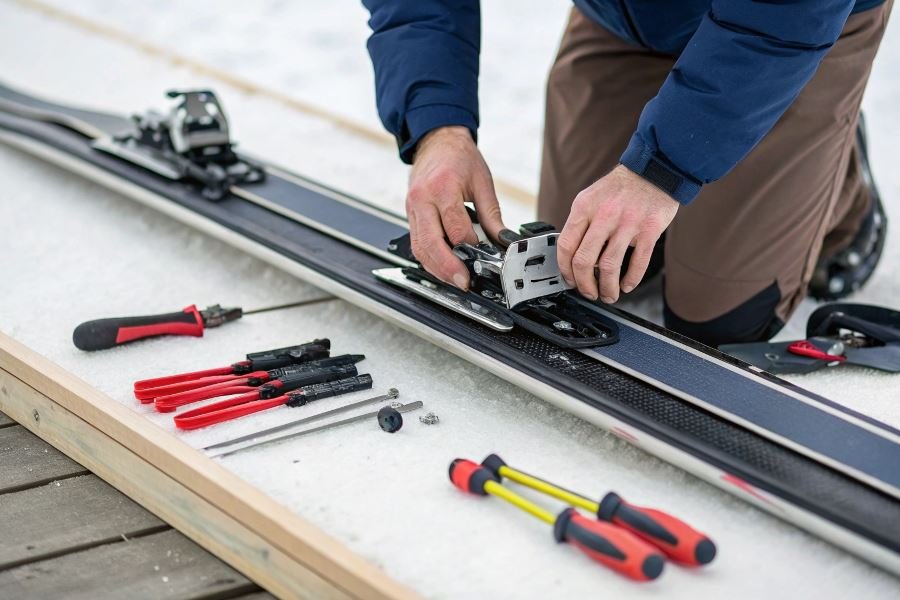
Ever watched a cross-country skier glide effortlessly across pristine snow and wondered what makes that seamless connection between boot and ski possible? The answer lies in one critical component: properly installed bindings. This seemingly small piece of equipment is the literal connection between you and your skiing experience—get it wrong, and you’ll feel it with every stride.
The binding trinity: Choosing your system
Cross-country ski bindings come in three primary flavors, each with distinct characteristics:
- NNN (New Nordic Norm): The most common system today, featuring two ridges on the toe of the boot that click into the binding
- SNS (Salomon Nordic System): Recognizable by its single wide ridge and typically offering excellent power transfer
- 75mm (Three-pin): The classic “duck bill” design, still beloved by traditionalists and telemark enthusiasts
The binding you choose determines which boots you’ll need—they’re not interchangeable!
Your binding installation toolkit
Before mounting bindings, gather these essentials:
| Must-have tools | Optional but helpful |
|---|---|
| Drill with 3.5mm bit | Binding jig |
| Screwdriver (Phillips) | Epoxy |
| Ruler or binding template | Heat gun |
| Pencil | Masking tape |
Placement precision: Why it matters
Binding position affects everything from balance to power transfer. Too far forward and you’ll struggle with control; too far back and you’ll sacrifice power. The sweet spot—typically aligned with your foot’s ball—creates that magical combination of stability, control, and efficient energy transfer that transforms good technique into great performance.
Mastering Binding Installation for Cross-Country Skis
Let’s dive into the nitty-gritty of binding installation – that critical connection between you and your skis that can make or break your cross-country experience. Proper installation isn’t just about slapping hardware onto your boards; it’s about creating a foundation for efficient power transfer, precise control, and injury prevention.
The process of how to properly install bindings on cross-country skis requires attention to detail and the right tools, but don’t worry – with this guide, you’ll be mounting like a pro shop technician. Whether you’re setting up NNN, Prolink, or SNS systems, these techniques ensure your bindings will stay secure through countless kilometers of classic striding or skate skiing.
Preparing the Ski Base and Finding the Sweet Spot
First things first – preparation is everything. Start with a clean workspace and gather your tools:
- Binding template (specific to your binding model)
- Sharp pencil or fine-point marker
- Measuring tape
- Masking tape
Finding the balance point is crucial. Place your ski on a flat surface and locate the manufacturer’s recommended mounting point, usually marked with a small arrow or line on the sidewall. If there’s no marking, find the balance point by placing the ski on your finger and moving it until it balances horizontally.
Pro tip: For classic skis, the binding position affects kick zone performance. Moving just 1cm can dramatically change how your ski performs on different snow conditions.
Once you’ve identified the mounting position, secure the binding template with masking tape. Double-check alignment by measuring from the tail and tip to ensure the template is centered on the ski’s width. Mark your drill points through the template with precision – these tiny dots will guide your entire installation.
Drilling with Confidence and Precision
Drilling into your precious skis might feel intimidating, but with the right approach, it’s straightforward:
| Ski Construction | Drill Bit Size | Special Considerations |
|---|---|---|
| Wood core | 3.5-4.0mm | Clean wood shavings immediately |
| Foam core | 3.6-4.1mm | Lower drill speed to prevent melting |
| Honeycomb | 3.5-3.8mm | Extra care to avoid crushing structure |
Always drill perpendicular to the ski surface, not at an angle. Use a drill stop or wrap tape around your bit to prevent drilling too deep – typically 9mm is sufficient for most skis.
For skis with metal layers like Fischer or Atomic racing models, use a sharp bit and drill slowly to prevent overheating. If you encounter resistance, back out slightly and clear chips before continuing.
Securing Bindings with Precision
The final phase is where many DIYers falter – but not you! Here’s how to ensure rock-solid mounting:
- Apply a tiny drop of wood glue into each hole (skip this for foam cores)
- Position your binding precisely over the holes
- Start screws by hand to prevent cross-threading
- Tighten in a star pattern (like changing a car tire)
Torque matters tremendously. Over-tightening can strip the core material or even crack the ski, while loose screws lead to wobble and eventual failure. Aim for “snug plus a quarter turn” – you want the binding flush against the ski with no gaps, but not crushing the top sheet.
After installation, verify alignment by:
- Checking that the binding is parallel to the ski’s center line
- Confirming equal distance from both edges
- Testing that the boot clicks in smoothly from multiple angles
Final verification: Stand on the mounted skis on a flat surface. Your weight should be distributed evenly, with no tendency to roll inward or outward. If something feels off, address it now rather than suffering through an entire season of misaligned equipment.
With these techniques mastered, you’ll have professionally mounted bindings ready for whatever snow adventures await!
Finalizing Your Ski Binding Setup for Peak Performance
You’ve mounted your bindings to your cross-country skis, but the job isn’t complete until you’ve properly tested and fine-tuned everything. This critical final phase ensures your bindings will perform flawlessly when you’re gliding through fresh powder or pushing for a personal best on groomed trails.
Boot-to-Binding Harmony
The relationship between your boot and binding is the foundation of control and power transfer in cross-country skiing. After installation, place your boot into the binding and check for these key indicators of proper compatibility:
- Zero lateral movement when the boot is locked in
- Smooth entry and exit without excessive force
- Proper alignment with the ski’s centerline
If your boot feels loose or wobbles side-to-side, you may need to adjust the binding width. Most modern NNN and SNS binding systems feature adjustment screws that allow for fine-tuning. A properly fitted binding should feel like an extension of your foot—secure but not restrictive.
The difference between a good binding setup and a great one often comes down to millimeters of adjustment and minutes of testing.
Security Testing That Saves Your Season
Before hitting the trails, perform these essential security tests:
- Step-in test: Step into each binding 10-15 times, confirming consistent engagement
- Twist test: With boots locked in, apply moderate lateral force to ensure bindings hold firm
- Release check: Test the release mechanism under controlled conditions
For automatic release bindings like those from Rottefella or Salomon, verify the release tension matches your weight and skiing style. Too tight, and you risk injury during a fall; too loose, and you’ll experience frustrating pre-releases.
Maintenance for Lasting Performance
| Maintenance Task | Frequency | Tools Needed |
|---|---|---|
| Inspect screws | Before each season | Phillips screwdriver |
| Clean binding mechanism | After wet conditions | Soft brush, compressed air |
| Lubricate moving parts | Bi-annually | Silicone-based lubricant |
| Check for wear | 300-500 km of use | Visual inspection |
The longevity of your binding setup depends largely on preventative maintenance. After installation, apply a drop of medium-strength threadlocker to binding screws to prevent loosening from vibration. This simple step can prevent the catastrophic mid-trail binding failure that ends ski outings prematurely.
For touring bindings from manufacturers like Fischer, pay special attention to the toe piece mechanism, as this component endures significant stress during the kick phase of your stride. A light application of silicone spray can keep these parts moving freely without attracting dirt.
Remember that temperature fluctuations can affect binding performance. If you’ve stored your skis in a cold garage and bring them into warm snow conditions, give the bindings time to acclimate before your first run.
The ultimate test comes on snow. During your first outing after installation, start with gentle terrain and gradually increase intensity, paying attention to how the bindings perform. Any clicking, excessive movement, or discomfort signals the need for adjustment before tackling more challenging trails.
With proper installation, testing, and maintenance, your cross-country ski bindings will deliver reliable performance season after season, allowing you to focus on the joy of gliding through winter’s wonderland rather than equipment concerns.