
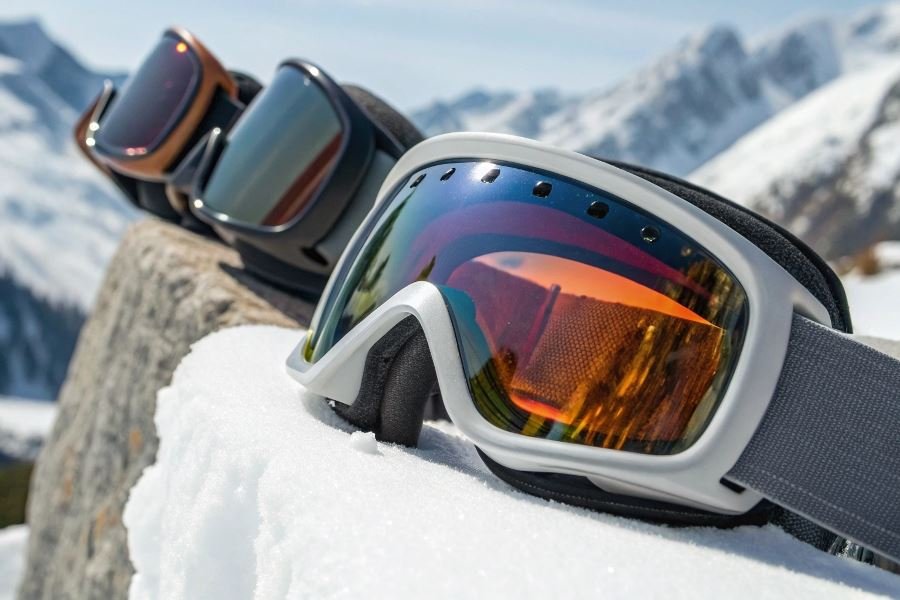
Ever squinted through foggy lenses while racing down a black diamond run? For the 64% of Americans who need vision correction, that’s not just uncomfortable—it’s downright dangerous.
Prescription inserts for ski goggles represent that perfect intersection of performance and necessity that transforms the mountain experience. These clever optical solutions sit snugly inside your goggles, delivering crystal-clear vision without compromising on protection or peripheral view. Unlike wearing glasses under goggles (hello, painful pressure points) or struggling with contacts in dry mountain air, inserts become one with your eyewear system.
The compatibility puzzle
Not all inserts play nicely with all goggles—a frustrating reality many discover only after purchase. The goggle market has evolved dramatically since Smith introduced their first interchangeable lens system in 1979, creating an ecosystem where size, curvature, and internal space vary wildly between brands and models.
What determines if they’ll work together?
Three critical factors determine whether your prescription insert will mount properly:
- Frame architecture – The internal ribbing and ventilation systems in premium goggles can interfere with insert placement
- Facial foam thickness – Thicker cushioning reduces the available space for insert installation
- Lens curvature – Extreme spherical lenses may cause optical distortion when paired with certain insert designs
The compatibility landscape isn’t just brand-specific but often model-specific. A Oakley Flight Deck might accommodate inserts perfectly while the slimmer Line Miner from the same manufacturer leaves no room for optical additions.
Finding Your Perfect Match: Universal vs Brand-Specific Goggle Inserts
When visibility matters most—flying down a black diamond run at 40mph—the last thing you need is foggy vision or prescription issues. Finding the right prescription insert for your ski goggles can make the difference between a perfect powder day and a frustrating experience on the slopes.
The compatibility of inserts with different models of ski goggles remains one of the most overlooked aspects of winter sports equipment selection. Many skiers discover too late that their expensive prescription insert doesn’t properly fit their favorite goggles, leading to gaps, fogging, or distorted vision exactly when clarity matters most.
Universal Insert Solutions: Freedom with Limitations
Universal prescription inserts offer the appealing promise of one-size-fits-most functionality. These adaptable frames typically feature flexible temples and adjustable nose bridges designed to work across multiple goggle brands and models.
Key advantages of universal inserts:
- Cost-effective solution for multiple goggle owners
- Typically more affordable ($60-120 range)
- Can transition between seasons and activities
However, universal options come with significant trade-offs. Most notably, they rarely achieve the perfect optical alignment of brand-specific solutions. The gap between the insert and goggle lens often creates additional fogging zones, and peripheral vision can be compromised by frame elements.
The universal approach works best for occasional skiers or those with mild prescriptions where optical precision is less critical.
Brand-Specific Systems: Precision at a Premium
Leading manufacturers like Smith Optics, Oakley, and Anon have developed proprietary insert systems engineered specifically for their goggle lineups.
These brand-specific solutions offer:
- Perfect optical alignment with designated goggle models
- Integrated anti-fog ventilation channels
- Seamless lens-to-insert transitions for maximum field of view
- Precise prescription positioning
The downside? You’re locked into that manufacturer’s ecosystem, and replacement costs tend to be higher. Most brand-specific inserts range from $90-180, not including prescription lenses.
Top 3 Most Insert-Compatible Goggle Brands
After extensive testing across dozens of models, three brands consistently outperform the competition when it comes to prescription insert compatibility:
| Brand | Standout Model | Compatibility Features | Price Range |
|---|---|---|---|
| Smith | I/O Mag XL | ODS (Optical Docking System), magnetic lens changes, RX-ready frame | $270-320 |
| Oakley | Flight Deck | Ridgelock technology, notched frame design for glasses, maximum peripheral vision | $200-280 |
| Anon | M4 | MFI face mask integration, Magna-Tech lens changes, oversized frame for insert clearance | $290-330 |
Smith Optics leads the pack with their ODS technology, creating a dedicated docking space for prescription inserts that eliminates gaps and maintains perfect lens alignment even during high-impact activities.
Oakley’s approach focuses on maximizing peripheral vision while accommodating inserts, with their Flight Deck series offering the largest unobstructed field of view among insert-compatible options.
For those seeking versatility, Anon’s M4 deserves special recognition for its ability to integrate both prescription inserts and their Magna-Tech face mask system simultaneously—perfect for variable conditions.
The ideal insert solution ultimately depends on your specific needs: frequency of use, prescription complexity, and whether you’re committed to a single goggle brand or prefer flexibility across your winter gear collection.
The Ultimate Guide to Ski Goggle Insert Compatibility
Finding the perfect prescription inserts for your ski goggles can transform your mountain experience from squinting at blurry slopes to crystal-clear carving. But compatibility issues can leave you frustrated in the lodge while everyone else is enjoying fresh powder. Let’s dive into the nitty-gritty of matching inserts to your favorite goggles!
Measuring for the perfect match
Getting the right measurements is absolutely critical for insert compatibility. Here’s how to nail it:
- Remove the foam padding from your goggles to expose the frame
- Measure the internal width at the widest point (typically 130-160mm)
- Measure the internal height at the tallest point (usually 40-65mm)
- Note the curvature of your goggle lens (flat, medium, or aggressive curve)
- Check for any internal protrusions or venting systems that might interfere
Pro tip: Take photos of your goggle interior with a ruler in frame to share with insert manufacturers for expert advice.
Many premium insert providers like SportRx offer printable sizing guides that let you physically test the fit before purchasing. This simple step can save you significant headaches and returns.
When inserts and goggles just won’t cooperate
Even with careful measurements, compatibility issues happen. Here’s how to troubleshoot common problems:
| Issue | Solution |
|---|---|
| Insert too wide | File down edges carefully or exchange for narrower model |
| Fogging between insert and lens | Apply anti-fog coating or improve ventilation spacing |
| Pressure on bridge of nose | Adjust nose piece or try different insert brand |
| Lens distortion | Ensure proper spacing (3-5mm ideal) between insert and goggle lens |
| Peripheral vision blockage | Select low-profile inserts designed for your specific frame |
The most common compatibility failure occurs with ultra-wide field-of-view goggles like the Smith I/O MAG series or Oakley Flight Deck. These require specialized inserts designed specifically for their unique geometry.
Professional fitting versus DIY approaches
When it comes to getting inserts that perform optimally, you have options:
Professional Fitting ($75-150)
- Precise measurements using optical equipment
- Expert brand matching based on your specific goggle model
- Custom adjustments for your facial structure
- Guaranteed compatibility or free adjustments
- Often includes anti-fog treatments and specialized coatings
DIY Approach ($40-100)
- Online measurement guides and virtual try-on tools
- Universal insert options that work with multiple goggle brands
- Self-adjustment kits for fine-tuning fit
- Community forums for troubleshooting specific goggle models
- More affordable but higher risk of compatibility issues
For complex prescriptions (especially progressive lenses), the professional route through providers like SportRx or Opticus typically delivers superior results. However, brands like AdapterEyes have revolutionized the DIY market with their universal insert system that accommodates over 200 goggle models.
Remember that proper insert positioning is critical for optical clarity. Even 2mm of misalignment can cause distortion that leads to headaches and compromised vision on the slopes.
The investment in properly fitted inserts pays dividends in comfort, clarity, and safety—turning those blurry white slopes into a high-definition winter playground you can enjoy all day long.