
Ever stood at the summit, ready to carve fresh powder, only to realize your goggles are so foggy you might as well be skiing blindfolded? That’s not just annoying—it’s downright dangerous.
Proper ski goggle lens care isn’t just about protecting your investment (though quality goggles aren’t cheap). It’s about maintaining crystal-clear visibility that could literally save your life on the mountain. When you’re bombing down a black diamond at 40mph, that scratch or fog could mean the difference between an epic run and a trip to the emergency room.
The lens landscape has evolved dramatically since the single-pane plastic goggles of the 1970s. Today’s high-tech options include photochromic lenses that adjust to light conditions, polarized lenses that cut glare, and mirrored coatings that reflect harsh sunlight. Each type demands specific care:
“Treat your goggle lenses like the sophisticated optical instruments they are, not like the plastic toys of yesteryear.”
The visibility-safety connection
Scratched or improperly maintained lenses don’t just look bad—they compromise depth perception and contrast recognition, especially in flat light conditions when terrain features already become difficult to distinguish.
Your essential lens care arsenal
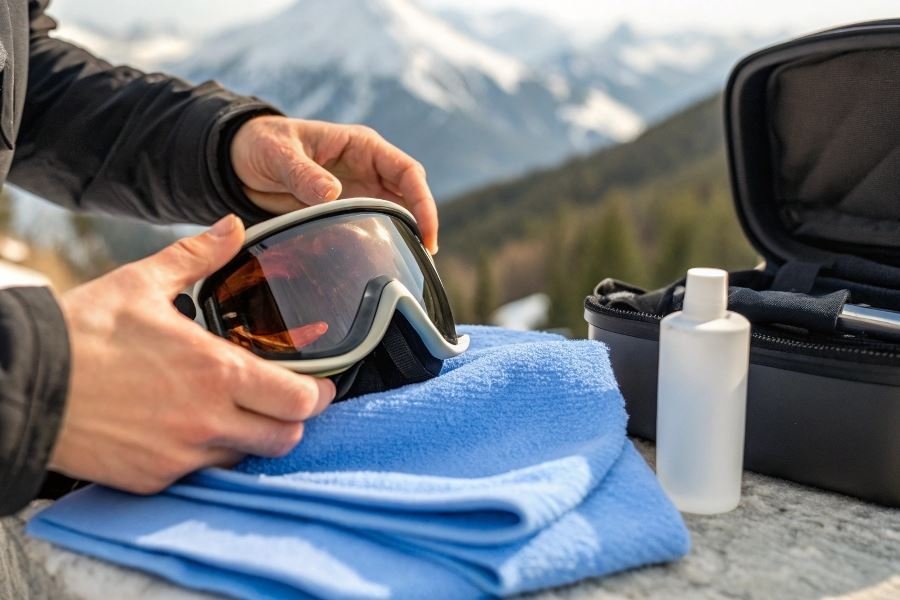
Building your goggle maintenance kit doesn’t require breaking the bank. The basics include:
- Microfiber cloth (never paper towels or clothing)
- Lens-specific cleaning solution (not household cleaners)
- Anti-fog treatment
- Protective case for storage
- Lens covers for transport
Remember that proper care begins before you even hit the slopes. Storing goggles lens-up in a breathable case prevents moisture buildup that leads to premature deterioration of anti-fog coatings. Your future self—racing down perfect corduroy with crystal-clear vision—will thank you.
Daily Maintenance for Ski Goggle Lenses
Nothing kills a perfect powder day faster than foggy, scratched, or damaged goggles. The crystal-clear visibility you need for carving those fresh tracks depends entirely on how you treat your lenses during your mountain adventures. Let’s dive into the essential daily maintenance that will keep your vision sharp and your goggles performing at their peak.
Proper lens care for ski goggles isn’t just about extending their lifespan—it’s about ensuring optimal performance when you need it most. How to care for ski goggles lenses during active use requires understanding both what to do and what to avoid while you’re out enjoying the slopes. The right maintenance routine can mean the difference between crystal clarity and frustrating fog-ups.
Slope-side Cleaning Techniques
When snow, slush, or debris hits your lenses mid-run, resist the urge to wipe with whatever’s handy. Instead:
- Use the microfiber pouch that came with your goggles for gentle cleaning
- Never use gloves, tissues, or jacket sleeves which can scratch the lens coating
- Gently dab snow off rather than wiping aggressively
- Allow wet lenses to air dry when possible before wiping
For stubborn smudges, use the Smith Optics lens cleaning solution or a specialized product from Oakley designed specifically for anti-fog coatings.
Between-Run Storage Solutions
Those breaks between runs are when most lens damage occurs. Protect your investment with these practices:
Never place goggles lens-down on any surface
| Don’t | Do Instead |
|---|---|
| Rest on helmet | Store in soft case |
| Hang from rearview mirror | Keep in zippered pocket |
| Leave in direct sunlight | Place in shade or bag |
| Stack under gear | Give dedicated space |
When taking a lunch break, resist the temptation to push goggles onto your forehead. This transfers oils and sweat directly to the lens and compresses the foam, reducing its ability to vent properly.
Preventing the Damage Trifecta
The three biggest enemies of lens longevity are sweat, moisture, and improper handling. Here’s your defense strategy:
Sweat Management:
- Wear a thin moisture-wicking beanie or headband under your helmet
- Take breaks to ventilate when you feel overheating
- Consider Dragon Alliance Sweat-X frames that channel moisture away
Moisture Control:
- Keep moving to maintain airflow through vents
- During heavy snowfall, periodically shake excess snow from frame edges
- Never tuck goggles inside your jacket when riding lifts—condensation forms instantly
Smart Handling:
- Hold frames by the edges, never touching the lens surface
- When adjusting, use both hands on the strap rather than pushing on the lens
- If you must remove mid-run, store in an inside pocket away from snow
Remember that even premium lenses from Anon or Giro require consistent care. The anti-fog coatings and specialized lens technologies are remarkable but not indestructible.
By implementing these daily maintenance habits, you’ll not only extend the life of your goggles but ensure every run delivers the visual clarity and protection you need for confident, safe skiing.
Ski Goggle Lens Care for the Long Haul
End-of-Season Deep Cleaning Ritual
When the last powder day fades and your season winds down, your goggles deserve more than just a quick wipe. A proper deep clean removes accumulated grime that regular maintenance misses. Start by removing the lenses (if your model allows) and soak them in lukewarm water with a drop of mild dish soap. Never use household cleaners or alcohol-based products – these can strip anti-fog coatings faster than a black diamond run.
For stubborn residue, use your fingertips to gently massage problem areas in circular motions. The emphasis here is on gentle – your lenses are sophisticated optical instruments, not dishware. After cleaning, rinse thoroughly with clean water until all soap residue disappears.
The difference between goggles that last one season versus five often comes down to 15 minutes of proper end-of-season care.
Pat dry with a microfiber cloth and allow to air dry completely before reassembly. For non-removable lenses, use a damp microfiber cloth with minimal soap, being extra careful around the foam and frame connections.
Storage Solutions That Preserve Performance
Your storage approach can make or break lens longevity. The ideal environment is cool, dry, and dark – essentially the opposite of a hot car or damp basement. Smith Optics and other premium manufacturers recommend storing goggles in their original microfiber bag inside a hard case.
Temperature fluctuations are particularly damaging to multi-layer lenses. The expansion and contraction can compromise seals and allow moisture between layers. Consider these storage options:
| Storage Method | Protection Level | Cost | Notes |
|---|---|---|---|
| Original case | Excellent | Included | Best option if you still have it |
| Hard goggle case | Excellent | $15-30 | Worth the investment |
| Microfiber bag | Good | $5-10 | Minimum protection needed |
| Hanging on hook | Poor | Free | Exposes to dust and pressure |
Never store goggles with the lens facing down against any surface – this transfers oils and can scratch the lens. Similarly, avoid compressing the foam, which can deform over time and compromise the face seal.
Replacement vs Continued Maintenance
Even with immaculate care, lenses don’t last forever. Here are the telltale signs it’s time for replacement:
- Scratches affecting vision – Minor scratches are cosmetic, but those in your primary field of view compromise safety
- Delamination – When you see bubbling or separation between lens layers
- Permanent fogging – When anti-fog coatings have degraded beyond recovery
- Color fading – Particularly in polarized or mirrored lenses, indicating UV coating deterioration
For high-end goggles like Oakley or Dragon, replacing just the lenses often makes economic sense. Many premium frames are designed to outlast several sets of lenses. A new lens typically costs $30-90 depending on technology, while complete new goggles run $100-300+.
The sustainability angle matters too – replacing only the lenses reduces waste and often saves 50-70% compared to buying new goggles. Many manufacturers like Anon now offer streamlined lens replacement programs specifically designed for extending product lifespan.
With proper care and timely lens replacement, quality ski goggles can remain your trusted mountain companion for many seasons of crystal-clear vision.