
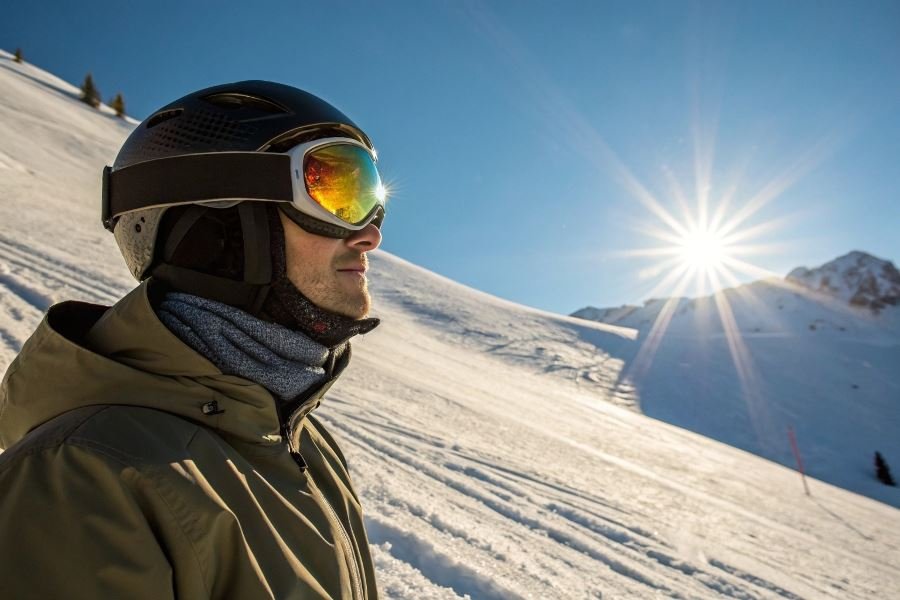
Ever squinted through blinding snow glare while racing down a mountain at 40 mph? That moment when your vision blurs and your confidence falters can mean the difference between an epic powder day and a painful collision. This is where polarizing lenses enter the scene as the unsung heroes of winter sports vision.
Polarizing technology works by filtering out horizontal light waves—the exact type that creates glare when sunlight bounces off snow. Unlike standard tinted lenses that merely darken everything, polarized lenses selectively eliminate reflected light while maintaining crucial depth perception and contrast. It’s like having a visual superpower specifically designed for snow conditions.
The challenges skiers face are unique: blinding snow reflection, flat light conditions that hide terrain variations, and rapidly changing mountain weather. Polarized lenses address these issues by reducing eye fatigue, enhancing contrast between snow textures, and revealing potentially dangerous ice patches that might otherwise blend into the landscape.
This technology has come a long way since its introduction to snow sports in the late 1980s. What began as bulky, limited-option eyewear has evolved into sophisticated, sport-specific equipment. Modern polarized ski goggles incorporate multi-layer lens technology, anti-fog treatments, and photochromic capabilities that adjust to changing light conditions—innovations that would have seemed like science fiction to skiers of previous generations.
The result? Sharper vision, reduced eye strain, and ultimately, safer and more enjoyable days on the mountain.
Performance Edge: How Polarizing Lenses Transform Your Ski Experience
When you’re carving down a pristine slope with the sun blazing overhead, what separates an average run from an exceptional one often comes down to what’s in front of your eyes. Polarizing lenses for ski goggles represent one of the most significant technological advances in snow sports vision technology, delivering benefits that extend far beyond basic eye protection.
The fundamental advantage of polarizing lenses for ski goggles lies in their ability to filter out specific light waves that create visual interference in snow environments. Unlike standard tinted lenses that merely reduce overall brightness, polarized technology selectively eliminates horizontal light waves—the exact type that creates blinding glare when sunlight bounces off snow surfaces. This targeted filtering mechanism preserves visual information while eliminating the disruptive elements that compromise performance.
Conquering snow glare for superior visibility
Snow reflects up to 80% of UV light—significantly more than water (10-20%) or dry pavement (5-10%). This intense reflection creates a visual battlefield for skiers navigating varied terrain. Polarized lenses combat this challenge by:
- Filtering horizontal light waves that bounce off snow surfaces
- Maintaining vertical light transmission essential for depth perception
- Preserving natural color perception while eliminating blinding white spots
The difference becomes immediately apparent when transitioning from standard to polarized lenses. Skiers report being able to identify subtle terrain changes, ice patches, and moguls with significantly greater accuracy, particularly during challenging midday lighting conditions when the sun sits directly overhead.
Terrain definition that transforms your technique
Beyond glare reduction, polarized lenses dramatically enhance contrast and depth perception—critical factors for technical skiing and safety.
| Terrain Feature | Standard Lens Visibility | Polarized Lens Visibility |
|---|---|---|
| Moguls | Moderate definition | Sharp definition |
| Ice patches | Often missed | Clearly visible |
| Shadow areas | Dark, details lost | Balanced, details visible |
| Flat light | Flat appearance | Enhanced contours |
This enhanced contrast allows skiers to anticipate terrain changes milliseconds earlier—the difference between a smooth adjustment and a jarring impact. Professional racers particularly value this advantage when navigating technical courses at high speeds, where split-second visual processing determines success.
All-day comfort for marathon sessions
Perhaps the most underrated benefit of polarized technology is its impact on endurance. Constant exposure to glare forces eye muscles to continuously contract, leading to:
- Reduced squinting which prevents facial muscle fatigue
- Decreased eye strain allowing for longer sessions without discomfort
- Improved focus during late-afternoon runs when fatigue typically sets in
“The difference between my first and last run of the day is night and day since switching to polarized lenses,” notes professional ski instructor Mark Hendrickson. “I can maintain precision and awareness even after eight hours on the mountain.”
This reduced fatigue factor becomes particularly valuable during multi-day ski trips, where cumulative eye strain can impact overall enjoyment and performance as the vacation progresses.
For serious skiers who measure their season in vertical feet rather than days on the mountain, polarized lenses aren’t merely an accessory—they’re essential equipment that directly impacts performance, safety, and enjoyment throughout every descent.
Maximizing Your Mountain Vision: The Ultimate Guide to Polarized Ski Goggles
When carving through fresh powder or navigating icy slopes, your vision isn’t just a convenience—it’s a safety essential. Polarized ski goggles represent that critical edge between merely seeing the mountain and truly reading its terrain. Let’s dive into how to select the perfect polarized eyewear for your alpine adventures.
Smart selection factors for polarized protection
Choosing polarized ski goggles isn’t just about grabbing the flashiest pair. The selection process demands attention to several critical factors:
Light transmission percentage matters tremendously. For bright, sunny conditions, look for lenses with 5-18% VLT (Visible Light Transmission). Overcast days call for 20-40% VLT, while night skiing requires 70-90% VLT. Many premium brands like Smith Optics and Oakley offer interchangeable lens systems for variable conditions.
Frame fit and face compatibility determine comfort during long days. Asian-fit models accommodate different facial structures, while OTG (Over The Glass) designs work for prescription eyewear users.
The quality of polarization filter directly impacts performance. Premium polarized filters maintain clarity while eliminating glare, whereas budget options might create color distortion.
Consider ventilation systems carefully—anti-fog technology paired with proper airflow prevents the dreaded lens fogging that can ruin visibility at crucial moments.
When polarization proves its worth
Polarized lenses deliver their maximum advantage in specific scenarios:
Spring skiing conditions create the perfect storm for polarized lenses to shine. When bright sunshine hits melting snow, the resulting glare becomes nearly blinding without polarization. The contrast enhancement lets you spot potentially dangerous slush patches and icy sections.
High-altitude expeditions expose skiers to intense UV radiation and reflection. At elevations above 8,000 feet, snow reflects up to 80% of UV radiation, creating what mountaineers call “snow blindness.” Polarized lenses cut this reflection dramatically.
Backcountry navigation requires precise terrain reading. When exploring unmarked areas, polarized lenses help distinguish subtle contours and potential hazards hidden by glare.
| Condition | Polarized Advantage | Recommended VLT |
|---|---|---|
| Bright sun | Maximum glare reduction | 5-10% |
| Partly cloudy | Enhanced contrast | 15-30% |
| Overcast | Improved depth perception | 30-50% |
| Evening/night | Minimal (not recommended) | 70-90% |
Preserving your polarized investment
Polarized ski goggles typically command premium prices, ranging from $120 to $300+. Protect that investment with proper maintenance:
Never wipe dry lenses with anything—even microfiber. Always rinse with lukewarm water first to remove abrasive particles that could scratch the polarized coating. Then use lens cleaner specifically formulated for coated optics.
Store your goggles in their protective case, never lens-down on any surface. The polarization filter can delaminate over time with improper storage.
Avoid extreme temperature changes which can stress the adhesives holding polarization filters. Never leave goggles on your dashboard or exposed to intense heat.
Replace foam inserts when they begin to compress—compromised foam allows moisture to reach the inner lens surface, potentially damaging polarization layers over time.
With proper selection, situation awareness, and maintenance discipline, polarized ski goggles deliver unmatched visual clarity that transforms your mountain experience from merely seeing to truly perceiving every nuance of the terrain ahead.