
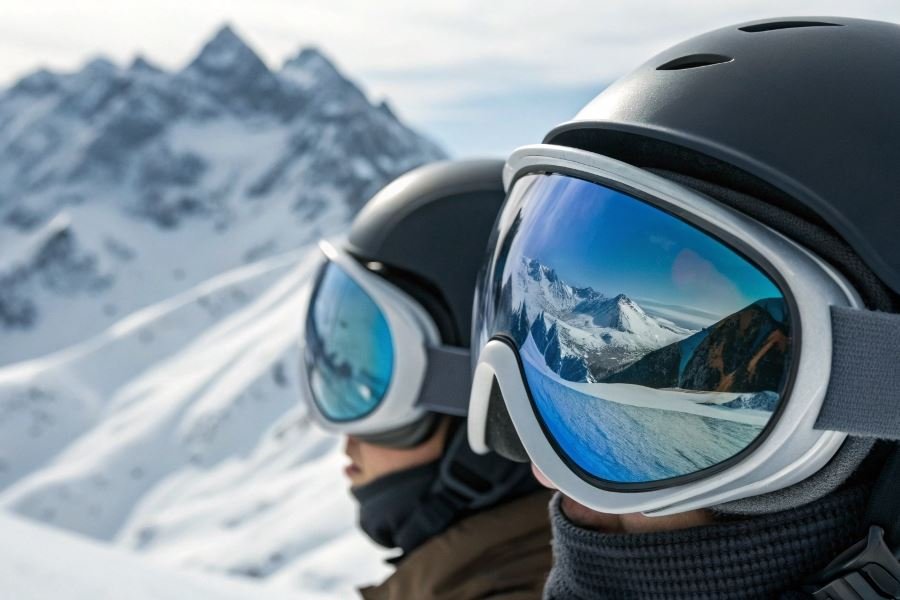
Ever wondered why pro snowboarders can navigate treacherous terrain at breakneck speeds with perfect vision while you’re squinting through foggy goggles? The secret might be in their lens technology.
When carving down a mountain at 40 mph, the difference between spherical and cylindrical lenses isn’t just technical jargon—it’s the difference between spotting that unexpected mogul or ending your season early. Winter sports eyewear has undergone a remarkable transformation since the first plastic ski goggles appeared in the 1960s. Those primitive shields have evolved into sophisticated optical systems that enhance contrast, reduce glare, and provide distortion-free vision across varying light conditions.
Lens selection isn’t just about style—it’s about safety and performance. The right lens can dramatically improve depth perception on flat-light days, enhance contrast when shadows play tricks on your eyes, and protect against harmful UV rays that intensify at altitude. With temperatures dropping and mountains opening across North America, understanding these differences becomes crucial for anyone serious about their winter sports experience.
Spherical lenses curve both horizontally and vertically, mimicking the shape of your eyeball, while cylindrical lenses curve horizontally but remain flat vertically. This fundamental difference affects everything from your peripheral vision to how light enters your eye on those bluebird days when the sun transforms snow into a blinding white canvas.
The lens you choose doesn’t just change what you see—it transforms how you experience the mountain.
The Lens Divide: Spherical vs Cylindrical in Winter Sport Masks
When carving down a mountain at 40mph, your vision isn’t just about safety—it’s your primary connection to the exhilarating experience. The comparison of spherical and cylindrical lenses in masks for winter sports reveals significant differences that can transform your performance on the slopes. Let’s dive into what separates these two lens technologies and why your choice matters more than you might think.
Field of view that changes everything
Spherical lenses curve both horizontally and vertically, mimicking the shape of your eyeball. This natural curvature delivers an expanded field of view that can reach up to 180 degrees in premium models like the Smith I/O MAG goggles. Cylindrical lenses, meanwhile, curve horizontally but remain flat vertically, which typically reduces peripheral vision by 10-15%.
Visual distortion differences are striking. Spherical designs minimize distortion at the edges where light passes through at similar angles across the entire surface. Cylindrical lenses can create slight distortion at the edges—noticeable when tracking fast-moving objects like other skiers in your peripheral vision.
Crystal clarity in challenging conditions
| Lens Type | Light Transmission Range | Anti-Fog Performance | Glare Reduction |
|---|---|---|---|
| Spherical | 15-90% (wider range) | Superior | Excellent |
| Cylindrical | 20-70% (limited range) | Good | Very Good |
Light transmission capabilities show marked differences between these lens types. Spherical lenses typically offer more sophisticated VLT (Visible Light Transmission) options, with premium models from Oakley featuring PRIZM technology that fine-tunes specific light wavelengths.
Fog resistance represents perhaps the most practical daily advantage of spherical lenses. Their increased internal volume creates better air circulation, while the curved design allows moisture to disperse more effectively. Cylindrical lenses, with their flatter profile, provide less internal airspace, though manufacturers like Dragon Alliance have developed advanced anti-fog coatings to compensate.
Physical characteristics that impact performance
The structural differences between these lens types create noticeable variations in weight and durability:
- Spherical lenses typically weigh 15-25% more than cylindrical counterparts
- Cylindrical designs offer a lower profile that some riders prefer for style and reduced wind resistance
- Spherical construction provides inherently better impact resistance due to its structural integrity
Durability testing from manufacturers like Anon shows spherical lenses withstanding approximately 30% more impact force before compromising optical clarity.
Value proposition: Is the premium worth it?
The price differential between these lens types is substantial. Entry-level cylindrical lens goggles from reputable brands start around $80-120, while spherical options typically begin at $150-200.
This price gap narrows at the high end, where cylindrical lenses with advanced coatings and materials can reach $180-250, compared to premium spherical options at $220-350 from brands like Giro.
The value equation depends on your specific needs. Weekend warriors might find cylindrical lenses perfectly adequate, while those logging 50+ days per season will likely appreciate the optical advantages of spherical technology. The investment in spherical lenses pays dividends in challenging light conditions, where enhanced contrast and reduced eye fatigue can extend your time on the mountain.
When selecting your next winter sports mask, consider not just the initial price tag but the performance benefits that align with your specific mountain activities and conditions you typically encounter.
Finding Your Perfect Match: Lens Types for Winter Sports
Sport-specific lens recommendations that actually work
When you’re carving down a mountain at 40 mph, your lens choice isn’t just about style—it’s about performance and safety. Different winter sports demand different visual requirements, and your lens type should match accordingly.
For downhill skiing and snowboarding, spherical lenses typically offer superior performance. Their curved design in both vertical and horizontal directions provides enhanced peripheral vision—crucial when you need to spot that tree or fellow rider approaching from the side. The Smith I/O MAG goggles exemplify this technology, offering a 180-degree field of view that can literally save your life on crowded slopes.
For cross-country skiing and snowshoeing, cylindrical lenses often make more sense. These activities involve less speed and more forward-focused movement, making the flatter profile of cylindrical lenses perfectly adequate. The Oakley Line Miner provides excellent forward visibility without the added cost of spherical technology.
Backcountry enthusiasts take note: spherical lenses provide better depth perception in variable terrain, which can be critical when navigating unmarked areas.
Weather and terrain: Choosing lenses for the elements
Your lens selection should adapt to Mother Nature’s mood swings. In bright, sunny conditions, spherical lenses excel by reducing glare and minimizing distortion across their entire surface. Their curved design handles light refraction more effectively, preventing the “fishbowl effect” that can disorient riders.
For flat light and foggy conditions, cylindrical lenses with specialized coatings often perform admirably. The Dragon PXV2 cylindrical goggles feature anti-fog technology that outperforms many spherical competitors in humid conditions.
| Weather Condition | Recommended Lens Type | Key Benefit |
|---|---|---|
| Bright sunshine | Spherical | Superior glare reduction |
| Overcast/Flat light | Either (with proper coating) | Contrast enhancement |
| Heavy snowfall | Spherical | Better depth perception |
| Foggy conditions | Cylindrical with anti-fog | Improved ventilation |
Face shape and prescription needs
Your face geometry matters more than you might think. Wider faces often find better compatibility with spherical lenses, which naturally curve around to provide a comfortable fit without pressure points. The Anon M4 offers interchangeable spherical lenses with excellent face coverage for larger facial structures.
Narrower faces frequently benefit from cylindrical designs, which sit closer to the face and create less dead space. The Giro Method cylindrical goggles provide excellent fit for smaller facial profiles without sacrificing field of vision.
For riders needing prescription correction, both lens types can accommodate inserts, but spherical designs typically offer more interior space. The Spy Marauder features a spherical design specifically engineered to accommodate prescription inserts without fogging.
Top performers in each lens category
Spherical Standouts:
- Smith I/O MAG – Magnetic lens change system and ChromaPop technology for unmatched clarity
- Oakley Flight Deck – Rimless design maximizing peripheral vision with Prizm lens technology
- Anon M4 MFI – Integrated facemask connection and SONAR lens technology for enhanced contrast
Cylindrical Champions:
- Dragon PXV2 – Frameless design with Lumalens technology for enhanced color definition
- Giro Method – VIVID lens technology with exceptional value-to-performance ratio
- Oakley Fall Line – Prizm lens technology in a more budget-friendly cylindrical package
Remember that the best lens is the one that fits your specific needs. Consider your primary sport, typical weather conditions, face shape, and budget when making your selection. The right lens won’t just improve your vision—it’ll transform your entire winter sports experience.