
Ever arrived at your dream mountain destination only to find your beloved skis scratched or board dinged? That sinking feeling in your stomach is exactly why proper bag sizing isn’t just a detail—it’s essential protection for equipment that often costs more than your flight.
When it comes to transporting your winter gear, the right bag does more than just carry—it shields, organizes, and simplifies your journey from home to slope. Choosing the correct size involves understanding both your equipment dimensions and travel needs.
Ski and snowboard bags generally come in three main varieties: sleeve bags (lightweight, minimal padding), padded bags (moderate protection), and hard cases (maximum protection). Each serves different purposes, from quick trips to the local mountain to international adventures where your gear might face baggage handlers who don’t share your passion for pristine equipment.
Several factors should guide your size selection:
- Equipment length – Measure your longest ski or board (tip to tail)
- Number of items – Single carriers versus multi-gear bags
- Padding requirements – More protection means larger external dimensions
- Travel method – Car-top carriers need different considerations than airline check-ins
“The few extra inches of properly sized protection can mean the difference between pristine equipment and a season-ruining repair bill.”
Remember that a properly sized bag should allow your equipment to fit snugly without forcing zippers or creating pressure points that could damage your gear during transit.
Getting Your Measurements Right for Perfect Gear Protection
Nothing ruins a ski trip faster than discovering your expensive equipment has been damaged in transit. The key to protecting your winter sports gear starts with selecting a bag that fits like a glove. How to choose the size of a ski and snowboard bag depends primarily on precise measurements and understanding your specific equipment needs.
Measuring Your Equipment Like a Pro
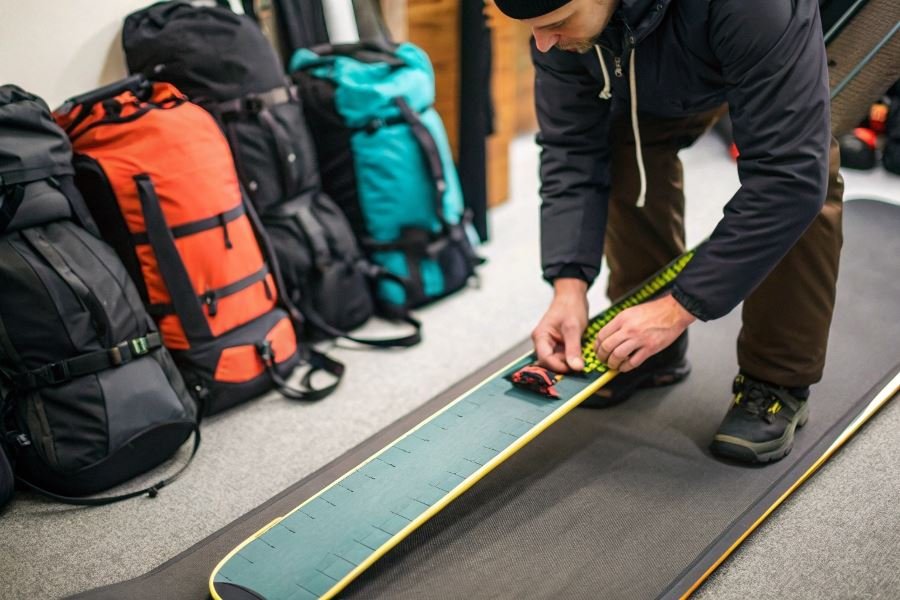
The foundation of finding your perfect bag begins with accurate measurements. Grab a tape measure and lay your ski or snowboard flat on the ground. For skis, measure from tip to tail along the base of the ski. The true length matters here—not the “recommended height” that might have guided your purchase.
Pro tip: Always measure each ski individually! Pairs can sometimes vary by a few millimeters, and you’ll want to accommodate the longer of the two.
For snowboards, measure from nose to tail along the base. Remember that the stated size (in centimeters) on your board might be rounded, so a physical measurement provides greater accuracy.
Never rely on memory or manufacturer specs alone—actual measurements prevent costly sizing mistakes.
The Binding Factor
Your bindings create a crucial dimension that many enthusiasts overlook when selecting storage solutions. Standard ski bags are designed with a width of approximately 15-20 cm (6-8 inches), but modern bindings—especially freestyle or alpine touring setups—can extend beyond these parameters.
To account for bindings:
- Measure the width at the widest point where bindings are mounted
- Add 2-3 cm (about an inch) of clearance on each side
- For snowboards, measure with bindings attached and at their widest stance
| Equipment Type | Base Measurement | With Bindings | Recommended Bag Width |
|---|---|---|---|
| Alpine Skis | 7-8 cm | 12-15 cm | 18-20 cm |
| Powder Skis | 10-12 cm | 15-18 cm | 20-23 cm |
| Snowboard | 25-27 cm | 25-27 cm | 30-33 cm |
When shopping for bags from manufacturers like Burton or Dakine, always check their specific sizing charts as dimensions can vary between brands.
Calculating Cushion and Extra Space
The final measurement consideration involves padding and additional space for accessories. The golden rule: your bag should be 10-15 cm (4-6 inches) longer than your longest piece of equipment.
This extra space serves multiple purposes:
Protection buffer: Creates shock absorption zones at the vulnerable tips and tails
Accessory storage: Accommodates tools, wax kits, or smaller items
Future-proofing: Allows for equipment upgrades without needing a new bag
For weekend warriors, a single bag with 5-10 cm of extra length works perfectly. For serious athletes traveling with multiple sets, consider a bag with 15+ cm of additional length to accommodate varying equipment sizes.
Remember that insufficient padding at the tips and tails is the leading cause of equipment damage during travel.
The padding thickness also matters—look for at least 1.5 cm (0.6 inches) of dense foam throughout, with reinforced sections at the tips and tails. Premium bags from Thule or Sportube often feature adjustable internal straps that secure your gear and prevent shifting during transport.
By taking these essential measurements and understanding your specific equipment profile, you’ll select a bag that provides perfect protection for your winter investment, ensuring many more seasons of powder days ahead.
Sealing the Deal: Your Perfect Ski and Snowboard Bag Size
Finding that sweet spot in ski and snowboard bag sizing isn’t just about fitting your gear—it’s about transforming your entire winter sports experience. After measuring your equipment and understanding the different bag types, it’s time to make that final call on which size will serve you best for seasons to come.
Travel frequency drives size decisions
Your travel habits should be the compass guiding your bag size selection. Weekend warriors hitting nearby slopes might find a streamlined single ski bag perfectly adequate, while destination skiers booking those bucket-list trips to Aspen or Whistler need more substantial protection.
For frequent flyers, airline compatibility becomes non-negotiable. Most major carriers accommodate bags up to 80″ in length before oversize fees kick in, though policies vary. Delta and American typically allow ski/snowboard equipment as standard checked baggage, while budget carriers may charge regardless of size.
Road-trippers enjoy more flexibility but should consider vehicle constraints:
- Compact cars: Opt for bags under 175cm with minimal padding
- SUVs/trucks: Can accommodate fuller 190-215cm bags with extra padding
- Roof racks: Consider weatherproof materials for external transport
The difference between a comfortable journey and a logistical nightmare often comes down to just 10-15cm of bag length.
Storage capacity beyond the basics
The most overlooked aspect of bag sizing? Additional gear capacity. A properly sized bag should accommodate more than just your board or skis.
| Gear Type | Extra Space Needed |
|---|---|
| Boots | +15-20% bag volume |
| Helmet | +10% bag volume |
| Outerwear | +15-25% bag volume |
| Tools/Wax Kit | +5-10% bag volume |
The math is clear: a bag that’s just big enough for your skis or board is actually too small for real-world use. Look for models with expandable compartments that can adapt to varying load requirements throughout the season.
Many enthusiasts find the sweet spot in bags that offer:
- Dedicated boot compartments (preventing edge damage)
- Separate pockets for smaller accessories
- Compression straps to minimize bulk when traveling lighter
Must-have features in properly sized bags
Beyond basic dimensions, three critical features separate exceptional bags from merely adequate ones:
Strategic padding placement tops the list. Quality bags from manufacturers like Burton and Dakine feature reinforced padding at the tips, tails, and bindings—precisely where damage most commonly occurs. This targeted protection adds minimal bulk while maximizing defense.
Intelligent weight distribution comes second. Look for bags with wheels positioned to balance your load, particularly important when navigating airports or train stations. The best designs place wheels at 60-70% of the bag’s length from the pull handle, creating natural balance even when fully loaded.
Material durability matched to use case rounds out the essentials. Weekend warriors can opt for 600D polyester, while serious travelers should invest in 1000D or higher with reinforced bases. The extra weight is negligible compared to the extended lifespan and superior protection.
Remember that the perfect bag size creates a performance ecosystem around your winter adventures—one where transportation becomes seamless rather than stressful, allowing you to focus on what really matters: conquering those slopes with confidence.