
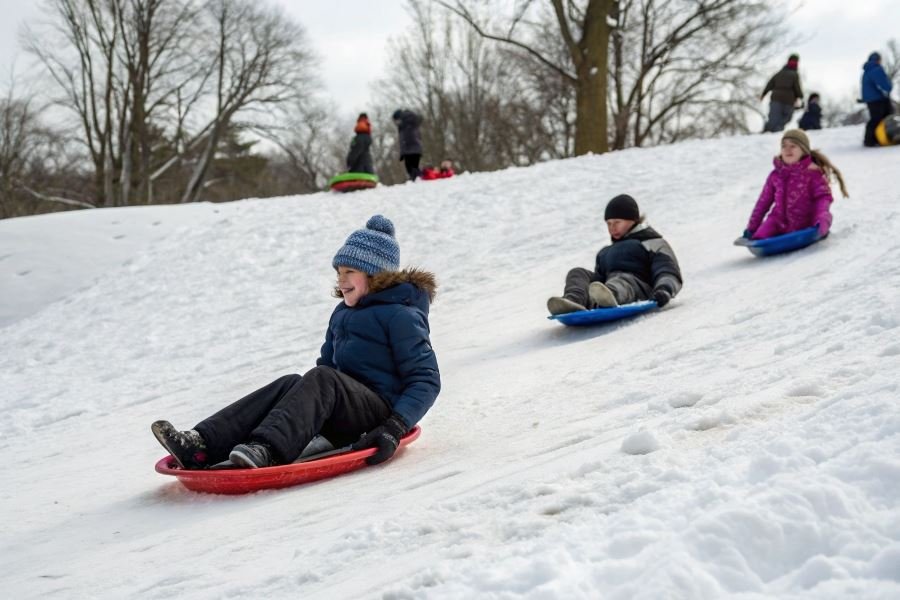
Ever watched a child’s face light up at the sight of fresh snow on a hillside? That magical winter moment deserves the perfect sledding companion. But should you grab a disc or a traditional sled? This choice impacts more than just the ride—it shapes the entire winter experience.
Traditional sleds and sledding discs might seem interchangeable at first glance, but they offer distinctly different experiences on the snow. Traditional sleds typically provide more stability and control with their runners and steering mechanisms, while discs deliver that wild, spinning thrill that has children squealing with delight as they careen downhill.
The difference matters significantly for three key reasons. First, safety considerations vary dramatically between these options—sleds generally offer more predictable paths while discs introduce an element of randomness that requires different awareness. Second, the enjoyment factor depends on your child’s personality: do they crave the secure feeling of a guided descent or the free-spirited adventure of a spinning ride? Finally, each option develops different physical skills—traditional sleds teach steering and weight distribution, while discs build core strength and balance reflexes.
When making your selection, consider your child’s age, the sledding terrain available to you, and their comfort with winter sports. The steepness of your local hills, the typical snow conditions, and even storage space at home all play important roles in determining which option will create those perfect winter memories.
Sledding Showdown: Discs vs Sleds for Your Child
When winter blankets the neighborhood in snow, the age-old question emerges for parents everywhere: which sliding contraption will bring the most joy to your child’s snow day adventures? The debate between sledding discs and traditional sleds isn’t just about preference—it’s about matching the right equipment to your child’s age, size, and sledding environment. Let’s dive into what makes each option shine in different scenarios.
Parents often find themselves weighing the pros and cons of sledding discs versus sledding sleds when choosing what to purchase for their child’s winter recreation. Both options offer distinct advantages that can significantly impact the sledding experience, from maneuverability to storage convenience.
Age and Size Matter
For the little ones (ages 3-6):
Sledding discs typically offer better stability for smaller children who are just beginning their sledding journey. Their low center of gravity means less tipping and a gentler learning curve for tiny adventurers.
Traditional sleds, particularly those with steering mechanisms, might be challenging for preschoolers to control independently. However, models with high backs provide crucial support for youngsters still developing core strength.
For growing sledders (ages 7-12):
As children grow, their preferences and capabilities evolve. Discs appeal to this age group because they:
- Offer 360-degree spinning thrills
- Require minimal skill to operate
- Accommodate growing bodies comfortably
Traditional sleds shine for this demographic when:
- Multiple children want to ride together
- Longer, more controlled runs are desired
- Speed is the priority (less surface friction)
For teens (13+):
Teens typically gravitate toward more specialized equipment based on their interests. High-performance sleds with steering capabilities appeal to speed demons, while discs remain popular for trick-oriented sledders.
Terrain Compatibility
The battlefield matters as much as the weapon when it comes to winter fun. Your local sledding environment should heavily influence your purchase decision.
| Terrain Type | Disc Performance | Sled Performance |
|---|---|---|
| Steep hills | Good (with caution) | Excellent (with steering) |
| Gentle slopes | Excellent | Good |
| Packed snow | Good | Excellent |
| Powdery snow | Excellent | Fair |
| Bumpy surfaces | Excellent (absorbs impacts) | Fair (can bottom out) |
Discs truly outshine sleds on varied terrain with unexpected bumps and dips. Their flexible construction absorbs impacts that might send a rigid sled airborne. For powdery conditions where traditional runners might sink, discs float effortlessly on the surface.
Conversely, sleds dominate on well-groomed, packed snow paths where their runners can achieve maximum velocity. The directional stability of sleds makes them ideal for longer runs where maintaining a straight course is preferable.
Practical Considerations
Durability:
Quality sleds from manufacturers like L.L.Bean can last generations when properly maintained. Their wooden or high-density plastic construction withstands years of use.
Discs typically have shorter lifespans (2-3 seasons of heavy use) but come with significantly lower price points—usually $15-30 compared to $50-150 for quality sleds.
Storage and Transportation:
Here’s where discs claim undisputed victory. Their compact, stackable design makes off-season storage a non-issue. Most discs easily fit in closets or garage rafters.
Traditional sleds demand dedicated storage space and can be awkward to transport, especially in smaller vehicles. However, this inconvenience might be worthwhile for families committed to regular sledding outings.
The perfect choice ultimately depends on your specific circumstances—your child’s age, your local terrain, storage limitations, and how frequently you’ll hit the slopes. Many sledding enthusiasts eventually invest in both options to maximize winter fun across all conditions.
Making the Right Call: Sledding Discs vs Sleds for Your Child
When winter blankets the neighborhood in snow, choosing the perfect sledding gear for your child becomes a mission-critical decision. Let’s dive into the nitty-gritty of sledding discs versus traditional sleds to help you make the perfect choice for your young snow enthusiast.
Perfect picks for beginners and little riders
For the smallest snow adventurers (ages 3-6), sledding discs often win the day. These lightweight, circular champions offer several advantages:
- Simplified control system that even tiny hands can master
- Lower center of gravity reducing tip-over risk
- Weighing just 1-3 pounds, making them easy for children to carry independently
Traditional sleds, meanwhile, shine for slightly older beginners (ages 5-8) who need more stability:
- Defined seating position helps children understand proper sledding posture
- Built-in handles provide security and confidence
- More predictable straight-line travel reduces the learning curve
The best first-time sledding experience comes from matching the gear to your child’s confidence level, not just their age.
Snow condition specialists
Different snow surfaces demand different tools:
| Snow Type | Best Option | Why It Works |
|---|---|---|
| Powdery Fresh | Traditional Sled | Better flotation, less sinking |
| Packed/Icy | Disc | Superior maneuverability on slick surfaces |
| Wet Heavy Snow | Traditional Sled | Cuts through dense snow more effectively |
| Mixed Conditions | Disc | Adaptability across varying terrain |
Location matters too. For groomed sledding hills with designated lanes, traditional sleds from brands like L.L.Bean excel with their predictable tracking. For backyard adventures with trees and obstacles, the quick-turning capability of discs from Lucky Bums provides the agility needed to navigate tight spaces.
Growing with your snow athlete
When considering long-term value, factor in these growth considerations:
Traditional Sleds:
- Accommodate growing bodies for typically 4-5 seasons
- More durable construction withstands years of use
- Can support multiple riders as children grow and want to sled with friends
Sledding Discs:
- Skill ceiling is higher with trick potential emerging as coordination improves
- Remain relevant longer as children develop interest in more dynamic sledding
- Typically last 2-3 seasons before being outgrown physically
The investment perspective tilts toward traditional sleds for families with multiple children, as these can be handed down with minimal wear. However, discs from quality manufacturers like Flexible Flyer often maintain their appeal even as children grow, transitioning from beginner tool to trick platform.
The verdict across scenarios
For most families, the winning strategy isn’t choosing one over the other—it’s strategic deployment:
- Toddlers and cautious beginners: Start with a disc for confidence-building
- Elementary-aged speed demons: Graduate to a traditional sled for faster, more controlled runs
- Multi-child households: Invest in one of each to accommodate different preferences and skill levels
Remember that the ultimate goal is joyful winter memories. The best sledding gear is whatever gets your child excited to bundle up and hit the slopes again and again!