
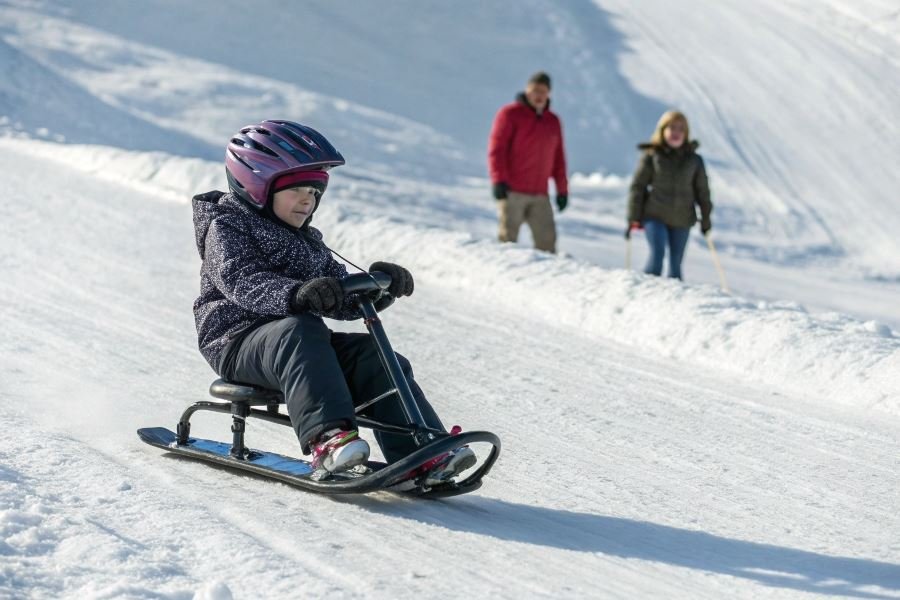
Ever watched a child effortlessly glide across fresh powder with a massive grin plastered across their face? That’s the magic of snow scooters – winter’s most underrated thrill machines that combine the excitement of sledding with the control of skiing.
Snow scooters stand apart in the winter recreation landscape as unique hybrids. Unlike traditional sleds that simply respond to gravity, these nimble devices feature a steering mechanism and a platform for standing, giving kids active control over their winter adventures. They differ from snowboards by requiring less technical skill and from skis by offering a more intuitive learning curve – making them perfect entry points to winter sports.
The developmental benefits are nothing short of impressive. When children navigate snow scooters, they’re not just having fun – they’re building core strength, enhancing balance, developing coordination, and improving spatial awareness. These physical benefits come wrapped in an activity that gets kids outdoors during months when screen time typically skyrockets.
“The right snow scooter can transform winter from a season of hibernation to a playground of possibilities.”
When selecting the perfect snow scooter for your young adventurer, three factors reign supreme:
- Age-appropriate sizing – ensuring the handlebar height and platform width match your child’s proportions
- Weight capacity – confirming the scooter can safely support your child through multiple seasons
- Terrain compatibility – matching the runner design to your typical snow conditions
The construction material also matters significantly – lightweight aluminum frames offer durability without sacrificing maneuverability, while reinforced plastic models provide budget-friendly options for beginners still testing their interest in the sport.
Remember, the best snow scooter isn’t necessarily the most expensive one – it’s the one that perfectly balances safety, durability, and the pure joy of winter exploration.
Essential Features for the Perfect Child’s Snow Scooter
When winter blankets your neighborhood in fresh powder, nothing beats the pure joy of watching kids zoom down snowy hills. Selecting the right snow scooter for your child combines practical considerations with the promise of winter adventures they’ll remember forever. The process of how to choose a snow scooter for a child requires attention to several critical factors that ensure both safety and maximum fun.
Finding the Right Size and Weight Capacity
The perfect snow scooter must match your child’s physical dimensions and development stage. Too large, and they’ll struggle with control; too small, and they’ll outgrow it before the season ends.
| Age Group | Recommended Scooter Height | Weight Capacity | Handle Height |
|---|---|---|---|
| 3-5 years | 15-20 inches | 44-66 lbs | 20-24 inches |
| 6-9 years | 20-24 inches | 66-88 lbs | 24-28 inches |
| 10-13 years | 24-28 inches | 88-132 lbs | 28-32 inches |
Adjustable features provide significant advantages, particularly with handlebar height. Many premium models from Stiga and Lucky Bums offer telescoping handlebars that grow with your child, extending the scooter’s usable lifespan through multiple winter seasons.
The scooter’s deck width matters tremendously for stability. Younger riders benefit from wider platforms (6-8 inches), while more experienced kids can handle narrower decks that offer improved maneuverability for carving through snow.
Construction Materials That Stand Up to Winter
The materials used in snow scooters dramatically impact performance, durability, and ultimately, value.
High-density polyethylene (HDPE) has become the gold standard for runners and decks, offering superior cold-weather performance without becoming brittle in sub-zero temperatures. Premium models feature reinforced nylon composites that maintain flexibility while resisting impacts from hidden obstacles beneath the snow.
For frames and handlebars, look for:
- Aluminum alloy – Lightweight yet strong, resists corrosion from snow and salt
- Powder-coated steel – Heavier but extremely durable with proper coating
- Carbon fiber components – Found in high-end models, offering exceptional strength-to-weight ratio
The connection points between components deserve special scrutiny. Quality models use stainless steel hardware and nylon bushings at pivot points to prevent freezing and ensure smooth steering even after multiple seasons of use.
Safety Features That Provide Peace of Mind
When it comes to children’s snow sports, safety features aren’t optional extras—they’re essential requirements.
Anti-slip foot grips prevent dangerous slips during active riding. The best designs incorporate raised patterns or textured rubber that maintains grip even when covered with snow. Models from Airhead feature innovative chevron patterns that channel snow away from foot placement areas.
The difference between mediocre and excellent snow scooters often comes down to braking systems. Look for models with intuitive braking mechanisms that even younger children can master quickly.
Steering limiters prevent over-steering accidents by restricting turning radius for beginners. Many models allow parents to adjust or remove these limiters as children gain experience and confidence.
Visibility features become crucial during limited daylight winter hours. Reflective strips on the sides and front of the scooter ensure your child remains visible to others. Some advanced models even incorporate LED lighting systems powered by motion-generated electricity—no batteries required.
The handlebar grip material should provide insulation against cold while maintaining tactile control. Foam grips tend to absorb moisture and deteriorate quickly, while dual-density rubber compounds offer superior longevity and comfort.
Sealing the Deal: Your Child’s Perfect Snow Scooter
Finding that sweet spot between what your child wants and what makes sense for their safety isn’t just possible—it’s essential. After exploring all the options, it’s time to make that final call on which snow scooter will bring the most joy (and fewest headaches) this winter season.
Quality meets safety without breaking the bank
The perfect snow scooter exists at the intersection of three crucial factors: quality construction, safety features, and reasonable pricing. While premium models from brands like Snowfox might offer aircraft-grade aluminum frames and enhanced steering systems, mid-range options often provide 90% of the benefits at 70% of the cost.
The wisest investment isn’t always the most expensive one—it’s the one that matches your child’s specific needs while offering room to grow.
Consider these balanced approaches:
- Allocate more budget toward models with replaceable parts rather than disposable designs
- Prioritize safety features like non-slip footboards and responsive braking over cosmetic elements
- Look for adjustable handlebars that accommodate growth spurts, extending usability across multiple seasons
Remember that the most expensive scooter isn’t necessarily the safest. Many mid-range models ($75-150) offer excellent safety profiles while remaining durable enough to handle typical childhood adventures.
Age-appropriate champions for every young rider
For Ages 3-5: Micro Mini Snow Scooter
This lightweight marvel weighs just 4.2 pounds with a 150-pound weight capacity, making it perfect for beginners. The three-wheel design provides exceptional stability while the low deck height prevents dangerous falls. Its simple steering mechanism teaches fundamental balance skills without overwhelming new riders.
For Ages 6-9: Snowtiger Freestyle
Bridging the gap between beginner and intermediate, this model features a reinforced deck, adjustable handlebars (28″-34″), and a responsive brake system. The slightly narrower ski width encourages skill development while maintaining necessary stability. The 5.8-pound frame strikes the perfect balance between maneuverability and durability.
For Ages 10-13: Avalanche Pro
When skills advance, this performance-oriented model delivers with its aircraft-grade aluminum construction, precision steering system, and terrain-adaptive ski design. The 6.5-pound weight supports tricks and jumps while the reinforced handlebars (adjustable 32″-38″) accommodate growth spurts and evolving riding styles.
Extending the adventure through proper maintenance
Your child’s snow scooter can deliver multiple seasons of joy with these essential maintenance practices:
- Post-ride routine: Wipe down the frame and skis after each use, removing snow, salt, and debris that can cause corrosion
- Storage smarts: Store in a dry, temperature-controlled environment with handlebars properly tightened
- Pre-season inspection: Check all bolts, steering components, and brake systems before the first ride each season
| Maintenance Task | Frequency | Tools Needed |
|---|---|---|
| Ski waxing | Every 8-10 uses | Ski wax, cloth |
| Hardware tightening | Monthly | Allen wrench set |
| Brake adjustment | Seasonally | Screwdriver, pliers |
| Frame inspection | Bi-monthly | Visual check |
Teach your child basic maintenance responsibility—it not only extends the scooter’s life but instills valuable ownership principles. Simple tasks like wiping down the frame or checking for loose parts can become part of their post-ride routine.
With the right balance of features, age-appropriate design, and consistent maintenance, your child’s snow scooter will deliver countless hours of winter excitement while building confidence and outdoor appreciation that lasts a lifetime.