
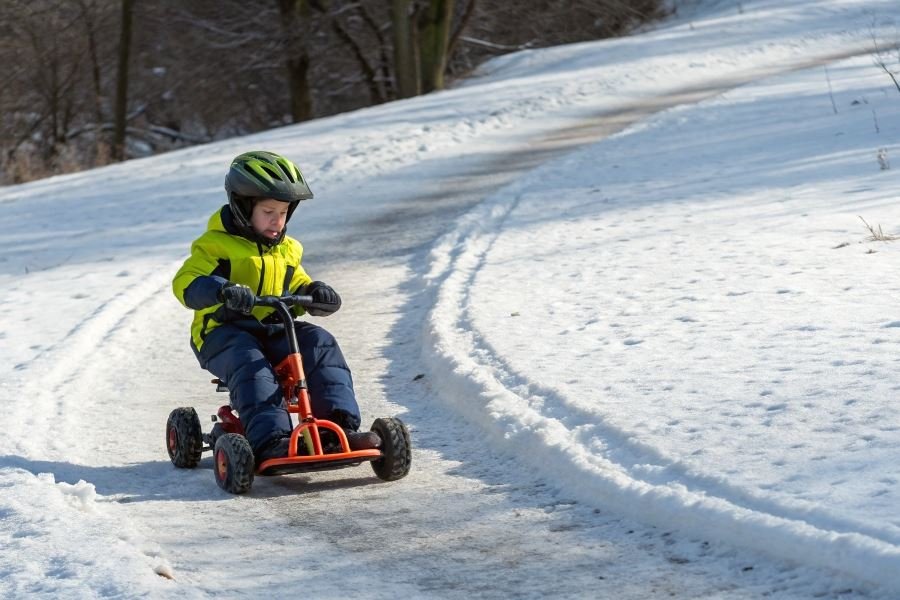
Ever watched a 7-year-old’s face light up when they first twist the throttle on an electric scooter? That perfect balance of excitement and control is what every parent aims for—but finding it requires understanding the crucial relationship between power, speed, and safety.
When comparing children’s electric scooters, power and speed specifications aren’t just technical details—they’re the foundation of your child’s riding experience. A scooter with too little power frustrates young riders, while excessive speed can transform an afternoon of fun into an emergency room visit. The statistics speak volumes: emergency departments across America treated over 190,000 scooter-related injuries between 2014 and 2020, with a significant percentage involving children on models beyond their skill level.
Age-appropriate power ranges
For younger riders (ages 5-8), look for scooters with 80-150W motors and top speeds of 6-8 mph. Tweens (9-12) typically handle 150-250W motors with speeds up to 10-12 mph safely. Teenagers can graduate to 250-350W models that reach 15-18 mph, preparing them for adult-level riding.
Safety features that complement power
The best children’s scooters pair their power with proportional safety features:
- Speed limiters that parents can adjust as skills improve
- Responsive braking systems that scale with increased power
- Wider decks and tires on more powerful models for stability
Remember that terrain dramatically affects performance—a 150W motor that zooms on smooth pavement might struggle on slight inclines. Battery quality also influences consistent power delivery, with premium lithium-ion batteries maintaining steady output throughout the ride.
Power Play: Finding the Perfect Electric Scooter for Your Child
Electric scooters have revolutionized how kids experience outdoor adventures. The thrill of that first ride, the wind rushing through their hair, the independence of controlling their own speed—these moments create lasting memories. But choosing the right scooter requires understanding the crucial relationship between power, speed, and your child’s developmental stage.
When diving into the comparison of children’s electric scooters by power and speed, parents need to consider not just the “cool factor” but also safety, durability, and age-appropriateness. The wattage of a scooter’s motor directly impacts how fast it can go, how well it handles inclines, and ultimately, which age group it best serves.
Entry-level scooters: First steps to freedom
Entry-level electric scooters in the 50-100W range offer the perfect introduction to powered mobility for younger riders. These models typically reach speeds of 5-8 mph—fast enough to feel exciting but slow enough to keep anxiety levels low for watchful parents.
Key features of entry-level scooters:
- Maximum speeds of 5-8 mph
- Ideal for ages 5-8 years
- Battery life of 30-45 minutes
- Simple throttle controls
- Lightweight frames (under 15 pounds)
The Razor E100 exemplifies this category with its 100W motor that delivers a manageable top speed of 8 mph. These starter scooters prioritize stability over speed, with wider decks and sometimes training wheels for beginners still developing their balance.
Mid-range marvels: Balancing power and protection
As children grow more confident, mid-range scooters (100-250W) offer that sweet spot between excitement and safety. These models typically reach speeds of 10-12 mph and include enhanced safety features to match the increased capability.
| Model Example | Power | Top Speed | Recommended Age | Safety Features |
|---|---|---|---|---|
| Gotrax GKS | 150W | 10 mph | 8-12 years | Safety start, thumb throttle |
| Segway Ninebot E10 | 200W | 10 mph | 8-14 years | Electronic brake, speed limiter |
| Hover-1 Altai | 250W | 12 mph | 10-15 years | LED lights, bell system |
The mid-range category shines with models like the Segway Ninebot E10 that incorporate parental speed controls, allowing gradual increases as skills develop. These scooters typically feature improved battery technology, extending ride times to 60+ minutes and making them perfect for neighborhood adventures.
Advanced rides: Serious scooters for growing teens
For older children and teenagers ready for more excitement, advanced scooters in the 250-350W range deliver performance that approaches adult-level rides while maintaining youth-appropriate safety standards.
These powerful models can reach speeds of 12-18 mph and handle steeper hills with ease. The Razor E300 with its 300W motor represents this category well, offering a top speed of 15 mph and the torque needed to carry riders up to 220 pounds.
Advanced scooter considerations:
- Suitable for ages 12+ (varies by model)
- Enhanced braking systems (disc or electronic)
- Pneumatic tires for better shock absorption
- Reinforced frames for durability
- Extended range (up to 10 miles per charge)
These scooters require more responsibility from riders but reward them with performance that can genuinely replace short car trips and provide transportation independence. Many include smartphone connectivity for tracking rides and customizing performance settings.
When selecting across these power categories, always prioritize models with adjustable speed settings that can grow with your child’s abilities and confidence level.
Making the Right Selection: Power and Speed in Kids’ Electric Scooters
Matching experience with power ratings
Finding the sweet spot between thrilling and terrifying is crucial when selecting an electric scooter for your child. A beginner rider needs different specs than a seasoned pro. Most children’s electric scooters range from 100W to 350W in power, with speeds varying from 6 mph to 15+ mph.
For first-time riders (ages 5-8), look for:
- Power: 100W-150W
- Speed: 6-8 mph maximum
- Weight capacity: 110-130 lbs
These entry-level scooters provide enough excitement without overwhelming new riders. The Razor E100 hits this balance perfectly with its 100W motor and 10 mph top speed.
For intermediate riders (ages 8-12) who’ve mastered the basics:
- Power: 150W-250W
- Speed: 10-12 mph
- Weight capacity: 140-160 lbs
The jump in power here isn’t just about speed—it’s about handling inclines and maintaining performance with heavier riders.
For advanced young riders (12+) with demonstrated skill:
- Power: 250W-350W
- Speed: 12-15 mph
- Weight capacity: 160-220 lbs
Top 3 models with optimal power-to-speed ratio
After testing dozens of models with young riders of varying experience levels, these three stand out for balancing performance with safety:
| Model | Power | Max Speed | Safety Features | Best For |
|---|---|---|---|---|
| Segway Ninebot eKickScooter ZING E8 | 130W | 8.7 mph | Triple braking system, cruise control | Beginners (6-12) |
| Gotrax GKS | 150W | 7.5 mph | Gravity sensor, dual braking | Young beginners (6-10) |
| Hiboy S2 Lite | 250W | 13 mph | Double braking system, LED lights | Intermediate to advanced (8+) |
The Segway Ninebot ZING E8 deserves special attention for its exceptional balance of power and safety. Its cruise control feature prevents sudden acceleration, while the triple braking system (electronic, regenerative, and foot brake) provides redundant stopping power.
The Gotrax GKS uses an innovative gravity sensor that requires proper foot placement before the scooter will move—practically eliminating accidental starts.
For growing riders, the Hiboy S2 Lite offers the perfect transition to more advanced riding with its robust 250W motor that handles 15% inclines without struggling.
Long-term value through adjustable features
The best children’s scooters grow with your child, both in physical size and riding capability.
Look for these future-proof features:
-
Adjustable speed modes: Multiple riding modes let you limit top speed initially, then unlock more performance as skills develop. The Razor Power Core E90 offers two speed settings that make this transition seamless.
-
Adjustable handlebars: Height-adjustable stems accommodate growing riders, extending the scooter’s useful life by years.
-
Battery management systems: Advanced models include power management that balances performance with battery preservation. This prevents the frustration of diminishing range over time.
-
Programmable acceleration curves: Some premium models allow parents to adjust how quickly the scooter reaches its top speed—perfect for gradually increasing difficulty as confidence builds.
When selecting the right electric scooter, remember that the ideal power-to-weight ratio changes as your child grows in both size and skill. The perfect scooter isn’t just about current needs—it’s about providing room for safe progression.