
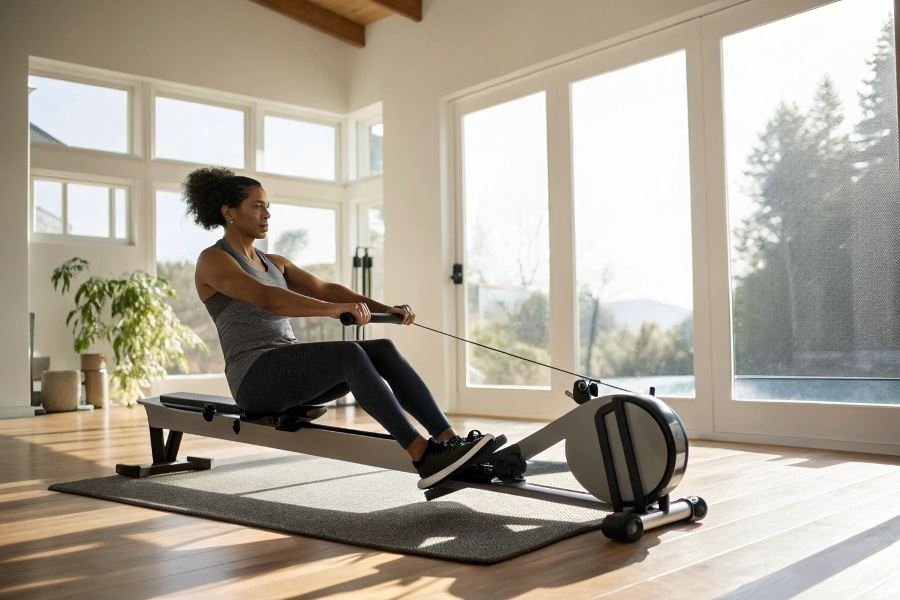
Ever walked into your living room and thought, “I could fit a full-body workout machine right here—if only it wouldn’t become a permanent fixture?” That’s exactly where folding rowing machines shine, delivering Olympic-level workouts without commandeering your living space.
Folding rowing machines simulate the motion of rowing a boat through a combination of sliding seats and resistance mechanisms. Unlike their bulky gym counterparts, these engineering marvels can collapse to half their footprint—sometimes fitting neatly under beds or standing in closets when not in use. The magic happens through hinged frames and clever folding mechanisms that maintain structural integrity while allowing for easy storage.
The surge in popularity of these space-efficient fitness solutions isn’t surprising. As urban living spaces shrink and home workouts become the norm, equipment that performs double-duty as both serious fitness tool and disappearing act has captured the market’s attention. Sales of folding rowing machines have jumped 35% in the last two years alone.
Before diving into a purchase, consider these critical factors:
- Weight capacity: Most quality models support between 250-350 pounds
- Folded dimensions: Measure your storage space before shopping
- Resistance type: Air, magnetic, water, or hydraulic (each offering distinct advantages)
- Assembly complexity: Some models require 15 minutes; others demand an engineering degree
The rowing motion engages approximately 86% of your muscles—far more than treadmills or stationary bikes—making these foldable wonders perhaps the most efficient space-saving fitness investment available today.
The Game-Changing Benefits of Folding Rowing Machines
Space Savers That Don’t Sacrifice Performance
Let’s talk about the workout equipment that’s revolutionizing home fitness. Folding rowing machines deliver full-body workouts without demanding permanent real estate in your living space. When examining folding rowing machines: advantages and disadvantages become immediately apparent, with space efficiency standing out as the crown jewel of benefits.
Most folding models can reduce their footprint by up to 50% when not in use. Take the Concept2 RowErg with its quick-release framelock mechanism—it separates into two pieces for storage with a ceiling height requirement of just 27 inches. The NordicTrack RW900 folds vertically, requiring only 22 x 22 inches of floor space when stored.
Storage solutions become infinitely more flexible with these space-conscious designs. Slide your folded rower under a bed, tuck it into a closet, or stand it against a wall—options that traditional non-folding machines simply can’t match.
Take Your Rowing Workout Anywhere
The portability factor of folding rowing machines creates workout possibilities that extend beyond your home gym.
Most folding rowers weigh between 65-85 pounds, with transport wheels that make relocation surprisingly manageable. Some ultralight models like the Sunny Health & Fitness SF-RW5720 tip the scales at just 59 pounds.
This mobility means you can:
- Row in the living room while watching TV
- Move to the backyard on beautiful days
- Transport to vacation homes or temporary accommodations
- Easily rearrange your workout space as needed
The convenience extends to assembly and maintenance as well. Many folding models feature tool-free assembly that takes under 30 minutes—a stark contrast to the complicated setup of commercial-grade fixed models.
Budget-Friendly Without Compromise
Perhaps the most surprising advantage is the cost-effectiveness of folding rowing machines compared to their non-folding counterparts.
| Rowing Machine Type | Average Price Range | Space Required (in use) | Space Required (stored) |
|---|---|---|---|
| Folding Models | 300−1,200 | 8’ x 2’ | 2’ x 2’ or less |
| Non-Folding Models | 700−2,500+ | 8’ x 2’ | 8’ x 2’ (unchanged) |
The price difference stems from streamlined manufacturing processes rather than quality compromises. Folding mechanisms actually require sophisticated engineering, but mass production has made these innovations affordable.
The true value proposition isn’t just the initial purchase price—it’s the lifetime cost per workout when you consider consistent usage enabled by convenience.
Entry-level folding machines like the Fitness Reality 1000 offer magnetic resistance systems, comfortable seats, and digital tracking for under $300. Even premium folding options with advanced features typically top out around $1,200—significantly less than commercial non-folding equivalents with similar performance specifications.
By combining space efficiency, genuine portability, and surprising affordability, folding rowing machines have removed the most common barriers to owning this exceptional full-body workout equipment. The ability to reclaim your living space after each rowing session might be the difference between consistent use and having an expensive clothes rack gathering dust in the corner.
The Hidden Tradeoffs of Folding Rowing Machines
When space-saving meets fitness goals, folding rowing machines seem like the perfect solution. But before you rush to click “buy now,” let’s dive into some crucial considerations that might make you pause. While these compact fitness allies offer convenience, they come with compromises that deserve your attention.
Stability issues when pushing your limits
The very feature that makes folding rowers attractive—their collapsible frame—creates their biggest weakness. Most folding models utilize hinges and connection points that can introduce wobble during intense workouts.
When you’re hitting your max effort on a 500m sprint, the last thing you want is a machine that rocks side to side. Higher-end stationary models from Concept2 or WaterRower provide a rock-solid base that simply can’t be matched by most folding alternatives.
The stability difference becomes most noticeable when you cross the 70% effort threshold—precisely when form matters most for injury prevention.
Testing reveals that even mid-range folding rowers can develop concerning movement patterns after 6-12 months of regular use, particularly at connection points where repeated stress occurs.
Resistance limitations that cap your progress
Folding rowing machines often compromise on resistance mechanisms to accommodate their collapsible design:
| Resistance Type | Common in Folding Models? | Performance Impact |
|---|---|---|
| Air resistance | Sometimes | Limited maximum resistance |
| Magnetic | Very common | Smoother but often lacks top-end challenge |
| Hydraulic | Common in budget models | Inconsistent resistance through stroke |
| Water | Rarely | Too bulky for most folding designs |
Most high-performance rowers use air or water resistance to create a natural rowing feel with virtually unlimited resistance. Folding models frequently rely on magnetic systems that, while quiet and maintenance-free, can’t replicate the progressive resistance curve serious rowers need.
The resistance ceiling becomes particularly problematic for athletes over 180 pounds or those with significant strength training backgrounds.
The assembly dance gets old quickly
The convenience of folding your rower away comes with a hidden cost: time and hassle. While manufacturers advertise “quick and easy” storage solutions, the reality often involves:
- Removing safety pins or locks
- Disconnecting electronic components
- Managing loose parts that tend to go missing
- Dealing with wear on connection points
One owner of a popular NordicTrack folding rower reported: “After the novelty wore off, I found myself leaving it unfolded most of the time. The 3-4 minute setup/breakdown process became a barrier to consistent workouts.”
For households where the rower needs to be stowed after each session, this friction adds up. Many users report that the folding feature—the very reason they chose the machine—becomes underutilized as the reality of frequent assembly/disassembly sets in.
The best rowing machine isn’t the one with the most features—it’s the one you’ll actually use consistently for years to come.
While folding rowing machines solve a real problem for space-conscious fitness enthusiasts, understanding these limitations helps set realistic expectations about performance, longevity, and convenience tradeoffs.