
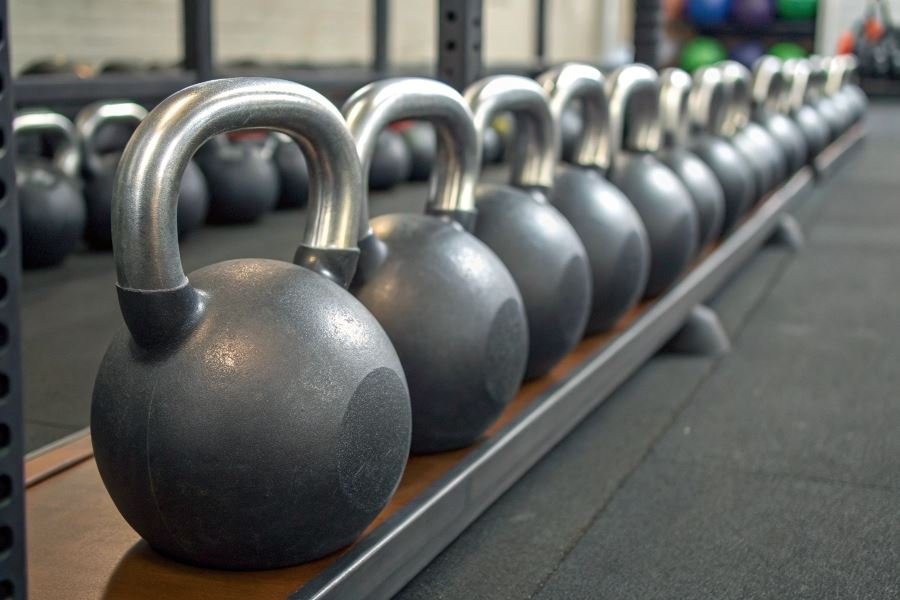
Ever wondered why Olympic weightlifters and CrossFit champions are increasingly turning to those cannonball-shaped weights with handles? The competitive kettlebell scene has exploded from obscure Russian military training to global sport phenomenon—and choosing the right equipment can make or break your performance.
When Pavel Tsatsouline introduced kettlebells to the American fitness landscape in the late 1990s, few could have predicted how these cast-iron implements would transform from simple strength tools into precision-engineered competitive equipment. Today’s competitive kettlebells bear only a family resemblance to their traditional ancestors, with standardized dimensions, weight-specific colors, and competition-grade materials that optimize performance.
From military might to sporting excellence
Traditional kettlebells—those bulky, varying-sized weights you might find in your local gym—served Russian military forces well for centuries. But competitive kettlebells? They’re a different beast entirely. Competition bells maintain identical dimensions regardless of weight, featuring standardized 35mm handles and perfectly uniform shells. This consistency allows athletes to develop technique without adjusting to different bell sizes as weights increase.
Competition vs. traditional: The critical differences
Competition kettlebells feature:
- Uniform dimensions across all weights
- Color-coded for instant weight recognition
- Steel or cast iron construction with minimal seams
- Flat bottoms for stability in resting positions
- Precisely calibrated weights (typically within 0.1-0.2%)
Traditional kettlebells typically offer:
- Increasing dimensions as weight increases
- Variable handle thickness and window size
- Less precise weight calibration
- Lower price points for beginners
Before you invest: Essential considerations
When selecting competition kettlebells, factor in your training goals, competition ruleset (GS, IUKL, or Kettlebell Sport), and technical requirements. Quality competition bells typically range from $80-200 per bell—a significant investment that pays dividends in performance and durability. Your hands, wrists, and technique will thank you for choosing equipment that meets international competition standards.
The Technical Edge in Competition Kettlebells
When you step onto the platform at a kettlebell sport competition, the implement in your hand becomes an extension of your body. The difference between a personal record and a failed attempt often comes down to the technical specifications of your kettlebell. Competitive kettlebells aren’t just heavier versions of what you’d find in a commercial gym—they’re precision instruments designed for maximum performance.
Selecting the right competition kettlebell requires understanding the nuanced features that separate elite equipment from standard training tools. Competitive kettlebells: features of selection include standardized dimensions, specific material compositions, and ergonomic handle designs that collectively determine how the kettlebell performs during high-repetition events like long cycle, snatch, or jerk.
Competition-Certified Dimensions and Weight
Competition kettlebells adhere to strict dimensional standards regardless of weight:
| Specification | Measurement | Purpose |
|---|---|---|
| Diameter | 210mm (±2mm) | Consistent center of mass |
| Height | 280mm (±5mm) | Standardized lever arm |
| Handle width | 35mm (±1mm) | Optimal grip diameter |
| Window height | 118mm | Consistent hand insertion |
Unlike adjustable or vinyl-coated fitness kettlebells, competition bells must weigh exactly as marked, typically with a tolerance of just ±0.1%. This precision ensures fairness in competition, where athletes train specifically for standardized weights ranging from 8kg to 48kg, with color-coding that’s universally recognized across federations.
Material Construction for Peak Performance
The composition of a competition kettlebell directly impacts its durability and feel during technical lifts. Premium competition kettlebells are typically constructed from:
- Cast steel (single-piece construction)
- Machined steel (for precise weight distribution)
- Hollow steel (competition-specific models)
The surface finish matters tremendously. While powder coating remains the gold standard for most competitions, some manufacturers have developed proprietary finishes that resist chalk buildup while maintaining optimal grip security during sweaty competitions.
The density and balance of the metal directly influence how the kettlebell moves through space during ballistic movements, affecting energy transfer and efficiency.
Handle Engineering for Competitive Advantage
Perhaps no feature distinguishes competition kettlebells more than their handles. Unlike fitness kettlebells with textured or variable-width handles, competition handles feature:
- Uniform diameter throughout the entire handle
- Flat machined surfaces on the top and bottom
- Specific handle length proportional to weight class
The handle’s finish must strike a perfect balance—smooth enough to rotate in the hand during technical movements like the snatch, yet providing enough friction to maintain control during fatigue. Many elite competitors from Kettlebell Sport federations develop preferences for specific handle diameters based on hand size and event specialization.
Competition kettlebells with properly designed handles allow for the “hand insertion” technique where the handle rests diagonally across the palm, reducing fatigue during high-repetition sets that can last up to ten minutes in competition.
When selecting your competition kettlebell, remember that the technical specifications aren’t just about meeting standards—they’re about finding the implement that becomes virtually weightless in your hands through perfect ergonomic harmony.
The Elite Athlete’s Guide to Competition Kettlebells
When you’re stepping onto the platform, your kettlebell isn’t just equipment—it’s your partner in the pursuit of excellence. Competition kettlebells differ dramatically from their standard counterparts, with uniform dimensions regardless of weight and precision-engineered balance points that can make or break your performance.
Competition-approved brands that dominate platforms
The kettlebell world has its royalty, and three manufacturers consistently appear at the highest levels of competition:
Kettlebell Kings stands as the gold standard in North America, with their competition kettlebells featuring in numerous championships. Their precision-cast steel bells maintain exact 35mm handle diameters and identical dimensions across all weights—critical for technique consistency when transitioning between weights.
Eleiko brings Swedish engineering excellence to kettlebell sport. Originally weightlifting specialists, their competition kettlebells feature a distinctive hollow core design that maintains perfect dimensional consistency while reducing manufacturing variations to less than 1%.
Rogue Fitness has emerged as a formidable player with their competition kettlebells now approved for use in multiple international federations. Their single-cast construction eliminates weak points, while their matte powder coating provides the ideal balance between grip security and rotation.
The difference between a good kettlebell and a great one isn’t just felt in your hands—it’s measured in your competition results.
Value proposition breakdown
Competition kettlebells represent a significant investment, but understanding the price-to-quality equation reveals their true value:
| Brand | Price Range (16kg) | Warranty | Competition Certifications |
|---|---|---|---|
| Kettlebell Kings | $119-139 | Lifetime | IUKL, IKFF, AKA |
| Eleiko | $149-169 | 3 Years | IWF, IUKL, WKSF |
| Rogue | $89-109 | Limited Lifetime | IUKL, OTSFF |
The premium isn’t just about the brand name—it’s about precision manufacturing. Competition bells require single-cast construction with zero tolerance for balance deviations, as even a 1mm offset can disrupt technique during high-repetition sets.
While standard kettlebells might save you $40-60 per bell initially, serious athletes find competition models deliver superior value through:
- Training transfer – Practice exactly as you’ll compete
- Technique consistency – Same dimensions mean same movement patterns
- Injury prevention – Balanced loading reduces compensatory movements
Longevity through proper care
Competition kettlebells are built to last decades, but proper maintenance maximizes their performance lifespan:
Storage considerations make a significant difference. Keep your competition kettlebells on rubber mats or dedicated racks to prevent floor damage and maintain their finish. Avoid prolonged exposure to humidity, which can affect even powder-coated finishes over time.
Surface maintenance varies by finish type. For powder-coated bells, a simple wipe-down with a damp cloth after use prevents chalk buildup. Steel competition kettlebells benefit from occasional treatment with a silicone-free, dry lubricant on the handle to maintain optimal rotation.
Handle care deserves special attention. Never use wire brushes on competition handles—they can create microscopic grooves that accelerate callus formation. Instead, use a nylon brush to remove chalk residue, preserving the factory-engineered texture that balances grip and rotation.
The investment in a quality competition kettlebell pays dividends through years of consistent performance. While standard kettlebells might show handle wear within 2-3 years of serious use, competition-grade equipment often maintains its performance characteristics for 8-10 years or more—making them not just equipment, but training legacy pieces.