
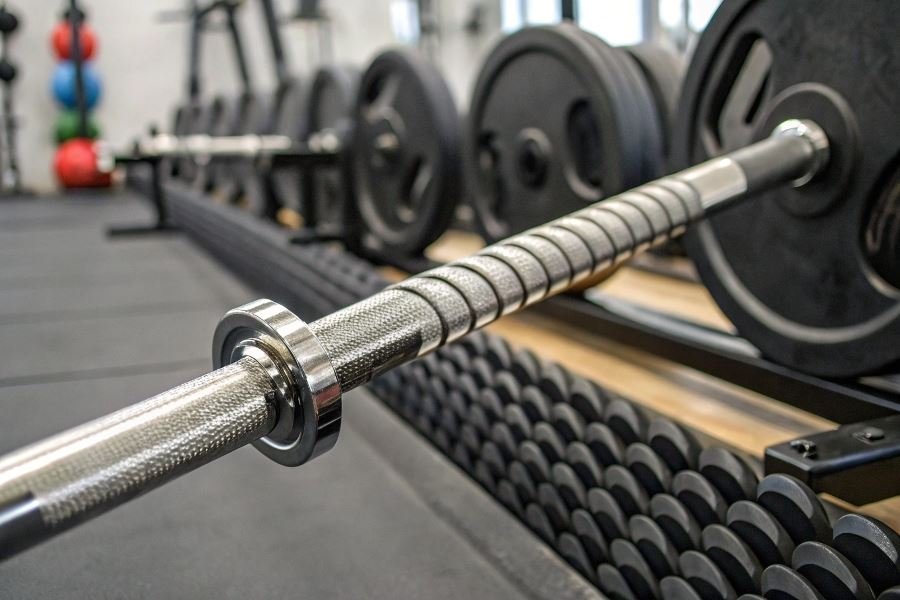
Ever watched a seasoned lifter grab that curved bar instead of the straight one and wondered why? The answer might revolutionize your training.
The weight room has evolved dramatically since the early days of physical culture. While the straight barbell remains the cornerstone of resistance training, specialized bars have emerged as game-changers for serious lifters seeking both performance gains and longevity. These ingeniously designed tools—EZ bars, trap bars, safety squat bars, and others—aren’t just equipment variations; they’re solutions to biomechanical challenges that have plagued lifters for generations.
The evolution of specialized bars
Specialized bars didn’t appear overnight. The EZ curl bar, with its signature zigzag shape, emerged in the 1950s when lifters recognized that straight bars created unnecessary wrist strain during curls and skull crushers. The trap bar (hex bar) followed in the 1980s, designed by powerlifting champion Al Gerard to accommodate a back injury while still allowing heavy pulls.
Beyond different shapes: Biomechanical advantages
What truly separates specialized bars from their straight counterparts goes deeper than appearances:
- Joint-friendly angles: The EZ bar’s angled grips place wrists, elbows, and shoulders in more natural positions during curls and extensions
- Altered load distribution: Trap bars center weight around your body rather than in front, reducing shear forces on the spine by up to 25%
- Targeted muscle activation: Safety squat bars shift emphasis to different quad regions while reducing shoulder mobility requirements
These aren’t merely comfort features—they’re strategic training tools that can help you train harder, longer, and with reduced injury risk while targeting muscles from optimal angles.
Specialized Bars That Transform Your Lifting Game
When standard straight bars no longer challenge your training regimen, specialized bars enter the picture to revolutionize your workout. These uniquely designed implements target specific muscle groups with precision that traditional equipment simply cannot match. The world of specialized bars like EZ, trap, and others for different muscle groups offers lifters advanced tools to break through plateaus and develop balanced, functional strength while reducing injury risk.
EZ Bars: The Arm Developer’s Secret Weapon
The EZ bar, with its distinctive zigzag shape, wasn’t just a random design choice. Created in 1950 by Lewis Hopfe, this bar specifically addresses the biomechanical limitations of straight bars during arm exercises.
Key design features:
- Angled grip positions (typically 30° and 45°)
- Shorter overall length (4-5 feet vs 7 feet for Olympic bars)
- Lighter weight (15-25 pounds vs 45 pounds for standard bars)
The magic of the EZ bar lies in its grip variations. The angled handles place your wrists in a semi-supinated position that significantly reduces strain on both wrists and elbows during curls and extensions. This natural alignment makes the EZ bar particularly valuable for lifters with existing joint issues.
Optimal exercises for biceps development:
- Standing EZ bar curls
- Preacher curls
- Reverse grip curls (for brachialis focus)
Triceps-targeting movements:
- Skull crushers (lying triceps extensions)
- Close-grip EZ bar press
- Overhead triceps extensions
Pro tip: For maximum biceps activation with the EZ bar, select the wider angled grips. For triceps emphasis, use the narrower grip positions.
Trap Bars: Reinventing the Deadlift
The trap bar (hex bar) represents one of the most significant innovations in strength training equipment. Invented by powerlifting champion Al Gerard in 1985, this hexagonal frame allows the lifter to stand inside the bar rather than behind it.
Structural advantages:
- Neutral grip handles (palms facing inward)
- Elevated handles on premium models (high and low options)
- Hexagonal or diamond shape for balanced weight distribution
| Feature | Trap Bar | Straight Bar |
|---|---|---|
| Starting position | More upright | More horizontal |
| Shear force on spine | Lower | Higher |
| Grip position | Neutral | Pronated/mixed |
| Weight distribution | Centered | Forward |
The trap bar transforms deadlifts from a posterior chain-dominant movement to a more balanced exercise that substantially recruits the quadriceps. Research published in the Journal of Strength and Conditioning Research found that trap bar deadlifts produced greater power output and lower mechanical stress compared to conventional deadlifts.
Beyond deadlifts, the trap bar excels for:
- Farmer’s walks
- Shrugs
- Jump training
- Floor presses
Three Specialized Bars Worth Your Investment
Safety Squat Bars
The padded yoke and cambered design of safety squat bars reduce shoulder mobility requirements while maintaining squat benefits. The forward handle position creates a front-loaded effect that builds tremendous upper back strength alongside quad development.
Swiss Bars
Also called football bars, these multi-grip implements feature parallel handles at varying widths. This neutral grip position dramatically reduces shoulder stress during pressing movements, making them essential for lifters with shoulder impingements or those seeking balanced chest and triceps development.
Cambered Bars
With their curved design creating offset weight placement, cambered bars introduce controlled instability that activates stabilizing muscles. Powerlifters particularly value these for bench press training, as the oscillation of the weights demands greater control and builds lockout strength.
Each specialized bar serves as a precision tool in your strength arsenal, allowing targeted development impossible with standard equipment alone.
Maximizing Results with Specialized Bars
The standard straight barbell has been the backbone of strength training for decades, but specialized bars can be game-changers for your progress. Whether you’re working around injuries, targeting specific muscle groups, or simply breaking through plateaus, knowing when and how to implement EZ, trap, and other specialized bars can dramatically enhance your training outcomes.
Strategic Bar Programming That Works
Incorporating specialized bars isn’t about randomly swapping equipment—it’s about purposeful programming. The most effective approach follows a simple principle: use specialized bars to either solve a problem or create a specific adaptation.
For heavy compound movements, consider this rotation strategy:
| Training Phase | Primary Bar | Secondary Bar | Frequency |
|---|---|---|---|
| Strength Focus | Straight Bar | Safety Squat Bar | 3-4 weeks |
| Hypertrophy | EZ Bar | Swiss Bar | 4-6 weeks |
| Deload/Recovery | Trap Bar | Safety Squat Bar | 1-2 weeks |
Olympic weightlifter and strength coach Jim Schmitz recommends introducing specialized bars during accessory work before making them primary movement tools. This gradual transition allows your neuromuscular system to adapt without compromising technique.
The trap bar deadlift can handle approximately 5-10% more load than conventional deadlifts for most lifters, making it perfect for overload phases in your programming.
Technique Adjustments Between Bar Types
Switching between bar types requires conscious technique modifications. When transitioning from a straight bar to an EZ bar for curls, your grip naturally rotates to a semi-supinated position, reducing wrist strain but slightly altering bicep activation patterns.
Key technique considerations include:
- Grip width adjustments – Specialized bars often require wider or narrower hand placement
- Center of gravity shifts – The trap bar elevates the weight relative to a straight bar
- Elbow and wrist positioning – The EZ bar changes joint angles significantly
Former USA Weightlifting coach Bob Takano notes that athletes need approximately 6-8 sessions to fully adapt to a new bar’s movement pattern. During this adaptation period, reduce working weights by 10-15% to maintain proper form.
The best specialized bar is the one that allows you to train consistently without pain while still challenging the target muscles effectively.
Selecting the Right Bar for Your Goals
Your training objectives should dictate bar selection. Here’s a practical guide:
For joint health preservation:
- EZ bar for pressing and pulling movements to reduce wrist strain
- Safety squat bar for squatting with shoulder limitations
- Swiss/football bar for bench pressing with shoulder or elbow issues
For targeted muscle development:
- Cambered bar for increased range of motion in bench pressing
- Trap bar for quad-dominant deadlift variations
- Buffalo bar for upper back engagement during squats
For strength sports specificity:
- Axle bar for strongman event preparation
- Specialty squat bars for powerlifting carryover
- Technique-specific bars for Olympic lifting
Physical therapist Dr. Quinn Henoch recommends that athletes with previous injuries should prioritize specialized bars that allow pain-free training over those that might offer marginal performance benefits.
The ultimate measure of a specialized bar’s effectiveness isn’t how exotic it looks, but whether it allows you to train consistently, intensely, and with proper technique. By strategically implementing these tools based on your specific needs and goals, you’ll unlock new dimensions of strength and muscle development that might otherwise remain untapped.