
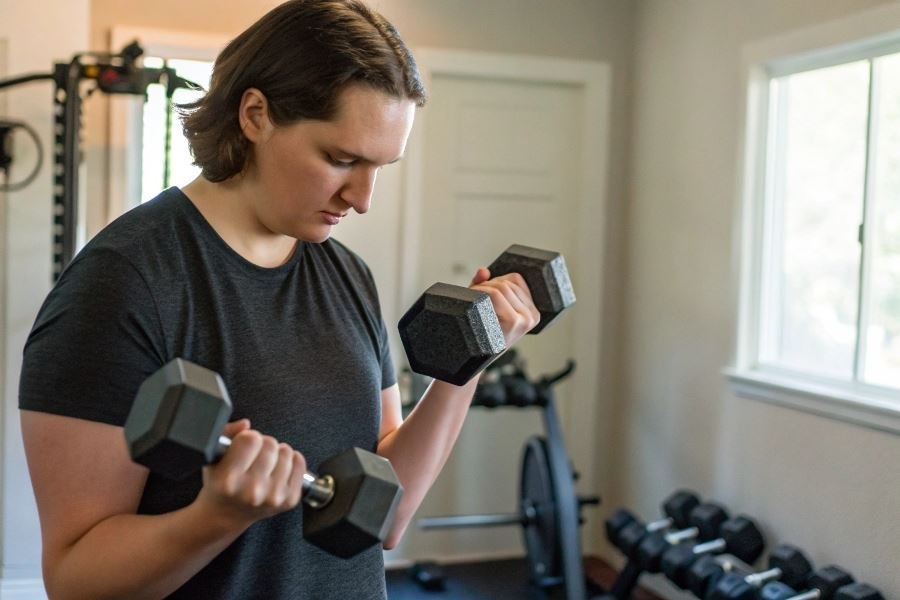
Ever picked up a dumbbell and thought, “This is either too heavy or too light for what I need right now”? You’re not alone. The choice between fixed-weight and adjustable dumbbells represents one of the most consequential decisions in home gym setup—yet many fitness enthusiasts make this choice without understanding the full implications.
When legendary strongman Eugen Sandow popularized dumbbells in the late 1800s, he couldn’t have imagined today’s sophisticated adjustable systems. The evolution from basic iron weights to sophisticated quick-change mechanisms reflects our growing understanding of progressive resistance training. Now, the market offers everything from traditional fixed hex dumbbells to dial-a-weight systems that transform in seconds.
Fixed-weight dumbbells offer simplicity and durability—what you see is what you lift. Their one-piece construction withstands years of dropping and banging. Meanwhile, adjustable dumbbells deliver space efficiency and versatility, allowing a single pair to replace an entire rack.
Three critical factors should guide your decision:
- Training style – Are you doing quick HIIT transitions or methodical strength progressions?
- Space constraints – Do you have room for a full rack or need a compact solution?
- Budget considerations – Are you investing long-term or seeking immediate value?
The perfect dumbbell doesn’t exist universally—it exists specifically for your unique fitness journey. Understanding these fundamental differences ensures your equipment enhances rather than hinders your progress.
Training Environments: Fixed vs Adjustable Dumbbells
When setting up your strength training arsenal, the choice between fixed-weight and adjustable dumbbells isn’t just about budget—it’s about matching your equipment to your training environment. The ongoing debate between fixed-weight dumbbells or adjustable ones: a comparison for different purposes reveals that each option shines in specific settings. Let’s break down how these strength-training staples perform across various workout spaces.
Home Gym Mastery
Space efficiency might be the most compelling reason to choose adjustable dumbbells for home use. A single pair of quality adjustables like the Bowflex SelectTech can replace 15+ pairs of fixed dumbbells—transforming what would be an entire rack into something that fits in a closet.
The space savings are dramatic: a full set of fixed dumbbells (5-50 lbs) requires approximately 30 square feet of floor space, while adjustables need just 2 square feet.
Noise considerations also favor adjustables in apartment settings. Fixed dumbbells inevitably clank when returned to racks, while many premium adjustable systems feature rubber components that dampen sound.
However, versatility presents trade-offs:
| Feature | Fixed Dumbbells | Adjustable Dumbbells |
|---|---|---|
| Weight changes | Requires multiple pairs | 5-10 second adjustment |
| Drop durability | Highly durable | Mechanism can break |
| Workout flow | Seamless transitions | Brief pauses to adjust |
Commercial Gym Applications
In commercial settings, fixed dumbbells reign supreme for good reason. The durability factor is undeniable—solid steel or rubber-coated fixed dumbbells can withstand thousands of drops onto gym floors, while most adjustable mechanisms would fail after dozens.
Maintenance requirements create another clear distinction. Commercial gym owners report:
- Fixed dumbbells: Require occasional tightening and rubber replacement
- Adjustable systems: Need regular lubrication, pin replacements, and mechanism cleaning
User experience in busy gyms heavily favors fixed options. During peak hours, waiting for someone to adjust their dumbbells between sets creates bottlenecks that fixed-weight options eliminate. The psychological benefit of seeing a complete rack also shouldn’t be underestimated—it creates a sense of equipment abundance that adjustable systems can’t match.
Outdoor and Travel Workout Compatibility
Portability transforms the equation entirely for mobile fitness enthusiasts. Modern adjustable dumbbells like the PowerBlock Sport offer remarkable weight ranges (5-50 lbs) in packages weighing under 60 pounds total—making them viable travel companions.
Weather resistance presents challenges for both types, but fixed dumbbells with neoprene or full rubber coating handle outdoor elements better than adjustables with exposed metal components.
Setup time becomes crucial for outdoor workouts:
- Fixed dumbbells: Grab and go, zero setup
- Adjustable systems: 30-60 seconds to unpack and configure
For travelers, the compact nature of adjustable systems makes them the clear winner, fitting easily in car trunks or large suitcases. Some specialized travel models even break down into components weighing less than airline baggage limits.
The environment where you’ll be pumping iron ultimately determines which dumbbell type deserves a spot in your fitness regimen. Your training space, noise tolerance, and mobility needs should guide this important equipment decision.
The Ultimate Dumbbell Decision: Fixed vs Adjustable
When it comes to building your home gym arsenal, few decisions impact your training journey quite like choosing between fixed-weight and adjustable dumbbells. After exploring the pros, cons, and practical applications of both options, it’s time to cut through the noise and determine which type aligns perfectly with your fitness ambitions.
Matching dumbbells to your training DNA
Your fitness goals should be the primary driver behind your dumbbell decision:
Strength builders typically benefit from adjustable dumbbells, particularly those pursuing progressive overload. The ability to incrementally increase weight—sometimes by as little as 2.5 pounds—creates the perfect environment for strength development without plateauing.
For hypertrophy specialists, both options work well, though adjustable systems from brands like Bowflex or PowerBlock offer the versatility needed for isolation movements and compound exercises alike.
Endurance athletes often prefer fixed dumbbells, especially when circuit training demands quick transitions between exercises. The seamless grab-and-go nature of fixed weights can shave precious seconds off your HIIT workouts.
For rehabilitation purposes, fixed dumbbells in lighter weights (1-10 pounds) provide the consistency and predictability needed for recovery protocols. The uniform shape and balanced weight distribution make them ideal for controlled movements during physical therapy.
The financial equation: initial cost vs lifetime value
The economics of your dumbbell investment deserves careful consideration:
| Dumbbell Type | Initial Investment | Long-Term Value | Best For |
|---|---|---|---|
| Fixed Set (5-50lbs) | $700-1,200 | High for commercial gyms | Facilities, serious lifters |
| Premium Adjustable | $300-600 | Excellent for home users | Space-conscious enthusiasts |
| Budget Adjustable | $100-250 | Good for beginners | Casual lifters, beginners |
Fixed dumbbells represent a significant upfront investment—a comprehensive set can easily exceed $1,000. However, their durability means they’ll likely outlast multiple adjustable systems, making them cost-effective for commercial settings or lifelong fitness enthusiasts.
Adjustable systems offer tremendous value for home gym owners, particularly those with space constraints. A quality adjustable set providing 5-50 pounds of resistance might cost $400-600, representing savings of 40-60% compared to equivalent fixed sets.
The value proposition shifts dramatically based on usage frequency. For those training 4+ times weekly, premium equipment pays dividends through reliability and user experience.
Final recommendations based on your fitness profile
For beginners, start with a quality adjustable dumbbell set like the NordicTrack Select-A-Weight system. The versatility allows exploration of different training styles without overwhelming investment or space requirements.
Intermediate lifters with established routines should consider their training style carefully:
- If you prioritize convenience and quick transitions, fixed dumbbells are worth the investment
- If space and budget constraints exist, premium adjustable systems offer the best compromise
Advanced athletes often benefit from a hybrid approach—adjustable dumbbells for the majority of training, supplemented with fixed dumbbells for specific lifts where quick weight changes or specialized movements are required.
Practical constraints matter. A fourth-floor apartment with no elevator practically demands adjustable dumbbells, while a dedicated home gym with ample space might justify fixed weights.
The perfect dumbbell choice ultimately reflects your unique fitness fingerprint—your goals, space, budget, and training style. Whichever path you choose, consistency with your selected equipment will yield far greater results than perpetually searching for the “perfect” option.