
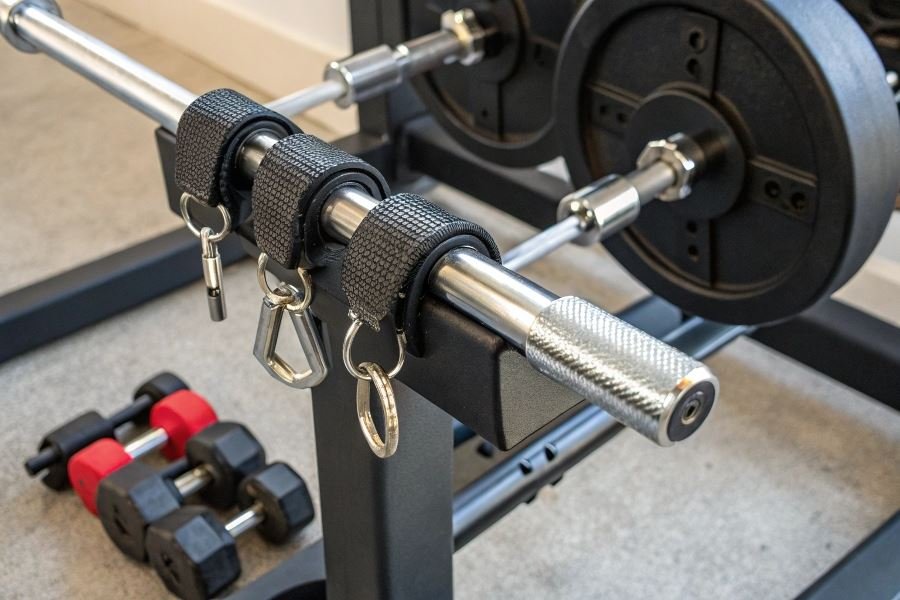
Ever walked into your home gym and found your carefully organized weight plates scattered by a curious teenager or pet? Or worse, discovered your barbell precariously balanced against the wall instead of locked safely in its rack? These aren’t just annoyances—they’re legitimate safety hazards.
Home gyms have transformed from luxury to necessity for fitness enthusiasts. With heavy equipment sharing space with family members, proper security isn’t just about organization—it’s about preventing accidents that could result in serious injury. A 45-pound plate that falls on a foot doesn’t discriminate between adults and children.
“The difference between a secure home gym and an accident waiting to happen often comes down to one simple addition: quality locking mechanisms.”
The safety imperative
When it comes to barbells, dumbbells, and weight plates, secure storage isn’t optional. These heavy metal objects become dangerous projectiles when improperly stored. Quality locks designed specifically for gym equipment provide both peace of mind and tangible protection.
Lock types that make sense for gym equipment
The market offers several specialized solutions:
- Cable locks – Perfect for threading through weight plates and securing them to racks
- Bar locks – Designed to prevent unauthorized use of barbells
- Rack security systems – Comprehensive solutions that secure entire power racks
The right lock doesn’t just protect your investment—it creates a safer environment for everyone who enters your training space. Remember, in home gym safety, an ounce of prevention truly is worth a pound of cure.
Essential Locks for Your Home Gym Arsenal
When building your home gym sanctuary, security isn’t just about keeping others out—it’s about keeping your equipment safe, organized, and ready for action. Understanding the various locks for bars for home gym equipment ensures both safety and longevity of your fitness investments. Let’s dive into the essential locking mechanisms that will transform your workout space from vulnerable to vault-like.
Cable Locks: Flexible Security Solutions
Cable locks offer versatile protection for multiple pieces of equipment simultaneously. These flexible security devices consist of a steel cable with a locking mechanism that can thread through various equipment pieces.
Key advantages of quality cable locks:
- Flexibility to secure multiple items with a single lock
- Lightweight and portable for easy storage
- Weather-resistant options for garage or outdoor gym setups
The Master Lock Python adjustable cable lock stands out with its customizable length and cut-resistant braided steel. For home gym enthusiasts with multiple barbells or accessories, these locks allow you to secure everything to a fixed anchor point, preventing unauthorized use or theft.
Pro tip: When selecting cable locks, prioritize models with at least 5/16-inch diameter cables for maximum resistance against cutting attempts.
Padlocks and Rack Security Systems
Weight storage racks represent significant investments that deserve proper protection. Specialized padlocks designed for fitness equipment offer robust security while maintaining quick access for legitimate users.
Top padlock features to consider:
- Weather-resistant construction for humid gym environments
- Keyless combination options for convenience
- Shrouded shackle designs that resist bolt cutter attacks
The American Lock A5200D solid steel padlock provides industrial-grade protection with its hardened boron alloy shackle and dual ball bearing locking mechanism—perfect for securing expensive rack systems.
For weight storage security, consider installing dedicated locking bars that secure multiple weight plates simultaneously, preventing both theft and the safety hazard of unsecured plates.
Specialized Barbell Collar Locks
Barbell collar locks serve dual purposes: securing weights during lifts and preventing unauthorized equipment use when not in training. These specialized devices have evolved significantly in recent years.
Top 3 Barbell Collar Locks
| Model | Security Level | Quick-Release | Weight | Price Range |
|---|---|---|---|---|
| Rogue OSO Barbell Collars | High | Yes | 0.55 lbs/pair | $49-55 |
| Lock-Jaw PRO 2 | Medium-High | Yes | 0.5 lbs/pair | $39-45 |
| Iron Bull Strength Collars | Medium | Yes | 0.6 lbs/pair | $25-35 |
The Rogue OSO Barbell Collars feature aircraft-grade aluminum construction with a patented locking mechanism that requires significant force to disengage—making them nearly impossible to remove without proper technique.
Lock-Jaw PRO 2 collars incorporate a unique dual-action locking system that prevents both sliding during intense lifts and unauthorized removal when secured with their secondary lock feature.
For budget-conscious home gym owners, Iron Bull Strength Collars deliver reliable security with their reinforced nylon construction and pressure-lock system that maintains grip even during dynamic movements.
When selecting collar locks, consider not just security but also how quickly you can change weights during supersets or circuit training. The best options balance theft prevention with workout efficiency.
By investing in these three essential lock types, you’ll create a secure training environment that protects your investment and provides peace of mind whether you’re mid-workout or away from home.
Securing Your Iron: The Ultimate Guide to Barbell Locks
Smart selection criteria that matter
When it comes to protecting your investment in quality barbells and weight equipment, the right locking mechanism isn’t just an accessory—it’s essential. The average Olympic barbell costs between 250−500, making it one of the most targeted pieces of equipment for theft. Selecting the proper security solution requires balancing several critical factors.
First, consider compatibility with your specific equipment. Different barbells have varying diameters and collar designs. Standard barbells typically measure 1 inch in diameter, while Olympic bars measure 2 inches at the sleeve ends. Your lock must accommodate these dimensions precisely.
Material durability stands as another non-negotiable factor. The best barbell locks feature hardened steel construction that resists cutting, sawing, and freezing attempts. Look for locks with anti-pick pins and drill-resistant cylinders for maximum security.
The environment where your equipment lives matters significantly. Indoor home gyms may require different security solutions than garage or outdoor setups. For areas exposed to moisture, marine-grade stainless steel locks from brands like Master Lock provide superior corrosion resistance.
Installation and maintenance for lasting protection
Proper installation ensures your security measures work as intended. Most quality barbell locks come with detailed instructions, but there are universal principles worth following.
Position locks at the most vulnerable access points of your equipment. For Olympic barbells, this typically means securing both collar ends rather than just one side. When installing cable locks, create tight loops that eliminate slack which could be manipulated by potential thieves.
Maintenance schedule for optimal lock performance:
| Maintenance Task | Frequency | Notes |
|---|---|---|
| Lubrication | Every 3 months | Use graphite-based lubricant only |
| Mechanism testing | Monthly | Ensure smooth operation |
| Visual inspection | Weekly | Check for damage or tampering |
| Deep cleaning | Bi-annually | Remove debris and corrosion |
Never use WD-40 or oil-based lubricants on lock mechanisms as they attract dust and debris that can jam the internal components.
For combination locks, periodically changing your code adds an extra layer of security. Mark your calendar to update combinations quarterly, and avoid using obvious number sequences like birthdays or address numbers.
The value proposition of premium security
When analyzing the cost-benefit ratio of barbell security, consider the total investment you’re protecting. A comprehensive home gym setup easily represents thousands of dollars in equipment.
Premium barbell locks from manufacturers like Abus or Kryptonite typically range from 40−100—a modest investment compared to replacing stolen equipment. These high-end options offer superior key encryption and often come with theft protection guarantees.
Budget-friendly alternatives exist in the 15−30 range, but understand the tradeoffs. Less expensive locks generally feature thinner cables, simpler locking mechanisms, and lower-grade materials that determined thieves can defeat more easily.
The hidden costs of inadequate security extend beyond equipment replacement. Insurance claims for stolen gym equipment often come with high deductibles, and many homeowner policies limit coverage for specialty fitness items unless specifically scheduled.
The peace of mind that comes from knowing your investment is secure allows you to focus on what matters most—your fitness journey. When selecting locks for your barbell equipment, remember that you’re not just buying a security product; you’re investing in the longevity of your home gym and the consistency of your training regimen.