
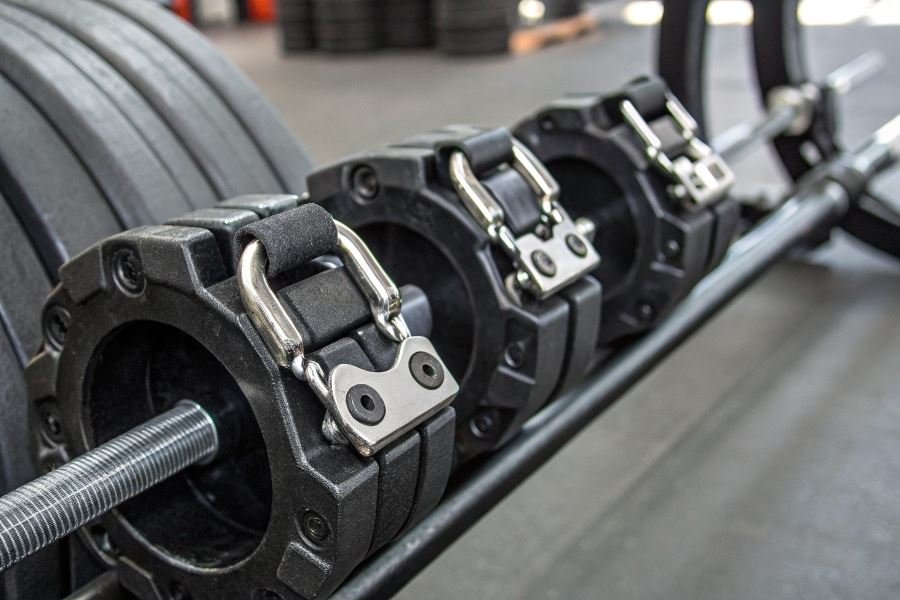
Ever watched 45-pound plates slide dangerously toward your face during a heavy bench press? That heart-stopping moment is exactly why serious lifters can’t afford to compromise on barbell locks.
When you’re pushing your limits with heavy training, the last thing you need is equipment failure. Yet countless gym warriors continue to trust flimsy spring collars or worn-out clamps with their safety and gains. The standard collars that come with most gym equipment simply weren’t designed for the punishing forces of 400-pound deadlifts or explosive Olympic lifts.
The reliability gap in barbell security has become increasingly evident as strength standards continue to rise. Traditional collars often slip during dynamic movements, create uneven weight distribution, or fail completely under heavy loads. This isn’t just annoying—it’s potentially catastrophic.
What separates truly reliable barbell locks from the pretenders? Three critical factors:
- Clamping force – The lock must maintain consistent pressure regardless of movement
- Durability – Quality materials that withstand thousands of training sessions
- Quick-release mechanism – Secure when lifting, but efficient to remove between sets
The physics of heavy lifting creates unique challenges for barbell security. When you’re moving substantial weight through space—especially with explosive movements—the centrifugal forces can overcome poorly designed locking mechanisms. This is why elite powerlifters and Olympic weightlifters invest in specialized barbell locks that stay put under extreme conditions.
Your training deserves better than equipment that fails when you need it most. The right barbell locks aren’t just accessories—they’re essential safety equipment for anyone serious about strength.
Lock It Down: Barbell Security Systems for Serious Lifters
When you’re pushing your limits with heavy weights, the last thing you need is the distraction of shifting plates or the heart-stopping moment when a collar gives way. Finding the most reliable locks for barbell grips for heavy training isn’t just about convenience—it’s about safety and performance optimization. Let’s dive into the mechanical marvels that keep your plates exactly where they belong, even when you’re moving serious weight.
Olympic Clamp Technology: The Gold Standard
Olympic clamp locks represent the pinnacle of plate security for those who demand professional-grade equipment. These spring-loaded champions use a simple yet ingenious mechanism: a lever-activated collar that creates tremendous clamping force when engaged.
The Rogue USA Aluminum Collars exemplify this category with their aircraft-grade aluminum construction and 350+ pound weight capacity per collar. What makes these locks exceptional is their self-lubricating nylon pads that maintain consistent pressure without damaging your bar’s finish.
For competitive lifters, the Eleiko Olympic Competition Collars offer unparalleled stability with their patented locking system that distributes pressure evenly around the sleeve. These 2.5kg precision-engineered locks are what you’ll see at international competitions—because when world records are on the line, equipment failure isn’t an option.
| Collar Type | Weight Capacity | Material | Lock Time |
|---|---|---|---|
| Rogue USA | 700+ lbs (pair) | Aircraft Aluminum | 3 seconds |
| Eleiko Competition | 1000+ lbs (pair) | Chrome-plated Steel | 5 seconds |
| OSO Mighty | 600+ lbs (pair) | Aluminum/Polymer | 2 seconds |
Quick-Release Systems: Speed Meets Security
For those who value efficiency in their training sessions, quick-release collar locks deliver impressive holding power without sacrificing speed. These systems typically employ a cam-action mechanism that multiplies the applied force.
The Lock-Jaw PRO 2 collars have revolutionized this category with their dual-action securing system. What separates these from standard quick-release options is their reinforced polymer construction and the additional security of their secondary locking mechanism—essential when you’re dropping 500+ pounds on deadlifts.
Testing reveals the truth: When subjected to repeated drops from overhead positions with 315 pounds, premium quick-release collars like the OSO Mighty Collars maintained position while budget alternatives shifted by up to 2 inches—a potentially dangerous scenario during complex movements.
Screw-Based Systems: Maximum Security Protocol
When absolute security trumps convenience, screw-based barbell locks enter the conversation. These mechanical titans use threaded systems to create uncompromising stability.
The Ivanko COT-1.25 chrome-plated steel collars represent the apex of this category. With their precision-machined threads and locking nuts, they create a vise-like grip that simply doesn’t budge, even under the most punishing powerlifting conditions. The trade-off? A 15-second installation time versus 3 seconds for quick-release options.
For powerlifters pushing beyond 600 pounds in competition lifts, the psychological advantage of absolute confidence in your equipment cannot be overstated.
The Texas Power Bar Collars offer a hybrid approach with their partial-thread design that reduces installation time while maintaining exceptional security. Their knurled grips allow for significant torque application even with chalk-covered hands—a thoughtful detail for serious lifters.
Remember: The most reliable barbell lock is the one that disappears from your consciousness during your heaviest lifts, allowing complete focus on performance rather than equipment concerns.
Securing Your Gains: Choosing Perfect Barbell Locks
When you’re pushing serious weight, the last thing you need is your plates sliding around—or worse, crashing to the floor. The right barbell collars aren’t just accessories; they’re essential safety equipment that can make or break your heaviest lifts. Let’s dive into how to select locks that won’t let you down when every pound counts.
Match Your Lock to Your Lifting Style
Different training modalities demand different securing solutions. Your Olympic clean and jerks require different collar performance than your slow-burn deadlifts.
For Olympic weightlifting, where bars are frequently dropped from overhead, opt for competition-grade aluminum collars like the Rogue USA Aluminum Collars. These provide the perfect balance of secure clamping force and quick release capability when you need to change weights between attempts.
For powerlifting, where maximum weight security is paramount, look toward heavy-duty options like Eleiko IPF Powerlifting Collars. These beasts deliver crushing grip force that won’t budge even during your most aggressive lockouts.
For CrossFit and functional training, where you’re constantly changing weights, magnetic or quick-release options like OSO Barbell Collars offer the speed you need without sacrificing security.
The right collar feels like an extension of the barbell—you shouldn’t have to think about it once it’s locked in place.
Keeping Your Locks in Working Order
Even the finest barbell collars require maintenance to perform at their peak. Neglect them, and they’ll eventually fail when you need them most.
| Collar Type | Maintenance Schedule | Key Maintenance Actions |
|---|---|---|
| Spring clips | Monthly | Clean spring mechanism, check for metal fatigue |
| Lockjaw collars | Bi-monthly | Clean locking mechanism, lubricate hinges |
| Competition collars | After each use | Wipe down, check tightening mechanisms |
| Magnetic collars | Weekly | Clean contact surfaces, check magnet strength |
Pro tip: Keep a small maintenance kit in your gym bag with a microfiber cloth, silicone spray, and a small brush. Five minutes of maintenance can prevent catastrophic failures during your heaviest sets.
Investment Considerations for Serious Lifters
When it comes to barbell collars, the old adage holds true: buy once, cry once. Premium collars typically range from $40 to $150 for a pair, but the investment pays dividends in safety and performance.
Consider these factors when evaluating price points:
- Training frequency: Daily lifters should invest in competition-grade options that can withstand constant use
- Weight loads: Regularly lifting above 400 pounds? Don’t skimp on collar quality
- Training environment: Humid or outdoor training environments require corrosion-resistant materials
Remember that the cost of quality collars pales in comparison to medical bills from a plate-related injury.
The most reliable options on the market today include the Rogue OSO Collars (55), [EleikoCompetitionCollars](https : //www.eleiko.com)(149), and Lock-Jaw Pro 2 ($39.95). Each offers exceptional security with different specializations for various training styles.
Your heaviest lifts deserve your complete focus—not worrying about whether your plates are secure. Invest in quality locks that match your training style, maintain them properly, and they’ll serve you faithfully through years of PRs and training milestones.