
Ever stood in a crowded gym waiting for equipment while watching the clock tick away your precious workout time? Home strength training isn’t just convenient—it’s revolutionary for your fitness journey.
The beauty of having your own strength training machine lies in the freedom it provides. No more commutes, no more membership fees, and definitely no more awkward encounters with that person who never wipes down the equipment. But choosing the right machine requires thoughtful consideration of your unique circumstances.
Unlock the power of consistent training
When you have 24/7 access to quality equipment, consistency becomes your superpower. Research shows that people who exercise at home are 73% more likely to maintain their routine long-term compared to gym-goers. This accessibility transforms occasional workouts into lifestyle habits.
Match your machine to your mission
Before browsing catalogs, ask yourself: What are you truly trying to accomplish?
A beginner focusing on general fitness has vastly different needs than someone training for competitive powerlifting. Be honest about your experience level—choosing equipment that’s too advanced might leave you frustrated, while something too basic might limit your progress.
The space-budget reality check
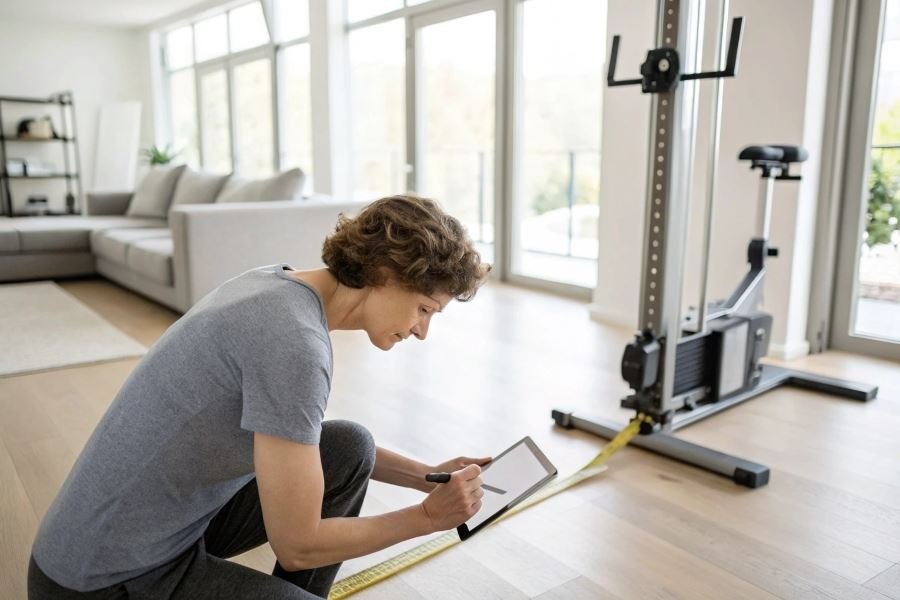
Your dream machine needs a home! Measure your available space before falling in love with any equipment. Remember to account for:
- Safety clearance (typically 2-3 feet on all sides)
- Ceiling height for tall machines
- Floor reinforcement needs for heavier equipment
Your budget isn’t just about the initial purchase—factor in potential delivery costs, assembly fees, and maintenance requirements that will affect your total investment over time.
Essential Factors for Your Home Strength Machine
Let’s face it—building a home gym that actually delivers results requires more than just enthusiasm and floor space. When navigating the landscape of strength training machines for home use, you’re making an investment that will either become the cornerstone of your fitness journey or an expensive clothes rack. The difference lies in understanding what truly matters.
Multi-Gyms vs. Power Racks vs. Cable Machines
The foundation of choosing a strength training machine for home use starts with understanding the three main contenders in the strength-building arena:
Multi-gyms pack multiple exercise stations into one footprint. The Bowflex Revolution exemplifies this category with its SpiraFlex technology, offering up to 220 pounds of resistance without actual weight plates. These all-in-one solutions typically include press stations, leg developers, and cable pulleys.
Power racks represent the purist’s approach. The Rogue R-3 Power Rack stands as the gold standard, delivering a framework for free-weight exercises with safety bars. These minimalist structures support squats, bench presses, and pull-ups—the fundamental movements that build serious strength.
Cable machines like the FreeMotion Dual Cable Cross offer unparalleled movement freedom. With adjustable pulleys and resistance that maintains tension throughout the range of motion, they excel at isolation exercises and functional training.
Which machine type aligns with your goals?
| Machine Type | Space Required | Exercise Range | Ideal For |
|---|---|---|---|
| Multi-gym | 50-70 sq ft | 20-50 exercises | Beginners seeking variety |
| Power Rack | 30-40 sq ft | 10-15 core lifts | Strength purists |
| Cable Machine | 40-60 sq ft | 30+ exercises | Functional training enthusiasts |
Build Quality That Withstands Your Progress
The structural integrity of your machine determines not just its lifespan but your safety. Commercial-grade steel frames with 11-gauge thickness provide the stability needed for serious lifting. Weight capacity tells the real story—look for machines rated at least 50% above your current max lift to accommodate future growth.
The Titan Fitness X-3 Series exemplifies proper construction with 3×3-inch steel uprights and a 1,000+ pound capacity. Remember that connection points—welds, bolts, and cable pulleys—often fail first. Inspect these areas carefully before purchase.
Exercise Versatility and Progression Pathways
A truly effective strength machine grows with you. The best options offer:
- Adjustable resistance increments of 5 pounds or less
- Multiple grip positions for targeting different muscle fibers
- Adjustable seats and pads to accommodate different body types
- Upgrade compatibility for adding attachments later
The Body-Solid EXM3000LPS demonstrates this adaptability with its modular design allowing users to add stations as their needs evolve.
Consider your long-term progression path. Will you eventually need to squat 300+ pounds? A power rack makes more sense. Focused on muscle isolation and definition? Cable systems offer superior options for targeted work.
The machine that collects dust is the most expensive one—regardless of price tag. Choose based on the exercises you’ll actually perform consistently, not the theoretical maximum number available. Your strength journey requires equipment that invites daily use while supporting your evolving capabilities.
Sealing the Deal: Your Home Strength Machine Decision
Beyond the price tag: warranty and support
Let’s face it—investing in a home strength training machine isn’t just about dropping cash on equipment; it’s about securing a reliable fitness partner for years to come. The warranty package speaks volumes about a manufacturer’s confidence in their product. Top-tier brands like Rogue Fitness and Life Fitness typically offer 10+ years on frames and 2-3 years on moving parts, while budget options might skimp with just 90 days of coverage.
The difference between a good warranty and a great one? About 47 fewer headaches when something inevitably needs attention.
Customer support quality varies dramatically across manufacturers. Before purchasing, test-drive their responsiveness—send an email with technical questions and see how quickly (and thoroughly) they respond. Companies like Nautilus and NordicTrack have built reputations on responsive support teams that don’t vanish after the sale.
Maintenance requirements deserve serious consideration too. Some machines need regular lubrication, belt adjustments, and cable inspections. Others, like plate-loaded systems from Hammer Strength, are virtually bulletproof with minimal upkeep. Factor maintenance time and costs into your decision—that “bargain” machine requiring monthly service might end up costing more than premium equipment in the long run.
The wisdom of the crowd and experts
User reviews are gold mines of real-world performance data. But not all reviews deserve equal weight. Look for verified purchasers who’ve owned the equipment for at least six months—they’ve moved past the honeymoon phase and encountered any potential issues.
When analyzing reviews, watch for patterns rather than outliers. If multiple users mention the same squeaky pulley or wobbly frame, that’s a legitimate concern. Conversely, if one person complains about complex assembly while dozens report smooth setup, consider the source.
Expert recommendations provide another valuable perspective. Publications like Men’s Health and Women’s Health regularly test and review strength equipment, as do specialized fitness tech reviewers. Their systematic testing protocols often reveal issues that might not surface during a showroom test drive.
| Review Source | Strengths | Limitations |
|---|---|---|
| Verified Users | Real-world usage scenarios, longevity issues | Often emotionally charged, assembly complaints |
| Fitness Magazines | Systematic testing, comparison across brands | May favor advertisers, limited long-term testing |
| YouTube Reviews | Visual demonstrations, space requirements | Potential sponsorship bias, limited testing time |
| Fitness Forums | Detailed technical discussions, modifications | Enthusiast bias toward premium equipment |
Future-proofing your fitness investment
The strength machine that perfectly suits your needs today might feel limiting in 18 months. Consider your fitness trajectory—are you just starting strength training or already approaching intermediate goals? Modular systems from companies like Bowflex and PowerBlock allow for expansion as your strength increases.
Compatibility with future accessories matters too. Some manufacturers create closed ecosystems where only their attachments work with their machines. Others, particularly those using standard Olympic plates and attachments, offer more flexibility for mixing and matching components as your needs evolve.
Space planning should account for your evolving routine. That compact machine might seem perfect now, but will you want to add a leg press attachment later? Functional trainers from brands like Inspire Fitness often provide the most versatility in limited spaces, allowing dozens of exercise variations without additional footprint.
Remember that your fitness goals will likely evolve. The best home strength equipment grows with you, adapting to new challenges rather than becoming an expensive coat rack when you outgrow its capabilities.