
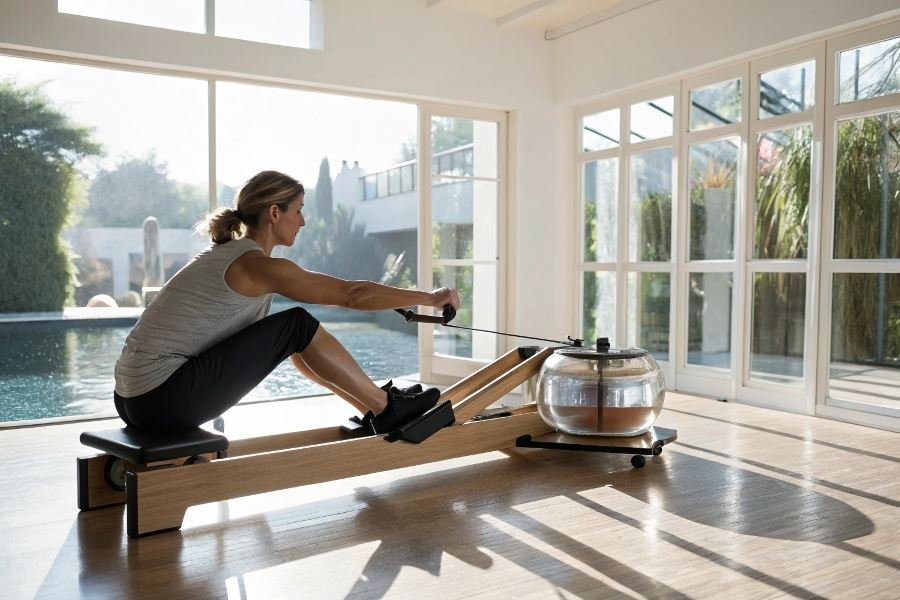
Ever wondered why Olympic athletes often recover in pools? Water’s natural resistance provides up to 12 times more muscle engagement than air—without the joint stress. This same principle powers the rising star of home fitness: water exercise bikes.
Aquatic cycling transforms traditional stationary biking by immersing you in water’s natural resistance. Unlike their land-based cousins, water exercise bikes don’t need complicated tension knobs or electronic resistance systems. Instead, they harness water’s inherent properties to create a workout that automatically adjusts to your effort level—push harder, meet stronger resistance.
The splash advantage: Benefits beyond traditional cycling
Water exercise bikes deliver exceptional cardiovascular benefits while being remarkably gentle on your body. The buoyancy effect reduces body weight by approximately 90% when submerged, creating a near-weightless workout environment that’s perfect for:
- Joint rehabilitation after injuries
- Cross-training for runners and high-impact athletes
- Fitness enthusiasts with arthritis or mobility limitations
- Anyone seeking effective, sweat-free resistance training
Land vs. water: The cycling comparison
Traditional stationary bikes excel at targeted training with precise resistance levels, but water bikes offer unique advantages:
| Water Exercise Bikes | Traditional Stationary Bikes |
|---|---|
| Natural, variable resistance | Fixed or programmed resistance |
| 360° muscle engagement | Primary focus on lower body |
| Self-cooling workout | Heat buildup requiring fans |
| Zero impact on joints | Low (but still present) impact |
Finding your ideal water exercise bike starts with understanding your fitness goals. For rehabilitation, look for models with exceptional stability. For intense training, prioritize bikes with larger paddles and robust construction. For general fitness, balance features with budget—the sweet spot where aquatic excellence meets practicality.
Essential Features That Make or Break Your Water Bike
Water exercise bikes have revolutionized home aquatic workouts, combining the benefits of cycling with the gentle resistance of water. When selecting the perfect water exercise bike for your home setup, understanding the critical features can mean the difference between a gathering dust or becoming your favorite fitness tool. Let’s dive into what truly matters when evaluating these aquatic fitness machines.
Water Resistance Mechanisms That Deliver
The heart of any water exercise bike lies in its resistance system. Most premium models utilize paddle wheels or propeller systems that push against water as you pedal. The beauty of water-based resistance is its natural progression—the harder you pedal, how to choose a water exercise bike for home workouts becomes clearer as you experience the water’s natural feedback mechanism.
Magnetic vs. Natural Resistance: While traditional pool bikes rely solely on water resistance, hybrid models incorporate magnetic resistance systems that allow for precise adjustment without changing your cadence.
The finest water bikes offer multiple resistance levels, typically between 8-16 settings, allowing you to progress from gentle rehabilitation exercises to high-intensity interval training. Look for models with easily accessible adjustment knobs that can be manipulated while maintaining your workout position.
Built to Last: Construction Quality Indicators
Water creates a uniquely corrosive environment that demands superior materials and construction techniques.
Frame Materials Matter: Marine-grade stainless steel frames command premium prices (800 − 1, 200)butofferunmatchedlongevity.Mid − rangeoptions(500-800) featuring aluminum frames with protective coatings provide excellent value while resisting corrosion.
Avoid chrome-plated steel frames that may initially shine but quickly deteriorate in chlorinated environments.
The pedal mechanism deserves special attention as it bears the brunt of your power output. Sealed bearing systems prevent water infiltration and extend the life of your investment.
| Material Type | Corrosion Resistance | Expected Lifespan | Price Range |
|---|---|---|---|
| Marine-grade 316L Stainless | Excellent | 10+ years | $800-1,200 |
| Anodized Aluminum | Very Good | 5-8 years | $500-800 |
| Powder-coated Steel | Good | 3-5 years | $300-500 |
| Chrome-plated Steel | Poor | 1-3 years | $200-400 |
Space Requirements and Dimensional Considerations
Home fitness equipment often faces the ultimate challenge: finding its place in your living space.
Footprint Fundamentals: Standard water exercise bikes require approximately 4’ × 2’ of floor space when in use. However, the water depth needed varies significantly between models:
- Shallow-water bikes: Operate in 3.5-4.5 feet of water
- Deep-water suspended bikes: Require 6+ feet of water depth
For those with dedicated swim spas like Endless Pools or Hydropool, ensure your chosen bike is compatible with the specific dimensions of your installation.
Storage Solutions: Some models feature foldable designs or removable components that reduce storage footprints by up to 70%. If space is at a premium, prioritize bikes with quick-release mechanisms that facilitate easy pool entry and removal.
The ideal water exercise bike balances stability during intense workouts with manageable weight for regular pool placement. Look for models with non-marking rubber feet that protect pool surfaces while providing secure positioning during even the most vigorous training sessions.
By focusing on these essential features—resistance mechanisms, construction quality, and spatial requirements—you’ll navigate the selection process with confidence and find a water exercise bike that delivers exceptional workouts for years to come.
What Makes a Water Exercise Bike Worth Your Investment
When diving into the world of aquatic fitness, choosing the right water exercise bike transforms your home workouts from splashy experiments to consistent, results-driven sessions. Let’s cut through the noise and focus on what truly matters when selecting your perfect underwater cycling companion.
Smart budgeting for lasting value
Water exercise bikes range dramatically in price—from basic $300 models to premium options exceeding $2,000. The sweet spot? Most high-quality, durable bikes fall between 800−1,200, offering the best balance of performance and longevity.
Insider tip: The cheapest option often becomes the most expensive when you factor in replacement costs after premature breakdowns.
Budget considerations should focus on construction materials rather than brand names. Stainless steel frames resist corrosion significantly better than aluminum or coated steel alternatives, extending your bike’s lifespan by 3-5 years in chlorinated environments. The Hydrorider Aquabike Professional exemplifies this quality-first approach with marine-grade stainless components that justify its higher price point.
Value indicators to watch for:
- Warranty length (minimum 2-year coverage)
- Replaceable parts availability
- Maintenance requirements (lower is better)
- Weight capacity (higher indicates stronger construction)
Ergonomics that keep you coming back
The most advanced water bike becomes worthless if discomfort prevents consistent use. Ergonomic excellence separates mediocre bikes from game-changers.
Critical comfort features include:
| Feature | Impact on Workout | What to Look For |
|---|---|---|
| Seat design | Determines session length | Wide, contoured with waterproof padding |
| Handlebar adjustability | Affects back and shoulder strain | Multi-position grips with height/reach adjustments |
| Pedal system | Influences joint stress | Oversized with adjustable resistance straps |
| Frame stability | Controls wobbling during intense sessions | Wide base with non-slip floor contacts |
The AquaJogger X-Ciser Pro stands out with its 12-position seat adjustment system that accommodates users from 5’0″ to 6’5″ without compromising proper alignment—a crucial factor for preventing repetitive strain injuries during longer training sessions.
Tech features that maximize results
Modern water exercise bikes have evolved beyond simple mechanical devices to include sophisticated performance tracking and motivation tools.
Game-changing digital features:
- Waterproof displays showing real-time metrics like cadence, estimated calorie burn, and workout duration
- Pre-programmed workout routines that simulate terrain changes through resistance cues
- Bluetooth connectivity allowing workout data export to fitness apps like Strava or MyFitnessPal
- Heart rate monitoring compatibility for precise training zone management
The BADU Jet Swim Bike leads the connectivity revolution with its waterproof touchscreen interface that not only tracks performance but connects to streaming services for guided workouts—turning solitary sessions into instructor-led experiences.
When evaluating these tech features, prioritize water-resistance ratings (minimum IPX7) and battery life over flashy but impractical additions. Remember that electronics in water environments face unique challenges, making reliability paramount over novelty.
The perfect water exercise bike balances these three critical factors—budget considerations, ergonomic design, and technological features—to create a sustainable fitness solution that continues delivering value long after the initial purchase excitement fades.