
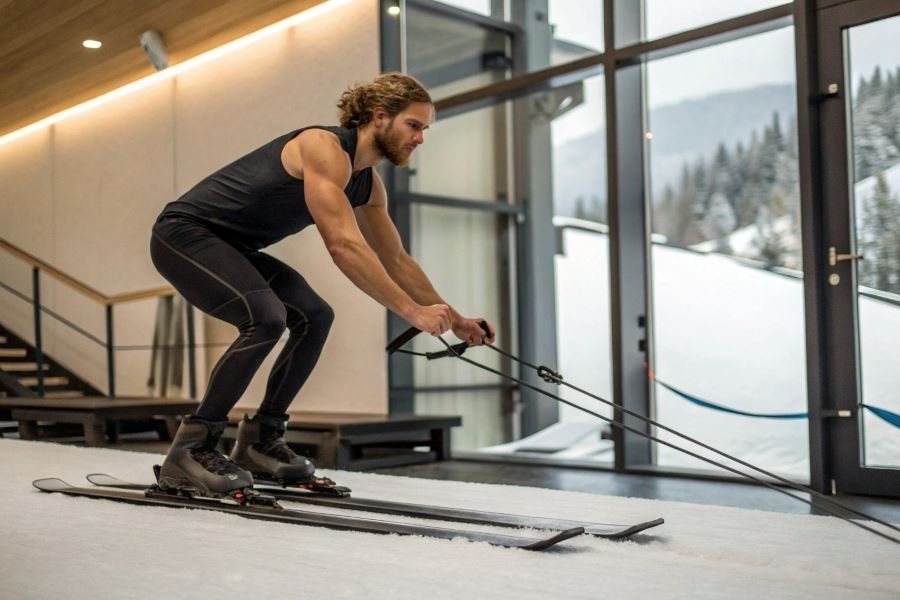
Ever watched Olympic skiers carve through powder with seemingly effortless precision? That magic doesn’t happen during a few winter months—it’s forged in the off-season. The difference between good and great often comes down to what happens when the lifts stop running.
Serious skiers know that maintaining muscle memory and technique during the off-season isn’t just helpful—it’s essential. This is where ski simulators enter the picture, transforming living rooms and garages into year-round training grounds. These devices replicate the lateral movements, balance challenges, and muscle engagement patterns unique to skiing, keeping your body “slope-ready” regardless of the weather outside.
“The muscles used for skiing are highly specific. Without regular engagement, you’ll spend the first two weeks of every season just getting your ‘ski legs’ back.” — Professional ski coach
When selecting the right ski simulator for your pre-season preparation, three factors stand above all others: movement authenticity, resistance customization, and spatial requirements. The best simulators recreate the precise lateral motion pattern of downhill skiing while allowing you to adjust resistance as your strength improves. And let’s be practical—you need something that fits your training space without becoming a household eyesore.
Modern ski simulators range from simple balance boards to sophisticated electronic systems with virtual reality integration. The technology has advanced dramatically, with top models now offering detailed performance metrics to track your progress throughout the off-season.
Ski Simulator Showdown: Your Pre-Season Training Arsenal
When the snow is still months away but your skiing muscles are crying for attention, finding the right ski simulator becomes crucial for maintaining that edge. Determining which ski simulator is better for preparing for the season depends largely on your specific training goals, available space, and budget. Let’s dive into the options that can transform your off-season training from mundane to magnificent.
Lateral Motion Ski Trainers: The Side-to-Side Specialists
Lateral motion ski trainers like the ProFitter 3D Cross Trainer have revolutionized how skiers maintain conditioning during off-seasons. These devices excel at mimicking the side-to-side movements essential for carving turns and maintaining edge control.
Key benefits include:
- Strengthening of adductor and abductor muscles critical for edge control
- Development of proprioception specific to skiing movements
- Low-impact training that’s gentle on knees and joints
However, these trainers do have limitations. Most notably, they focus primarily on lateral movement patterns while neglecting some of the forward-backward dynamics of actual skiing. They’re ideal for intermediate to advanced skiers who already understand proper technique and need to maintain muscle memory.
Perfect for: Downhill skiers, racers, and those recovering from minor injuries who need controlled movement patterns.
Balance Boards and Ski Balance Trainers: Technique Refinement
Balance training represents perhaps the most accessible entry point for ski-specific conditioning. Devices like the BOSU Balance Trainer and ski-specific options such as Fitter First Boards create unstable platforms that force your stabilizing muscles to engage constantly.
These trainers excel at:
- Developing the proprioceptive awareness essential for quick adjustments on varied terrain
- Strengthening ankle and core stability
- Improving overall balance reflexes that translate directly to on-snow performance
| Balance Trainer Type | Primary Benefit | Best For |
|---|---|---|
| Wobble boards | Ankle strength | Beginners |
| Multi-directional | Core stability | Intermediates |
| Ski-specific | Sport-specific balance | Advanced |
The beauty of balance trainers lies in their versatility—you can increase difficulty by closing your eyes, adding weights, or incorporating dynamic movements. They’re particularly effective for skiers working on technique refinement rather than pure conditioning.
Full-Motion Ski Machines: The Complete Package
For those seeking the most comprehensive ski-specific workout, full-motion ski machines like the NordicTrack Ski Machine and SkiErg by Concept2 deliver unparalleled training effectiveness.
These powerhouses offer:
- Simultaneous upper and lower body engagement
- Cardiovascular conditioning alongside strength training
- The closest simulation to actual skiing biomechanics
The distinction between models matters significantly. Traditional Nordic-style machines emphasize the forward-backward gliding motion ideal for cross-country skiers, while newer vertical machines better simulate the poling motion used in both alpine and Nordic disciplines.
What makes full-motion machines stand out is their ability to develop skiing-specific endurance. A 30-minute session on a quality ski machine can replicate the muscular fatigue experienced during several hours on the slopes—preparing you for those long powder days when they finally arrive.
The primary drawback? Space requirements and cost. These machines represent a significant investment, but for serious skiers looking to hit the slopes running when the season opens, they provide unmatched preparation efficiency.
Your ideal ski simulator ultimately depends on your training priorities, but incorporating elements from each category creates the most well-rounded pre-season preparation program. The right combination will have you carving fresh corduroy with confidence from your very first day back on snow.
Making the Right Ski Simulator Choice for Season Prep
When the snow starts falling, you want to be ready. The right ski simulator doesn’t just prepare your body—it transforms your entire season. Let’s cut through the noise and find the perfect match for your training goals, space, and budget.
Aligning Simulators with Training Goals
Different simulators target specific skiing skills. Your training objectives should drive your selection:
Cardiovascular fitness demands equipment that keeps your heart pumping. The NordicTrack Ski Machine excels here, combining upper and lower body movements in a rhythm that mimics cross-country skiing.
Balance and coordination improvement calls for lateral training devices. The Skier’s Edge series creates the side-to-side motion that develops those stabilizer muscles crucial for carving turns.
Technical skill development requires simulators that replicate actual skiing mechanics. The Pro Ski Simulator offers resistance patterns that mimic downhill forces, helping you perfect your form before hitting the slopes.
The simulator that feels most like actual skiing will deliver the most sport-specific training benefits.
For those focused on strength training, look to devices with adjustable resistance like the Concept2 SkiErg. Its flywheel technology allows progressive overload—essential for building power in your poling motion.
Space and Budget Realities
Your perfect simulator must fit both your living space and financial plan:
| Simulator Type | Footprint (sq ft) | Price Range | Storage Options |
|---|---|---|---|
| Lateral Motion | 15-25 | $700-2,500 | Some foldable |
| Ski Ergometers | 4-6 | $800-1,200 | Mostly fixed |
| Balance Boards | 2-4 | $100-400 | Highly portable |
| Full Simulators | 20-40 | $2,000-5,000 | Rarely foldable |
Apartment dwellers should consider the SkiA Sweetspot Trainer, which develops balance and edge control in minimal space. At under $200, it’s also budget-friendly.
For those with dedicated workout spaces, the investment in a WinterSteiger SkyTechSport might be justified. While premium models approach $4,000, they offer unparalleled simulation quality with adjustable slope angles and resistance.
Remember that cheaper isn’t always economical if it doesn’t deliver the training benefits you need.
Skill-Based Recommendations
Your current skiing ability should influence your simulator choice:
Beginners benefit most from intuitive equipment that builds fundamental skills. The BOSU Balance Trainer combined with ski-specific exercises develops the proprioception needed for confident skiing.
Intermediate skiers should look to the Ski Erg Plus, which combines cardio training with technical movements that refine your existing skills.
Advanced and competitive skiers require precision equipment that allows technique refinement. The VASA Trainer offers sport-specific resistance patterns that can be customized to address individual technical weaknesses.
For families with multiple skill levels, adjustable systems like the Skier’s Edge QS5 accommodate everyone from novices to experts with changeable resistance and range of motion settings.
The perfect ski simulator bridges the gap between off-season training and on-snow performance. By matching your specific needs with the right equipment, you’ll arrive at the slopes not just prepared, but primed for your best season yet.