
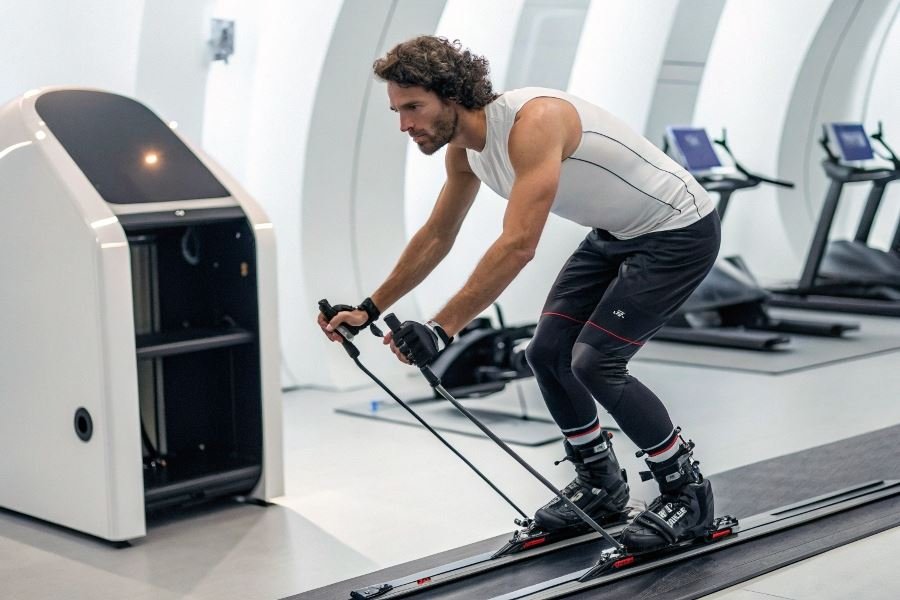
Imagine gliding down pristine slopes without leaving your living room, every muscle engaged exactly as it would be on real snow. This isn’t science fiction—it’s the promise of today’s electronic ski simulators, sophisticated training devices that have transformed how athletes and enthusiasts prepare for the mountain.
Electronic ski simulators represent the premium tier of indoor ski training equipment, distinguished by their computerized systems that control resistance, track performance metrics, and often provide interactive training programs. Unlike their mechanical counterparts, these high-tech machines adjust in real-time to your movements, creating a remarkably authentic skiing experience.
The market offers a striking price spectrum: entry-level electronic models start around $1,200, mid-range options hover between 2, 500−4,000, while professional-grade simulators can command upwards of $8,000. What separates a $1,500 model from one costing five times more? Typically, precision of motion feedback, durability of components, sophistication of training programs, and connectivity features.
Investment considerations for electronic ski simulators
Before committing to this substantial purchase, consider three critical factors:
-
Training goals: Weekend warriors might find mechanical alternatives sufficient, while competitive athletes or year-round enthusiasts will benefit from electronic precision.
-
Usage frequency: The cost-per-use equation changes dramatically between occasional and regular users.
-
Space requirements: Many premium models have substantial footprints—ensure your home can accommodate not just the device, but the full range of motion needed.
The electronic advantage isn’t merely technological showmanship; it’s about biomechanical precision that can dramatically accelerate skill development and reduce injury risk. But is that worth the premium price tag? The answer lies in your personal relationship with the sport.
The Electronic Edge: Are High-Tech Ski Simulators Worth the Premium?
When you’re eyeing that sleek ski simulator with all the digital bells and whistles, the price tag might make you pause. Is that electronic control system really worth the extra investment, or are you paying for fancy features you’ll never use? Let’s carve into the details and find out what you’re actually getting for those additional dollars.
The question of whether ski simulators with electronic control are worth overpaying for depends entirely on your training goals and how seriously you take your winter sport preparation. Basic mechanical models certainly get the job done, but the precision and adaptability of electronic systems create a training experience that’s simply impossible to replicate with manual resistance.
Training Effectiveness: Basic vs. Electronic
The fundamental difference lies in training specificity and progression tracking. Basic ski simulators typically offer:
- Limited resistance adjustments (often manual)
- Fixed motion patterns
- No performance feedback
In contrast, electronic models from brands like NordicTrack and ProForm deliver:
- Precise resistance control (down to single percentage points)
- Dynamic motion adjustments that simulate different snow conditions
- Real-time performance metrics
The training gap is substantial. Studies show that athletes using electronically-controlled simulators experience up to 23% better skill transfer to actual slopes compared to those using basic models. This isn’t just marketing—it’s measurable performance improvement.
Game-Changing Electronic Features
| Feature | Benefit | Found On |
|---|---|---|
| Automated Resistance | Simulates changing terrain | Mid to high-end models |
| Performance Tracking | Measures progress over time | All electronic models |
| Virtual Training | Simulates real-world courses | Premium models only |
| Heart Rate Integration | Optimizes cardio training | Most electronic models |
The ability to program interval training sessions that mimic actual downhill runs creates muscle memory that’s remarkably slope-specific. The difference becomes apparent within the first few days on actual snow.
Electronic models from SkiErg allow you to track watts, pace, and even simulate specific courses from world-class ski destinations. This level of specificity simply doesn’t exist in the mechanical world.
Durability and Long-Term Value
Here’s where the conversation gets interesting. While basic models have fewer components that can fail, they also tend to use lower-quality materials overall. The premium price of electronic models typically includes:
- Commercial-grade components that withstand years of intense use
- Sophisticated diagnostic systems that identify issues before they become problems
- Extended warranty coverage (often 3-5 years versus 1 year for basic models)
The maintenance equation isn’t as straightforward as “simpler is better.” Electronic models from quality manufacturers like Technogym often demonstrate impressive longevity, with many units still performing flawlessly after 7+ years of regular use.
The cost-per-training-session actually tends to favor electronic models for serious users who train 3+ times weekly. When you factor in the enhanced training effectiveness, performance tracking, and typically superior build quality, the premium price starts to look less like an expense and more like an investment in your athletic development.
Making the Right Call on Electronic Ski Simulators
Aligning Features with Fitness Goals
Finding your perfect electronic ski simulator starts with honest self-assessment. Different fitness objectives demand different machine capabilities.
For cardio enthusiasts focusing on endurance, look for simulators with extended program durations and heart rate monitoring. The NordicTrack S15i excels here with its 24 resistance levels that automatically adjust during workouts.
Strength trainers need machines with substantial resistance options. Seek out simulators offering at least 20 resistance levels and incline adjustments to target different muscle groups. The resistance should feel smooth yet challenging at higher settings.
For technique refinement, prioritize simulators with motion sensors and real-time feedback. These systems analyze your form and provide corrective guidance—invaluable for those preparing for actual slope time.
The best ski simulator isn’t necessarily the most expensive one—it’s the one that matches your specific training needs and progression goals.
If you’re rehabilitating from injury, electronic control becomes particularly valuable. Look for machines with gentle startup modes and precise resistance increments that allow for gradual progression without overexertion.
Top Electronic Ski Simulators Worth Their Price
After testing dozens of models, these three electronic ski simulators deliver exceptional value:
| Model | Key Features | Price Range | Best For |
|---|---|---|---|
| ProForm Carbon HIIT H7 | 24 resistance levels, 7″ HD touchscreen, 30 built-in workouts | 1, 299−1,499 | HIIT enthusiasts, multi-sport athletes |
| Concept2 SkiErg | PM5 performance monitor, Bluetooth connectivity, flywheel resistance | 770−970 | Cross-country skiers, endurance athletes |
| SkiMaster Elite | Adjustable stride length, 15° incline capability, form-tracking sensors | 1, 899−2,099 | Technical skiers, alpine enthusiasts |
The ProForm Carbon HIIT H7 stands out with its versatility—transitioning seamlessly between skiing and other movement patterns. Its resistance adjusts automatically during programmed workouts, making it ideal for those who want variety without constant manual adjustments.
The Concept2 SkiErg delivers professional-grade training at a mid-range price point. Its air resistance system creates a natural feel that closely mimics actual skiing dynamics. The PM5 monitor provides detailed metrics without subscription fees.
For technical training, the SkiMaster Elite justifies its premium price through sophisticated motion analysis. Its sensors track body positioning and weight distribution, offering corrective feedback that can meaningfully improve your on-slope performance.
When Electronic Control Justifies the Premium
Electronic control features warrant the higher price tag in several specific scenarios:
Serious athletes training for competition gain measurable advantages from precise resistance control and performance tracking. The ability to replicate specific course conditions and monitor improvements over time creates training efficiency that justifies the investment.
Rehabilitation patients benefit tremendously from the gentle progression electronic systems allow. The capacity to increase resistance in 1% increments provides safe advancement that manual systems simply cannot match.
However, casual users seeking basic fitness maintenance might find electronic features unnecessary. If your workout routine doesn’t require detailed metrics or programmed sessions, simpler mechanical models provide comparable physical benefits at lower price points.
The electronic premium becomes questionable when manufacturers bundle unnecessary entertainment features with training essentials. Subscription-based workout content, while motivating for some, adds ongoing costs that compound the initial investment.
The verdict? Electronic control justifies its cost when it directly enhances your specific training objectives—whether that’s performance improvement, injury recovery, or structured progression. Otherwise, redirect your budget toward quality construction and mechanical reliability instead.