
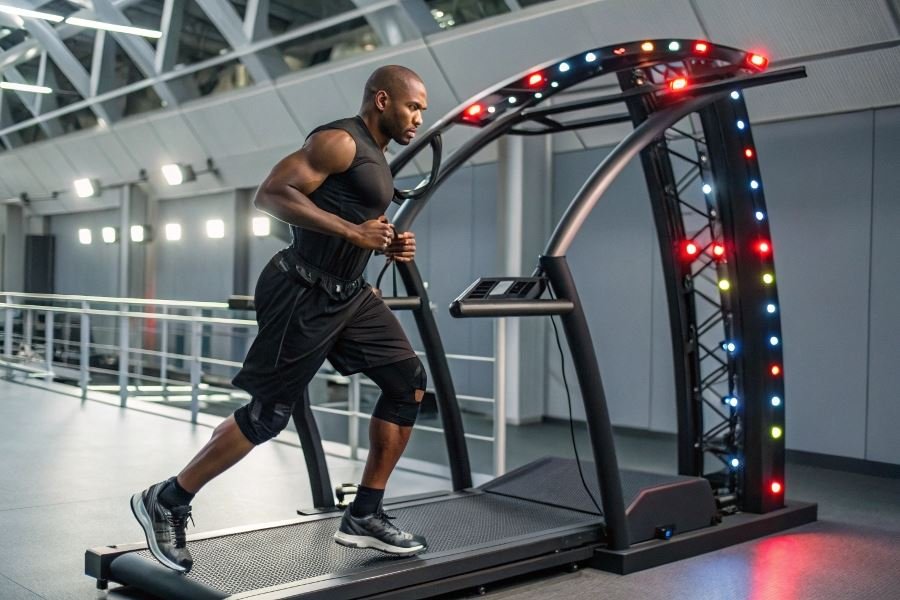
Ever watched an Olympic sprinter explode from the blocks in under 0.15 seconds? That’s not just talent—it’s a finely tuned reaction system developed through thousands of hours of specialized training. The difference between gold and fourth place often comes down to milliseconds that can’t be seen by the naked eye.
Professional reaction simulators have revolutionized how elite athletes and tactical professionals prepare for split-second decision making. These sophisticated training devices create controlled environments where users respond to visual, auditory, or tactile stimuli, gradually reducing reaction time while improving decision accuracy. Unlike basic drills, these systems adapt to performance levels, creating personalized challenges that push cognitive and physical boundaries simultaneously.
The science behind reaction development is compelling. Research from the Journal of Sports Sciences shows that dedicated reaction training can improve response times by up to 18% in just eight weeks—a game-changing margin in competitive environments. But the benefits extend far beyond faster reflexes:
- Enhanced cognitive processing that transfers to real-world performance
- Improved hand-eye coordination that remains stable under pressure
- Significant gains in decision-making accuracy during high-stress situations
For professionals whose performance depends on split-second choices—from quarterbacks reading defenses to emergency responders assessing threats—reaction simulators provide measurable advantages that traditional training methods simply can’t match. The neural pathways strengthened through this specialized training create what sports psychologists call “unconscious competence”—the ability to make optimal decisions without conscious thought.
Reaction Training Evolved: Professional Simulators Breakdown
Light-Based Reaction Simulators That Illuminate Performance
The science behind reaction time development has transformed athletic training across disciplines. Light-based reaction simulators have emerged as frontrunners in this evolution, offering athletes precision tools that measure millisecond improvements. These systems typically feature illuminated targets that require physical interaction—tapping, hitting, or stepping—when they activate.
When evaluating professional simulators for reaction development, features of selection should prioritize programmability and data tracking capabilities. The best light-based systems offer customizable patterns that adapt to specific sport movements, creating training scenarios that directly translate to competitive environments. The Blazepod system exemplifies this approach with its portable light pods that can be arranged to mimic game-specific reaction challenges.
What separates elite systems from basic models:
- Reaction time measurement precision (1ms vs 10ms accuracy)
- Programmable sequence complexity
- Wireless range capability (30+ feet optimal)
- Battery life (4+ hours continuous use)
- Impact resistance rating
The difference between good and great often comes down to milliseconds—the exact measurement these systems are designed to improve.
Audio-Response Training Systems That Command Attention
While visual stimuli dominate many sports, audio-response systems target a different neural pathway that’s crucial for comprehensive reaction development. These simulators emit tones, beeps, or verbal commands requiring immediate physical responses.
The FITLIGHT Trainer incorporates both visual and audio cues, allowing coaches to create multi-sensory drills that force athletes to process information through different channels simultaneously. This dual-processing requirement more accurately replicates game situations where athletes must filter multiple inputs.
Key selection factors for audio systems include:
| Feature | Why It Matters | Professional Standard |
|---|---|---|
| Sound clarity | Must be distinguishable during exertion | 85+ dB output |
| Directional audio | Spatial awareness training | 360° sound field |
| Voice command options | Sport-specific instruction capability | Customizable command library |
| Environmental durability | Outdoor/gym functionality | Water/dust resistance |
Multi-Sensory Equipment That Transforms Training
The most sophisticated reaction development systems integrate visual, auditory, and tactile stimuli to create immersive training environments. These comprehensive platforms represent the cutting edge of neurological training technology.
The Dynavision D2 stands as the gold standard in this category, featuring a wall-mounted board with 64 target buttons that illuminate randomly, requiring athletes to respond while processing additional cognitive tasks. Originally developed for rehabilitation, these systems have found their way into elite training facilities across professional sports.
Multi-sensory systems deliver exceptional value through:
- Cognitive load management during physical exertion
- Decision-making improvement under pressure
- Peripheral vision enhancement
- Hand-eye coordination refinement
- Reaction time analytics with performance trending
The most effective multi-sensory simulators allow for sport-specific customization. Basketball coaches might program quick-change directional drills, while football trainers might focus on recognition-reaction scenarios that mimic defensive reads.
When selecting any professional reaction training system, consider not just the immediate performance metrics but the long-term adaptability of the platform. The best systems grow with athletes, continuously challenging their neurological development through progressive difficulty adjustments and varied stimulus patterns.
Maximizing Your Reaction Training Investment
Identifying your true training needs
Reaction training isn’t one-size-fits-all. Before investing in professional simulators, conduct a thorough assessment of your specific needs. Are you training for split-second decisions in team sports? Working on hand-eye coordination for racquet sports? Or perhaps developing cognitive processing speed for tactical situations?
The most successful athletes and teams start by identifying performance gaps through video analysis and performance metrics. The Blast Motion sensor system, for example, can quantify reaction times in baseball swings down to milliseconds, helping pinpoint exactly where improvements are needed.
For team environments, consider whether you need:
- Multi-user simultaneous training capabilities
- Sport-specific reaction patterns
- Portable vs. fixed installation options
- Data tracking across multiple athletes
Individual needs differ dramatically from team requirements, not just in scale but in fundamental functionality.
Budget reality and ROI calculations
Professional reaction simulators range from $500 portable light-based systems to comprehensive $25,000+ installations. The key isn’t spending the most—it’s spending wisely.
Calculate your return on investment by considering:
| Investment Factor | Calculation Approach | Example |
|---|---|---|
| Usage frequency | Cost ÷ (sessions × years of use) | $3,000 ÷ (100 sessions × 3 years) = $10/session |
| Performance gain | % improvement × value of performance | 5% speed improvement in a sport where milliseconds matter |
| Injury prevention | Potential injury costs avoided | Reduced ankle sprains through improved proprioception |
| User capacity | Cost per athlete for team systems | $5,000 ÷ 20 athletes = $250/athlete |
The Fitlight Trainer system offers modular expansion, allowing teams to start with a basic setup and add components as budgets allow—a smart approach for organizations with fluctuating resources.
Implementation strategies that deliver results
Purchasing the equipment is just the beginning. The implementation strategy determines the actual value you’ll extract from your investment.
-
Progressive integration: Begin with fundamental drills before advancing to complex scenarios. The Dynavision D2 system offers programming that scales from basic reaction training to complex cognitive-physical integration.
-
Periodization planning: Incorporate reaction training strategically within your overall training calendar:
- Pre-season: Focus on baseline development
- In-season: Maintenance and sport-specific applications
- Off-season: Targeted improvement of weaknesses
- Data-driven adjustments: The most sophisticated systems like NeuroTracker provide comprehensive performance analytics. Use this data to:
- Establish individual baselines
- Track progress over time
- Identify plateaus requiring training modifications
- Compare results against sport-specific benchmarks
- Cross-training integration: Reaction development doesn’t exist in isolation. The SPARQ training methodology demonstrates how reaction work should complement strength, agility, and sport-specific skill development.
The difference between mediocre and exceptional results often lies not in the equipment itself, but in the systematic implementation approach.
By thoughtfully assessing needs, making budget-conscious decisions, and implementing strategic training protocols, you’ll transform reaction training from a novelty into a performance multiplier that delivers measurable competitive advantages.