
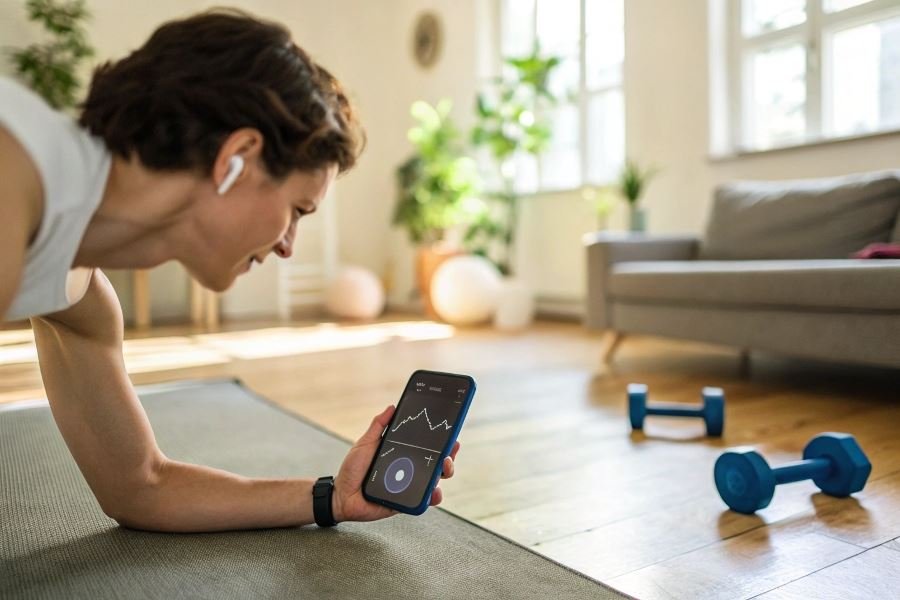
Ever wondered how 43% of fitness enthusiasts transformed their home workouts from mundane to extraordinary? The answer fits in your pocket.
Solo fitness has undergone a revolutionary transformation. Gone are the days when training alone meant limited guidance and motivation. Digital fitness solutions have exploded in popularity, with downloads of fitness apps increasing by 46% since 2020. These virtual trainers have become the silent partners in millions of fitness journeys, offering expert guidance without the scheduling constraints or recurring costs of in-person training.
Why fitness apps are changing the solo workout game
The beauty of quality fitness apps lies in their ability to solve the three biggest challenges of solo training: structure, technique, and motivation. With customizable workout plans, video demonstrations, and progress tracking, these digital companions transform your smartphone into a comprehensive fitness center.
“The right fitness app doesn’t just tell you what to do—it creates a framework for consistent improvement while adapting to your unique needs.”
Essential features that separate great fitness apps from good ones
When hunting for your perfect fitness companion, look beyond flashy interfaces to these game-changing elements:
- Adaptive programming that evolves as you progress
- Form-checking technology using your phone’s camera
- Community features that create accountability without requiring in-person interaction
- Data visualization that transforms numbers into meaningful insights about your fitness journey
The most powerful apps combine scientific training principles with intuitive design, making expert-level fitness knowledge accessible to everyone, regardless of experience level. They don’t just track your workouts—they transform how you understand your own body’s capabilities.
Top 3 Fitness Apps for Every Training Style
Finding the right digital companion for your solo fitness journey can transform those lonely gym sessions into guided masterclasses. The best fitness apps for solo workouts have evolved dramatically, offering everything from real-time form correction to progressive training plans that adapt to your performance. Let’s dive into the elite options across three major training categories that will revolutionize your independent fitness routine.
Strength Training Champions
JEFIT stands tall as the strength trainer’s digital spotter. With over 1,300 exercises complete with 3D demonstrations, this powerhouse app tracks your rest periods, suggests progressive overload strategies, and even generates heat maps showing which muscle groups you’ve been neglecting.
“The difference between a good workout and a great one often comes down to proper tracking and progression—exactly what JEFIT excels at.”
Strong delivers a cleaner interface with lightning-fast workout logging capabilities. Its rest timer and plate calculator features make it particularly valuable for serious lifters moving significant weight. The app’s ability to track personal records and visualize strength gains over time creates that addictive progress feedback loop that keeps users coming back.
Fitbod employs machine learning to analyze your workout history and suggest optimal resistance training sessions based on muscle recovery status. Its “fresh muscle” algorithm ensures balanced development while preventing overtraining—perfect for those who struggle with programming their own routines.
Cardio and HIIT Intensity Boosters
Nike Training Club offers premium-quality HIIT and cardio workouts completely free. Their video-guided sessions feature Olympic athletes and professional trainers delivering studio-quality instruction. The app’s “Collections” feature groups workouts into progressive series that build upon each other for systematic improvement.
Intervals Pro focuses exclusively on timing structures for interval training. Its customizable timer sequences allow for complex Tabata, EMOM (Every Minute On the Minute), and custom interval patterns with visual and audio cues that keep you locked in during those brutal final rounds.
Strava dominates the outdoor cardio space with its sophisticated GPS tracking, segment competitions, and social features. The app’s detailed analytics on pace, elevation, heart rate zones, and power output provide serious endurance athletes with professional-level insights.
Mind-Body Connection Enhancers
Down Dog revolutionizes yoga practice with infinitely customizable flows. Unlike apps with pre-recorded sessions, Down Dog generates fresh sequences each time, allowing users to specify duration, style, voice instruction, music, and focus areas. The app’s attention to proper alignment cues makes it surprisingly effective for solo practitioners.
| App Feature | Down Dog | Alo Moves | Pilates Anytime |
|---|---|---|---|
| Custom Flows | ✓ | ✗ | ✗ |
| Difficulty Levels | 6 | 4 | 5 |
| Offline Access | ✓ | ✓ | ✓ |
| Equipment Options | Minimal | Extensive | Moderate |
Alo Moves delivers celebrity-instructor-led sessions across yoga, pilates, meditation, and flexibility work. Their “Series” feature guides users through progressive skill development, from basic foundations to advanced practices like handstands and complex backbends.
Pilates Anytime offers over 3,400 video classes from renowned Pilates instructors worldwide. Their detailed filtering system helps users find sessions matching their equipment access, time constraints, and specific body focus areas.
Each of these apps transforms solo workouts from potential drudgery into guided experiences that rival in-person instruction. The key is finding which digital training style resonates with your personal fitness philosophy and goals—then letting technology handle the programming while you focus on the execution.
Maximizing Results with the Best Fitness Apps for Solo Workouts
The digital fitness revolution has transformed solitary workouts from potentially boring routines into dynamic, guided experiences. With the right apps in your corner, you’re never truly working out alone—even when there’s nobody else in the room.
Seamlessly integrating apps into your routine
The key to successful app integration isn’t downloading every shiny new fitness tool—it’s strategic implementation. Start by identifying gaps in your current workout regimen. Are you struggling with form? Motivation? Tracking? Once identified, introduce one app at a time to address specific needs.
For strength training enthusiasts, Nike Training Club offers an excellent entry point. Begin by replacing one workout per week with an app-guided session, gradually increasing as you become comfortable with the digital coaching style.
The most successful app adopters use the 70/30 rule: 70% of their established routine enhanced by 30% new app-guided elements.
For runners transitioning to app-guided workouts, Strava can initially serve as a passive tracker before you dive into its structured training plans. This gradual approach prevents the overwhelm that leads many to abandon fitness apps within weeks.
Tracking progress that actually motivates
The difference between data and motivation lies in how metrics are presented and interpreted. The most effective fitness apps transform cold numbers into compelling narratives about your fitness journey.
Fitbod excels at visualizing strength progression through heat maps showing which muscle groups you’ve worked and which need attention. This visual feedback creates a completion incentive that basic number tracking can’t match.
For comprehensive progress tracking, consider these app features that consistently drive long-term engagement:
| Feature | Psychological Benefit | Example App |
|---|---|---|
| Streak counting | Triggers loss aversion | MyFitnessPal |
| Social sharing | Activates accountability | Strava |
| Achievement badges | Provides milestone rewards | Garmin Connect |
| Progress visualization | Creates tangible evidence | Strong |
The most powerful tracking features connect your efforts to concrete results, creating a feedback loop that reinforces consistency.
Creating your personal fitness app ecosystem
The truly savvy solo athlete doesn’t rely on a single app but builds a complementary ecosystem. Think of it as assembling your personal training team, with each app playing a specialized role.
A well-rounded fitness app stack might include:
- A workout guidance app like Peloton Digital for structured sessions
- A tracking specialist such as Strong for logging weights and reps
- A recovery monitor like HRV4Training to optimize rest periods
The magic happens when these apps communicate through platforms like Apple Health or Google Fit, creating a comprehensive picture of your fitness journey.
Advanced users leverage automation tools like IFTTT to create custom workflows—automatically logging workouts to spreadsheets or triggering reminder notifications based on recovery metrics.
By thoughtfully combining specialized apps rather than seeking one perfect solution, you create a flexible system that evolves with your fitness goals and keeps solo workouts feeling fresh, challenging, and rewarding.