
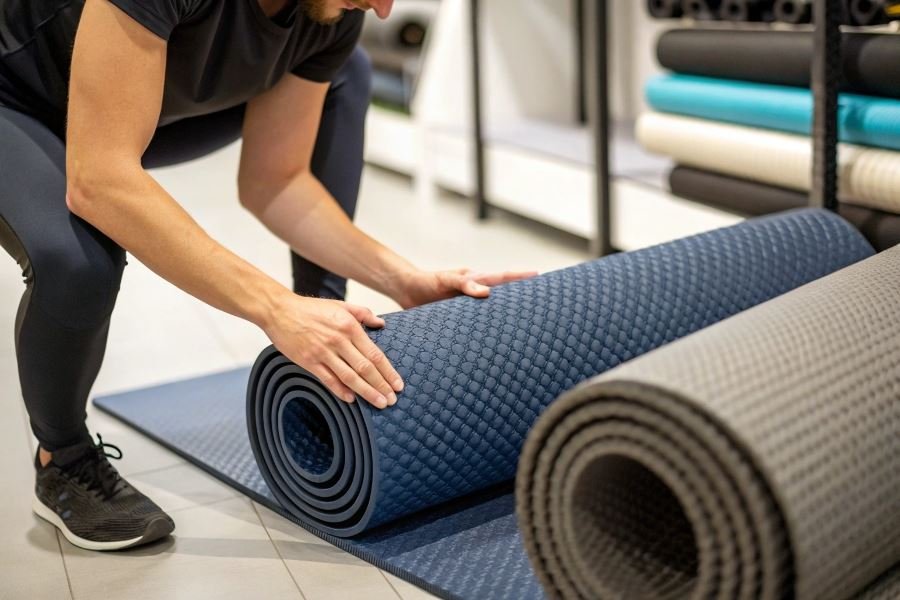
Ever stood on a cold, hard floor trying to hold a plank while your elbows scream in protest? The right fitness mat isn’t just a luxury—it’s the unsung hero of your workout routine, standing between you and potential injury.
When Olympic gymnasts stick their landings or yoga masters hold seemingly impossible poses, they’re not just showcasing skill—they’re relying on quality surfaces beneath them. The perfect fitness mat provides the trifecta every athlete needs: cushioning, stability, and grip.
Today’s market offers an impressive array of options, from ultra-thin travel mats that fold into backpacks to thick, cushioned powerhouses designed for high-impact training. Materials range from traditional PVC to eco-friendly natural rubber, cork, and TPE (Thermoplastic Elastomer) alternatives that offer both performance and peace of mind.
Before swiping your card, consider these critical factors:
- Thickness matters: Thin mats (1/16″-1/8″) offer stability for balance-focused activities, while thicker options (1/4″-1/2″) protect joints during intense training
- Surface texture: Look for non-slip patterns that keep you grounded through sweaty sessions
- Portability vs. durability: Lightweight mats offer convenience, while denser materials provide longevity
- Material composition: Your choice affects both performance and environmental impact
Remember that the perfect mat aligns with your specific workout style—what works for gentle stretching might fail during explosive HIIT sessions. Your fitness foundation deserves thoughtful consideration!
Essential Criteria for Choosing Your Perfect Fitness Mat
Let’s face it—your fitness mat is the unsung hero of your workout routine. It’s the foundation that supports every plank, cushions every burpee, and keeps you grounded during those challenging balance poses. Selecting the right mat isn’t just about grabbing whatever’s on sale; it’s about finding a faithful workout companion that meets your specific needs.
When exploring how to choose a fitness mat for workouts, several critical factors come into play that can make the difference between an enjoyable exercise session and a frustrating experience. The right mat should feel like an extension of your body—there when you need it, never getting in your way.
Material Matters: Durability for the Long Haul
The material of your fitness mat determines not just how it feels, but how long it will serve you. PVC (polyvinyl chloride) remains the most common material due to its exceptional durability and reasonable price point. However, for those with environmental concerns, TPE (thermoplastic elastomer) offers an eco-friendlier alternative with closed-cell construction that prevents bacteria growth.
Natural rubber mats provide superior grip and resilience but may trigger allergies in some users.
For intensive training, consider these material lifespans:
| Material | Expected Lifespan | Best For | Maintenance |
|---|---|---|---|
| PVC | 8-10 years | High-intensity training | Wipe with mild soap |
| TPE | 3-5 years | Moderate use | Water-only cleaning |
| Natural Rubber | 5-8 years | Hot yoga, heavy sweating | Regular deep cleaning |
| Cork | 3-4 years | Low-impact exercises | Gentle cleaning, avoid moisture |
Thickness: Finding Your Cushion Sweet Spot
The thickness of your mat directly impacts joint protection and stability. 3mm mats provide minimal cushioning but maximum stability—ideal for balance-focused practices like yoga. For general fitness, 6mm mats offer the versatility most users need.
The right thickness isn’t about comfort alone—it’s about creating the optimal interface between your body and the floor for your specific exercise type.
High-impact workouts or those with joint concerns should consider 8-10mm mats for maximum protection. Remember that thicker isn’t always better—too much cushion can destabilize movements requiring precise balance.
Size and Portability: Practical Considerations
Standard fitness mats measure approximately 68″ x 24″, but taller individuals should look for extended lengths of 72-85″. Consider your available workout space and storage options before committing to an oversized mat.
For travelers and commuters, foldable mats (rather than rollable) offer superior portability. Some premium options from Manduka and Lululemon now feature innovative folding designs that maintain structural integrity while fitting easily in standard gym bags.
Grip and Texture: The Safety Factor
Nothing disrupts flow like slipping during a crucial movement. Surface texture creates friction between your body and the mat, while bottom texture prevents the mat from sliding across the floor.
Raised patterns provide excellent grip for sweaty conditions, while microfiber surfaces offer superior hand and foot traction for dynamic movements. For hot workouts, consider specialized non-slip mats from Jade Yoga or Gaiam designed specifically to improve grip as moisture increases.
The ideal texture should feel comfortable against your skin while providing confident traction throughout your entire workout sequence.
By carefully considering these essential criteria—material, thickness, size, and grip—you’ll find a fitness mat that not only meets your immediate needs but becomes a reliable partner in your fitness journey for years to come.
Sealing the Deal: Your Perfect Fitness Mat Awaits
Finding the sweet spot between quality, functionality, and budget doesn’t have to feel like an impossible yoga pose. Your fitness mat is the foundation of your workout experience—the unsung hero supporting every plank, downward dog, and burpee. Let’s bring this search home with practical wisdom that’ll have you rolling out your ideal mat in no time.
Quality meets affordability without compromise
The fitness mat market spans from $15 budget options to premium $150 professional-grade mats. But here’s the truth: the most expensive option isn’t always the best for your specific needs.
Consider this balanced approach:
- Identify your non-negotiable features (thickness, material, size)
- Determine your workout frequency (daily users should invest more)
- Set a realistic budget ceiling (typically $30-80 for quality all-purpose mats)
The cost per workout drops dramatically when you invest in durability. A $60 mat used 4 times weekly for two years costs just 14 cents per session.
For high-intensity training, prioritize density and grip over aesthetics. For restorative practices, comfort and cushioning deserve your dollars. Remember that specialized mats (hot yoga, travel) justify premium pricing through specialized performance.
Standout performers for every workout style
After testing dozens of options across various workout disciplines, these mats consistently deliver exceptional performance:
For versatile training enthusiasts
The Manduka PRO offers unmatched durability with its lifetime guarantee. At 6mm thick with closed-cell construction, it handles everything from HIIT to meditation with minimal breakdown. The initial investment ($120-140) pays dividends through years of consistent performance.
For yogis seeking perfect balance
The Lululemon Take Form features innovative alignment guides without sacrificing grip. Its 5mm natural rubber construction provides ideal cushioning while maintaining stability for balance poses. The antimicrobial additives make it particularly suitable for hot yoga environments.
For budget-conscious fitness buffs
The Gaiam Essentials delivers surprising performance at its $25 price point. At 10mm thick, it offers superior joint protection for fitness beginners while maintaining enough firmness for standing exercises. The lightweight design makes it perfect for those who transport their mat regularly.
| Mat | Best For | Thickness | Material | Price Range |
|---|---|---|---|---|
| Manduka PRO | All-purpose/Longevity | 6mm | PVC | $120-140 |
| Lululemon Take Form | Yoga/Alignment | 5mm | Natural Rubber | $95-118 |
| Gaiam Essentials | Beginners/Budget | 10mm | NBR Foam | $20-30 |
Extending your mat’s prime performance years
Your fitness mat will thank you for these simple maintenance practices:
-
Clean regularly but gently – Wipe down after every sweaty session with a specialized mat cleaner or diluted vinegar solution (avoid harsh chemicals that break down materials)
-
Proper storage matters – Roll rather than fold to prevent permanent creases, and store away from direct sunlight which degrades materials prematurely
-
Rotation prevents uneven wear – Flip your mat end-to-end and side-to-side periodically to distribute pressure points
Deep cleaning should happen monthly for regular users—submerge non-porous mats briefly in a bathtub with mild soap, rinse thoroughly, and air dry completely before rolling up.
The perfect fitness mat becomes an extension of your workout commitment. By balancing practical considerations with performance needs, you’ll find a mat that supports not just your body, but your entire fitness journey.