
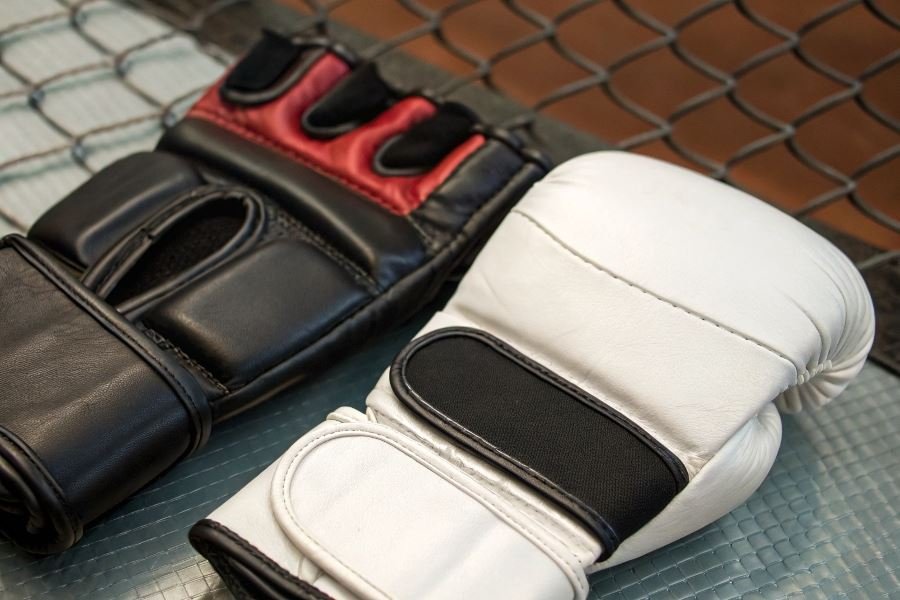
Ever watched a fighter’s hands get wrapped before a big match? That meticulous ritual isn’t just tradition—it’s the difference between victory and injury. The gloves you choose matter more than most fighters realize until they’ve made their first mistake.
Boxing gloves aren’t one-size-fits-all equipment across martial arts. The padded protection that works perfectly for a traditional boxer might leave a Muay Thai fighter vulnerable during clinches or compromise an MMA practitioner’s grappling ability. Each discipline demands specific features that enhance performance while providing appropriate protection.
Safety and performance intersect at the perfect glove choice. Too much padding might protect your hands but slow your strikes; too little might increase speed but leave your wrists vulnerable. This balance becomes even more critical when considering that hand injuries account for nearly 35% of all combat sports injuries.
Three key factors should guide your selection:
- Fighting discipline – Boxing requires more padding than MMA, while Muay Thai needs flexible wrist movement
- Training purpose – Sparring demands more protection than bag work or competition
- Personal fit – Hand size, fighting style, and experience level all influence optimal glove selection
“The right gloves don’t just protect your hands—they become an extension of your fighting philosophy.”
Whether you’re throwing hooks in boxing, clinching in Muay Thai, or transitioning to ground game in MMA, your gloves should enhance your natural abilities while providing appropriate protection for your specific martial art.
Specialized Gloves for Combat Sports
When you step into the ring or cage, your gloves aren’t just equipment—they’re your primary weapons and shields. Choosing the right pair can mean the difference between victory and injury. Boxing gloves for different types of martial arts: features of selection becomes critical knowledge when you understand how dramatically glove design varies across combat sports.
Boxing Gloves: The Sweet Science Specialists
Boxing’s technical demands have shaped glove evolution for over a century. Modern Everlast and Cleto Reyes boxing gloves feature concentrated padding across the knuckle area with a distinct profile that supports straight punching mechanics.
Weight classification matters enormously. Training typically requires 14-16oz gloves for adequate protection, while competition weights follow strict regulations:
- Professionals: 8-10oz (depending on weight class)
- Amateurs: 10-12oz (with AIBA approval)
The padding distribution in boxing gloves concentrates protection at the first two knuckles—precisely where boxers generate maximum impact. Premium models feature multi-layered foam systems that disperse force while maintaining feedback.
Wrist support extends 4-5 inches up the forearm, utilizing hook-and-loop or lace-up closures to prevent dangerous hyperextension during power punches.
Muay Thai Gloves: Designed for Eight Limbs
Muay Thai—Thailand’s national sport—demands gloves with distinctive characteristics that accommodate its clinching, blocking, and diverse striking techniques.
Key design elements include:
| Feature | Purpose | Benefit |
|---|---|---|
| Shorter cuff | Allows wrist flexibility | Enhanced clinch work |
| Rounded profile | Distributes impact evenly | Better for blocking kicks |
| Open palm | Improves grip | Superior clinching ability |
Fairtex and Twins Special produce authentic Thai gloves with these specialized features. The padding distribution spreads more evenly across the hand compared to boxing gloves, accommodating the palm strikes and forearm blocks essential to the art.
The thumb position sits slightly more forward, allowing fighters to grip opponents during the clinch phase while maintaining protection during exchanges.
MMA Gloves: Balancing Striking and Grappling
Mixed Martial Arts presents the ultimate equipment challenge: protecting fighters while enabling both striking and complex grappling techniques.
MMA gloves feature:
- Open-finger design (4oz competition standard)
- Compartmentalized padding focused on knuckle protection
- Minimal wrist coverage to facilitate transitions
The UFC competition glove and training variants from Hayabusa demonstrate how manufacturers balance impact protection with grappling functionality. The padding concentrates 70% of its volume across the knuckles while leaving fingers free for submissions.
The true art of MMA glove design lies in protecting what needs protection while freeing what needs freedom.
Training variants typically weigh 6-7oz with additional padding, while competition gloves maintain the 4oz standard with exposed fingers and minimal palm coverage.
The striking surface features a curved design that naturally aligns with a closed fist, reducing hand injuries during impact while still allowing fighters to open their hands for takedowns and submissions.
When selecting gloves for any combat sport, understanding these discipline-specific design elements ensures you’re properly equipped for both performance and protection in your chosen martial art.
The Ultimate Guide to Boxing Glove Selection
When you step into the ring or onto the mat, your gloves become an extension of yourself. The right pair can elevate your performance, while the wrong choice might leave you nursing unnecessary injuries. Let’s dive into what truly matters when selecting boxing gloves across different martial arts disciplines.
Material matters more than you think
The construction of your gloves directly impacts their performance and lifespan. Premium boxing gloves typically feature genuine leather, offering exceptional durability and a natural feel that synthetic materials struggle to match. Brands like Cleto Reyes and Winning have built their reputations on high-grade leather that molds to your hands over time.
For those practicing Muay Thai, look for reinforced knuckle padding and a more flexible wrist design to accommodate clinch work. Meanwhile, MMA practitioners need gloves with exposed fingers and minimal padding—completely different requirements from traditional boxing.
Pro tip: The stitching quality often reveals a glove’s true durability. Double or triple stitching along stress points indicates craftsmanship that will withstand hundreds of rounds.
Synthetic options from manufacturers like Venum and Hayabusa have dramatically improved in recent years, offering impressive performance at lower price points. Modern microfiber materials can provide excellent moisture resistance—crucial during those sweat-drenched summer training sessions.
Finding your perfect fit
Nothing derails training faster than ill-fitting equipment. Boxing gloves should feel snug without restricting blood flow or causing numbness. Your fingertips should barely touch the end of the glove’s interior, with enough room to make a partial fist.
Weight classification varies by discipline:
| Martial Art | Training Weight | Competition Weight |
|---|---|---|
| Boxing | 14-16oz | 8-10oz |
| Muay Thai | 14-16oz | 8-10oz |
| Kickboxing | 12-16oz | 8-10oz |
| MMA | 7oz | 4-6oz |
Hand wraps are non-negotiable companions to your gloves, providing crucial wrist support and knuckle protection. The combination of proper wraps and correctly sized gloves dramatically reduces injury risk during those high-intensity training sessions.
Investment strategy for every skill level
Quality gloves represent an investment in both performance and safety. Beginners should focus on versatile training gloves in the $60-100 range from reputable brands like Everlast or Title, which offer adequate protection while you develop proper technique.
As your skills advance, consider specialized gloves for different training aspects:
- Heavier gloves (16-18oz) for conditioning and partner drills
- Competition weight gloves for speed work and technique refinement
- Bag gloves with reinforced padding for heavy bag sessions
Elite amateurs and professionals often maintain multiple pairs for different training purposes, typically investing $150-300 per pair from premium manufacturers like Grant or Rival.
Remember that proper maintenance extends glove lifespan significantly. Allowing gloves to dry completely between sessions and using antibacterial sprays prevents premature deterioration from sweat and bacteria—turning your investment into equipment that performs consistently for years rather than months.