
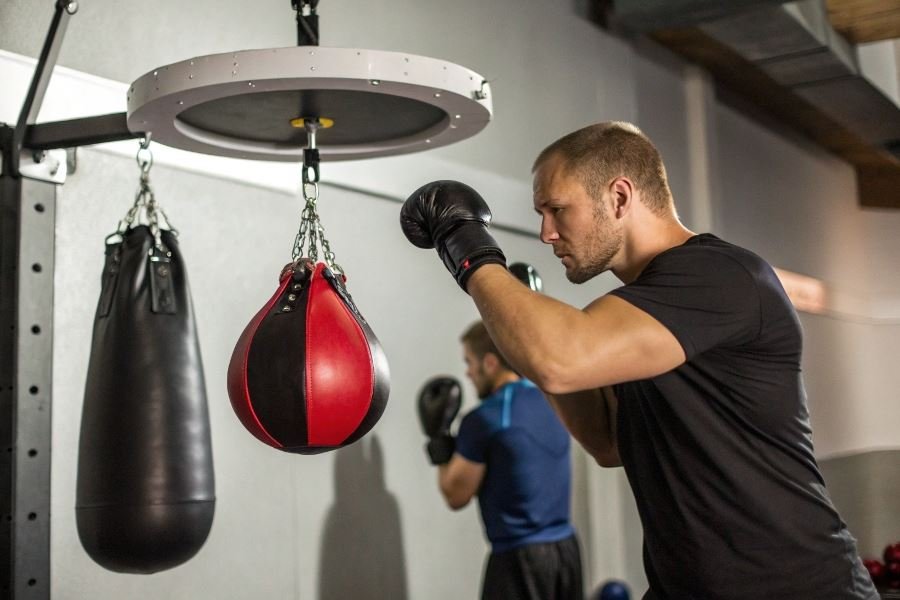
Ever watched a boxer’s lightning-fast combinations and wondered how they developed such precision? The secret often hangs right in front of them—a punching ball. But not just any ball will do, especially when you’re taking your first steps into the boxing world.
The difference between developing proper technique and picking up bad habits often comes down to the equipment you use from day one. A quality punching ball isn’t just an accessory; it’s your silent coach, providing instant feedback on every jab, cross, and hook you throw. The right ball responds to your power, timing, and accuracy, teaching your muscles the correct movement patterns before they become second nature.
For beginners, specialized punching balls offer something traditional heavy bags can’t—they demand focus on hand-eye coordination while improving reaction time. They’re less intimidating than sparring yet more engaging than shadow boxing. Think of them as the perfect middle ground where technique meets practical application.
What separates a beginner-friendly punching ball from the rest? Three critical factors:
- Appropriate rebound speed – fast enough to challenge you, slow enough to let you maintain form
- Adjustable height – allowing proper stance development as you progress
- Durable construction – withstanding those early, sometimes awkward punches without losing shape
The best training balls create a foundation for everything that follows in your boxing journey. They transform raw enthusiasm into disciplined technique, turning beginners into boxers one punch at a time.
Top 3 Punch Training Balls Every Boxer Needs
When you’re stepping into the ring for the first time, developing proper technique is everything. The best balls for practicing punches for beginner boxers can dramatically accelerate your progress, building muscle memory and reflexes that translate directly to sparring success. Let’s dive into the three essential training tools that should be in every novice boxer’s arsenal.
Double-End Bags: The Rhythm Masters
Double-end bags might look simple—just a leather ball attached to elastic cords at both ends—but they’re boxing’s secret weapon for developing timing and accuracy. These responsive bags bounce back with surprising speed after each punch, simulating an opponent’s movement.
Key Benefits:
- Improves hand-eye coordination
- Teaches proper distance management
- Develops defensive reflexes
- Enhances punch accuracy
The Everlast Double End Striking Bag stands out with its genuine leather construction and adjustable tension cords, allowing you to customize resistance as your skills improve. For beginners seeking durability, the Title Boxing Gyro features reinforced seams that withstand thousands of punches while maintaining shape.
Speed Bags: Rhythm and Precision
Nothing says “boxer” quite like the distinctive rat-a-tat-tat of a speed bag workout. These teardrop-shaped bags hang from a swivel platform and require precise timing to maintain continuous motion.
Speed bags transform awkward beginners into fighters with fluid hand movement and impeccable timing.
| Speed Bag Model | Best For | Price Range |
|---|---|---|
| Ringside Leather Speed Bag | Overall quality | $45-65 |
| Title Classic Speed Bag | Durability | $35-55 |
| Venum Hurricane Speed Bag | Responsiveness | $50-70 |
The Ringside Leather Speed Bag offers balanced weight distribution that creates consistent rebounds, making it ideal for beginners learning the fundamental three-hit rhythm. Meanwhile, the Title Classic features a latex bladder that maintains air pressure longer between inflations—perfect for extended training sessions.
Reflex Balls: Portable Coordination Builders
Reflex balls represent the newest innovation in boxing training equipment. These headband-attached balls connected to elastic cords bounce back toward your face, forcing you to punch reactively.
Why Beginners Love Them:
- Portable training anywhere
- Immediate feedback on punch accuracy
- Develops defensive reflexes
- Low cost entry point
The Yokkao Boxing Reflex Ball comes in three difficulty levels, allowing beginners to progress naturally as their skills improve. For those seeking versatility, the PIQIUQIU Boxing Reflex Ball Set includes multiple ball weights and headbands suitable for different skill levels.
What makes reflex balls particularly valuable is their ability to develop both offensive and defensive movements simultaneously. As you punch the ball away, you must immediately prepare to strike again as it returns—creating the perfect simulation of an exchange with an opponent.
Each of these training tools develops different aspects of your boxing fundamentals. By incorporating all three into your regular practice routine, you’ll build a comprehensive skill set that translates directly to improved performance in the ring. Start with 10-15 minutes on each apparatus during your workout, gradually increasing duration as your endurance and technique improve.
Finding Your Perfect Punching Partner: Balls for Beginner Boxers
The journey from boxing novice to skilled fighter begins with the right training tools. Punching balls aren’t just equipment—they’re your daily sparring partners that shape your technique, build your strength, and refine your timing. Let’s dive into the world of boxing balls and find your perfect match.
The Ball Selection Breakdown
Choosing the right punching ball involves understanding how different options affect your development. Here’s what matters most:
Speed – Different balls move at different paces, challenging your reflexes in unique ways. Double-end bags bounce back quickly, while heavy bags provide steady resistance.
Weight – The heavier the ball, the more it builds power; the lighter, the more it develops speed. Beginners should start with medium-weight options (around 25-40 pounds for hanging bags) before progressing.
Response – Some balls are designed to simulate an opponent’s movement. The Everlast double-end bag, for instance, mimics the unpredictable head movement of an opponent, while floor-to-ceiling balls improve timing and accuracy.
Your choice should match your current skill level, not where you aspire to be. Starting with equipment that’s too advanced can ingrain bad habits.
Ball Types for Boxing Beginners
| Ball Type | Primary Benefit | Ideal For |
|---|---|---|
| Heavy Bag | Power development | Building strength and form |
| Speed Bag | Hand-eye coordination | Rhythm and endurance |
| Double-End Bag | Timing and accuracy | Defensive movements |
| Reflex Ball | Reaction time | Solo drills |
Beginners should typically start with a standard heavy bag to master basic punching mechanics. The Title Boxing Classic Heavy Bag provides consistent resistance that helps develop proper form without the unpredictability that can frustrate newcomers.
Keeping Your Ball in Fighting Shape
The lifespan of your punching ball depends largely on how you treat it. Follow these maintenance principles:
Regular inspection – Check for tears, loose stitching, or leaking fill material weekly.
Proper storage – Keep leather bags away from direct sunlight and extreme temperatures to prevent cracking.
Surface cleaning – Wipe down synthetic bags with antibacterial spray after use; condition leather bags monthly with appropriate leather care products.
A well-maintained punching ball isn’t just economical—it’s safer. Damaged equipment can lead to injuries that set your training back weeks or months.
The Progression Pathway
As your skills develop, your equipment should evolve with you:
- Beginner stage – Start with a medium-weight heavy bag to master basic punches and combinations
- Early intermediate – Add a speed bag to improve hand-eye coordination and develop rhythm
- Intermediate – Incorporate a double-end bag to enhance accuracy and defensive movements
- Advanced beginner – Experiment with a Ringside reflex ball to sharpen reaction time
The key is progressive challenge—each new ball should push your skills slightly beyond your comfort zone without overwhelming you.
Remember: The best punching ball isn’t necessarily the most expensive or professional-grade option. It’s the one that matches your current abilities while gently pushing you toward improvement. Start simple, master the basics, and let your equipment grow with your skills.