
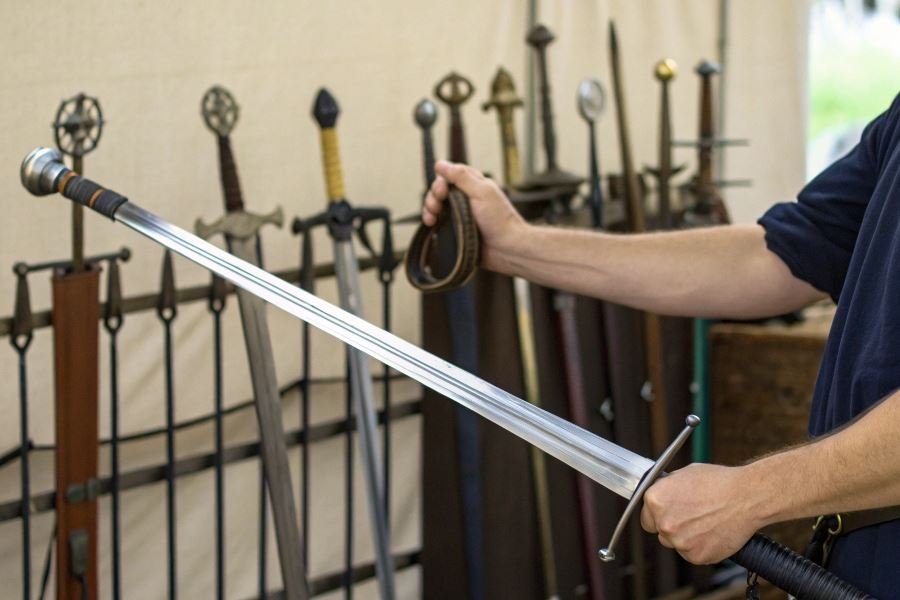
Ever held a sword that felt like swinging a sledgehammer? Or one so light it seemed to float away from your grip? The difference between an exhilarating training session and a frustrating workout often comes down to one crucial factor: choosing the right training sword for your body and skill level.
When selecting a training sword, weight and size aren’t just preferences—they’re fundamental to your safety, technique development, and overall enjoyment. A properly balanced sword becomes an extension of your arm, while an ill-fitted one can lead to joint strain, improper form, and even injury. The sword that transformed your instructor into a graceful warrior might turn you into a clumsy novice if it doesn’t match your physique and experience.
Training swords come in three primary varieties, each with distinct advantages. Wooden swords (bokken or wasters) offer traditional feel and moderate weight, perfect for beginners learning proper form. Synthetic options provide durability and weather resistance while maintaining realistic weight distribution. Steel trainers deliver the most authentic experience with true balance and weight, though they require greater skill to handle safely.
“The right training sword should challenge you without overwhelming you. It’s a delicate balance between weight that builds strength and dimensions that allow proper technique.”
Safety must remain paramount in your selection process. A sword too heavy leads to fatigue and sloppy technique; too light and you’ll develop habits that won’t translate to authentic weapons. The ideal training sword grows with you—challenging enough to build skill, but manageable enough to prevent frustration or injury.
Finding Your Perfect Training Sword Match
When stepping into the world of sword training, the weight and dimensions of your practice weapon aren’t just specifications—they’re the foundation of your entire training experience. Selecting the right training sword transforms practice from awkward flailing into fluid, purposeful movement that builds real skill.
The process of how to choose a training sword by weight and size requires understanding both your body’s capabilities and your training objectives. Too heavy, and you risk injury; too light, and you miss valuable strength development. Let’s dive into the essential factors that will guide you toward your ideal training companion.
Match Weight to Purpose and Power
Your training sword should challenge you without overwhelming you. A beginner might start with a lighter option (around 2-3 pounds) while an experienced practitioner might handle 4+ pounds comfortably.
Training goals matter tremendously here:
- Endurance focus: Choose lighter weights (1.5-2.5 pounds) for extended practice sessions
- Strength development: Select heavier options (3-4 pounds) for resistance training
- Technical precision: Mid-range weights (2-3 pounds) offer the best balance
Remember that historical swords weren’t as heavy as movies suggest. Most functional medieval longswords weighed between 2.5-4 pounds, not the 10-pound behemoths often depicted in fantasy.
The right training sword weight should leave you pleasantly fatigued after practice—not injured or unable to maintain proper form.
Length Considerations Based on Physiology
Your height and arm length directly determine appropriate sword length. The traditional method involves standing straight with arms at your sides—your sword should reach from the ground to approximately your armpit.
| Your Height | Recommended Sword Length |
|---|---|
| Under 5’4″ | 36-40 inches |
| 5’4″ – 5’10″ | 40-45 inches |
| Over 5’10″ | 45-50+ inches |
Arm span matters too. Those with longer reaches might comfortably handle longer blades, while those with shorter arms may need to adjust downward by 2-3 inches from these guidelines.
Balance Point: The Hidden Game-Changer
Perhaps the most overlooked aspect of training sword selection is the balance point—where the sword pivots when balanced on a finger. This dramatically affects how the weapon feels in motion.
Balance types to consider:
- Blade-heavy balance: Creates momentum in cuts but requires more strength to control
- Handle-heavy balance: Easier to maneuver quickly but delivers less powerful strikes
- Neutral balance: Offers versatility for various techniques
For beginners, a slightly handle-heavy or neutral balance provides the most forgiving learning experience. As you advance, experimenting with different balance points helps develop adaptability across weapon types.
Quality training swords from manufacturers like Cold Steel or Purpleheart Armory typically provide balance point measurements in their specifications—a detail worth its weight in gold when making your selection.
By thoughtfully matching your sword’s weight, length, and balance point to your physical attributes and training goals, you’ll create the optimal conditions for skill development while minimizing injury risk. Your perfect training sword awaits!
Sealing the Deal: Your Ultimate Training Sword Decision
Finding your perfect training sword isn’t just about picking up any blade—it’s about starting a journey that grows with your skills. Let’s cut through the confusion and forge a clear path to your ideal training weapon.
The Smart Progression Path
Starting with a lighter training sword isn’t just for beginners—it’s strategic brilliance. Most martial arts masters recommend beginning with weapons around 2-3 pounds, regardless of your strength. Why? Because technique trumps power every time.
The sword that feels too light today will teach you the precision you’ll need when wielding heavier blades tomorrow.
The natural progression typically follows this pattern:
- Lightweight synthetic (1-2 lbs) – Perfect for learning basic forms and movements
- Mid-weight synthetic or light steel (2-3 lbs) – Developing proper edge alignment and control
- Standard weight steel (3-4 lbs) – Refining techniques with authentic weight distribution
- Historical replicas (3-5+ lbs) – Mastering period-specific techniques with authentic handling
This graduated approach prevents injury while building the specific muscle memory needed for proper sword handling. Many practitioners keep their starter swords even after advancing, using them for speed drills and precision work.
Maintenance Matters
Your sword’s weight and material directly impact its maintenance requirements:
| Material | Weight Range | Maintenance Level | Key Requirements |
|---|---|---|---|
| Synthetic | 1-2 lbs | Low | Occasional cleaning, check for cracks |
| Aluminum | 2-3 lbs | Low-Medium | Wipe down after use, check fittings |
| Carbon Steel | 3-5 lbs | High | Regular oiling, rust prevention, edge maintenance |
| Stainless Steel | 3-4 lbs | Medium | Periodic cleaning, fitting checks |
Heavier steel swords demand more attention—carbon steel blades require regular oiling to prevent rust, while even “maintenance-free” stainless steel needs occasional care to maintain fittings and handle wrappings.
Remember that proper storage is equally important—wall-mounted racks keep heavier swords from warping, while lighter synthetic options can often be stored in carrying cases between sessions.
Top Training Swords Worth Your Investment
After testing dozens of training swords across weight categories, these stand out for their exceptional balance of quality, durability, and performance:
Lightweight Category (1-2 lbs)
The Cold Steel Polypropylene Longsword delivers remarkable durability at just 1.4 lbs. Its balanced design makes it perfect for beginners developing proper form without fatigue.
Mid-weight Category (2-3 lbs)
The Purpleheart Armory Pentti Synthetic weighs in at 2.5 lbs and offers near-perfect weight distribution. Its replaceable tip system extends longevity while providing realistic handling.
Full-weight Category (3-4+ lbs)
The Albion Meyer Fechterspiel at 3.7 lbs represents the gold standard in training swords. Though premium-priced, its historically accurate balance point and blunted edges make it ideal for advanced practitioners seeking authentic handling.
Your perfect training sword should grow with your practice—starting lighter develops proper technique, while gradually increasing weight builds the specific strength needed for historical accuracy. Choose wisely, maintain diligently, and your training sword will become an extension of yourself.