
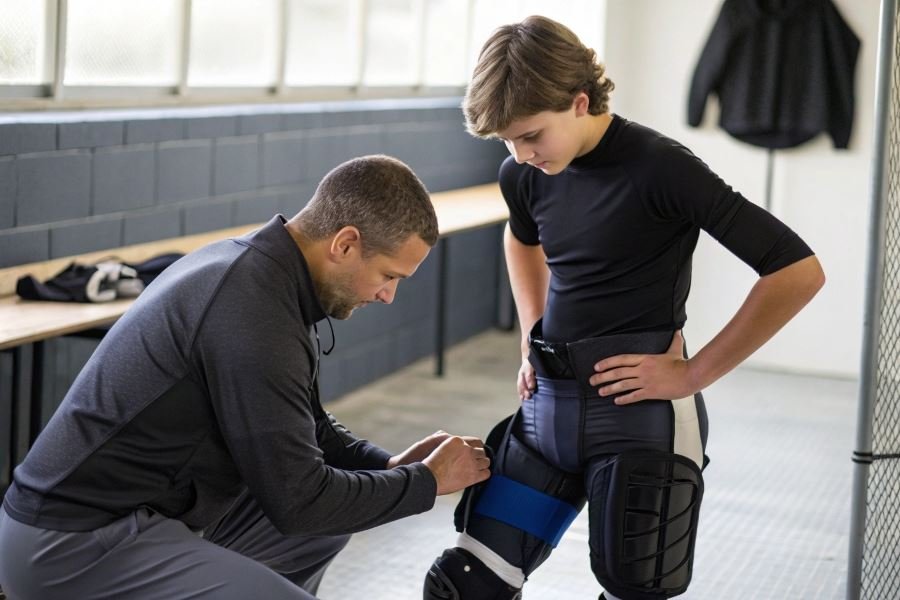
Ever taken a direct hit to the groin during a match? That searing, breath-stealing pain isn’t just uncomfortable—it can sideline you for weeks. Yet surprisingly, many athletes still treat groin protection as an afterthought rather than essential equipment.
The difference between adequate protection and exceptional protection often comes down to one critical factor: material selection. From traditional hard plastic cups to cutting-edge composite polymers, the evolution of groin protection materials has transformed athletic safety while maintaining performance.
Why proper protection matters beyond the obvious
The consequences of inadequate groin protection extend far beyond momentary pain. Serious impacts can cause testicular torsion, contusions, or even long-term fertility issues. For combat sports athletes, the risk multiplies exponentially—UFC fighters absorb strikes at forces exceeding 2,000 newtons, equivalent to being hit by a 20-pound sledgehammer.
Material landscape: What’s actually shielding you
Today’s protection options include:
- Hard thermoplastics: Rigid and durable but often uncomfortable
- Gel-enhanced composites: Offering superior impact absorption
- Foam technologies: Lightweight with progressive resistance
- Carbon fiber blends: Elite-level protection with minimal weight penalty
Choosing your shield: Critical factors
When evaluating protection materials, consider these non-negotiable factors:
- Impact dispersion capability – How effectively does the material spread force across its surface?
- Weight-to-protection ratio – Heavier isn’t always better
- Anatomical conformity – The best material adapts to your specific body shape
- Moisture management – Critical for preventing bacterial growth and chafing
The right material choice varies dramatically between sports—what works for a baseball catcher faces different demands than an MMA fighter’s needs.
The Ultimate Groin Protection Showdown: Materials That Matter
When it comes to athletic performance, protection isn’t just about safety—it’s about confidence. The material between you and potential injury can make all the difference in how you move, compete, and perform. Let’s dive into the science and sensations behind the top three groin protection materials dominating the market today.
Hard Plastic and Foam Composites: The Reliable Defenders
Hard plastic and foam composite protectors have long been the gold standard in high-impact sports. These traditional guardians combine rigid outer shells with strategic foam padding to create a fortress for your most vulnerable areas.
The question of which groin protection material is better: a comparison between traditional and newer options often begins with these tried-and-true composites. Their primary advantage? Unmatched impact resistance. When a hockey puck travels at 90+ mph or a martial arts kick lands with full force, the hard outer shell disperses energy while the foam absorbs what remains.
Protection Level: 9/10 – These composites excel in high-impact scenarios, making them ideal for combat sports, hockey, and baseball catchers.
Durability: 8/10 – Most quality hard shell protectors from brands like Shock Doctor can withstand multiple seasons of intense use.
Comfort: 6/10 – The trade-off comes in mobility and comfort. Many athletes report restricted movement and chafing during extended wear.
Gel-Based Protection Systems: The Comfortable Contenders
Gel technology has revolutionized impact protection across sporting goods, and groin guards are no exception. These systems utilize viscoelastic polymers that remain soft during normal movement but instantly harden upon impact.
Impact Absorption: 8.5/10 – Gel systems excel at absorbing and dispersing energy across their entire surface area, reducing pressure points.
Flexibility: 9/10 – Unlike rigid alternatives, gel protectors move with your body, conforming to your anatomy during dynamic movements.
Temperature Regulation: 7.5/10 – Most gel systems from manufacturers like Diamond MMA incorporate ventilation channels that prevent overheating during intense activity.
The gel’s adaptive properties create a second-skin feeling that many athletes prefer for extended training sessions. While slightly less protective against extreme impacts than hard shells, the comfort advantage makes them superior for endurance sports and training environments.
Advanced Technical Fabrics: The Innovative Challengers
The newest entrants in protective gear utilize cutting-edge textile engineering. These systems layer specialized fabrics with varying densities to create protection that’s ultralight yet surprisingly effective.
Breathability: 9.5/10 – Technical fabric protectors from companies like Under Armour utilize moisture-wicking materials and strategic ventilation to keep athletes dry.
Antimicrobial Properties: 9/10 – Many incorporate silver-ion technology that prevents bacterial growth and odor development, even after multiple intense sessions.
Weight Considerations: 10/10 – At roughly half the weight of traditional options, these protectors virtually disappear during competition.
| Material Type | Impact Protection | Comfort | Breathability | Best For |
|---|---|---|---|---|
| Hard Composite | Excellent (9/10) | Moderate (6/10) | Fair (5/10) | Combat sports, hockey |
| Gel Systems | Very Good (8.5/10) | Excellent (9/10) | Good (7.5/10) | MMA, basketball, soccer |
| Technical Fabrics | Good (7.5/10) | Outstanding (9.5/10) | Excellent (9.5/10) | Running, tennis, training |
The technical fabric revolution represents the future of protection—where safety doesn’t require sacrifice. While they may not match the absolute impact protection of hard shells, their superior comfort and breathability make them ideal for sports with intermittent contact and extended wear requirements.
Your choice ultimately depends on your specific sport, position, and personal preference. The best protection is the one that gives you confidence to perform at your peak without distraction.
Making the Right Call: Your Ultimate Groin Protection Guide
Sport-specific protection that performs
When it comes to groin protection, one size definitely doesn’t fit all. Combat sports athletes need materials that can absorb significant impact without compromising mobility. For boxing and MMA, high-density foam combined with gel inserts provides optimal protection against direct strikes. The Shock Doctor Ultra Carbon Flex Cup uses aerospace-grade carbon fiber that distributes impact forces while weighing just 38% of traditional plastic cups.
Baseball catchers and hockey goalies face different threats—high-velocity projectiles. These athletes benefit from reinforced thermoplastic shells with multi-layered foam backing. The Warrior Ritual X3 E+ goalie cup incorporates perforated foam that maintains protection while allowing airflow—crucial during those three-hour games.
For runners and cyclists, lightweight microfiber compression materials with strategically placed padding work best. These materials wick moisture and prevent chafing during repetitive movements, while still offering protection against incidental contact.
The protection-comfort equation
Finding the sweet spot between protection and comfort isn’t just nice—it’s necessary for performance. Here’s how different materials stack up:
| Material | Protection Level | Comfort Rating | Mobility Score | Best For |
|---|---|---|---|---|
| Carbon Fiber | Excellent (9/10) | Good (7/10) | Good (7/10) | Combat sports, hockey |
| Thermoplastic | Very Good (8/10) | Good (7/10) | Good (7/10) | Baseball, cricket |
| Gel-Enhanced Foam | Good (7/10) | Excellent (9/10) | Excellent (9/10) | Basketball, soccer |
| Compression Microfiber | Moderate (5/10) | Excellent (9/10) | Excellent (9/10) | Running, cycling |
The material thickness creates an inverse relationship between protection and mobility. The key is matching protection level to actual risk. A marathon runner doesn’t need the same cup as an MMA fighter, and forcing that level of protection can create unnecessary friction and heat buildup.
Advanced materials like D3O (a non-Newtonian polymer) offer the best of both worlds—soft and flexible during normal movement, but instantly hardening upon impact. These smart materials represent the cutting edge of protection technology, though they typically command premium prices.
Longevity and maintenance matters
Even the best protection fails if improperly maintained. Different materials demand different care:
Thermoplastic and carbon fiber cups require simple rinsing with mild soap and air drying. These materials maintain structural integrity for 2-3 years of regular use before microscopic stress fractures compromise protection.
Foam and gel-based protectors need more careful handling—hand washing only, as machine washing can compress foam cells and reduce impact absorption. These typically need replacement every 12-18 months as the foam loses its resilience.
Pro tip: Keep two protection cups in rotation. This extends product life and ensures you always have a dry option available.
The Diamond MMA Athletic Cup combines a polycarbonate core with elastomer edges, creating a product that maintains structural integrity through hundreds of impacts while being dishwasher safe—a maintenance dream for busy athletes.
When making your final decision, consider not just today’s needs but how the protection will perform over time. The initial investment in premium materials often pays dividends through extended product life and consistent protection when you need it most.