
That sickening pop. The instant pain. The long road to recovery. Every athlete who’s suffered a shoulder injury knows this journey all too well. Yet many still hit the field, court, or ring without adequate protection.
When you’re dodging tackles in football, absorbing checks in hockey, or grappling in MMA, your shoulders are constantly at risk. Selecting the right shoulder protection isn’t just about comfort—it’s about preserving your athletic career and long-term mobility. The American Journal of Sports Medicine reported that shoulder injuries account for nearly 20% of all contact sport injuries, with many requiring surgical intervention.
The injury landscape: What’s at stake
The shoulder is a marvel of mobility but pays for this flexibility with vulnerability. Common injuries include:
- AC joint separations: When the collarbone separates from the shoulder blade
- Rotator cuff tears: Damage to the muscles and tendons stabilizing your shoulder
- Dislocations: When the ball pops out of the socket (and often becomes prone to recurrence)
- Labral tears: Damage to the cartilage rim that deepens the shoulder socket
Each of these can sideline you for weeks, months, or even permanently alter your athletic capabilities.
Selection essentials: Beyond basic padding
When choosing shoulder protection, consider these critical factors:
- Sport-specific design: Football requires different protection than hockey or lacrosse
- Mobility vs. protection balance: More protection often means less range of motion
- Fit and coverage: Protection should be snug without restricting blood flow
- Material technology: Modern composites offer better impact absorption while remaining lightweight
Remember that the best shoulder protection is the one you’ll actually wear consistently. Finding equipment that balances protection with comfort ensures you’ll use it every time you play—not just when coach is watching.
The Armor Behind the Athlete
When you step onto the field, rink, or court, your shoulders become prime targets. The right protective gear isn’t just equipment—it’s your insurance policy against season-ending injuries. Today’s shoulder protection technology has evolved dramatically, offering athletes specialized options that balance crucial protection with the freedom to perform at peak levels.
Selecting appropriate shoulder protection for contact sports requires understanding both the physical demands of your specific activity and the engineering behind protective equipment. Modern designs consider not just impact absorption but also mobility, comfort, and sport-specific requirements that can make the difference between playing through the season or watching from the sidelines.
Shoulder Pads: The First Line of Defense
Modern shoulder pads represent engineering marvels that distribute impact forces across their structure rather than into your body. The evolution from basic padding to sophisticated protection systems has been remarkable.
Materials matter enormously. Today’s premium pads typically feature:
- Multi-density foams that progressively absorb impact
- Lightweight polycarbonate shells for rigid external protection
- Moisture-wicking fabrics that prevent equipment from becoming waterlogged
- Antimicrobial treatments to combat odor-causing bacteria
The design architecture varies significantly between brands like Riddell and CCM, with key differences in how the pads disperse energy. High-end models now incorporate gel inserts and air management systems that can reduce impact forces by up to 30% compared to basic models.
Compression Sleeves and Braces: The Mobility Equation
When full shoulder pads aren’t required or practical, compression sleeves and braces offer targeted support while maximizing movement range.
The stability-mobility tradeoff becomes crucial here. Athletes must balance:
| Protection Type | Stability Provided | Mobility Allowed | Best For |
|---|---|---|---|
| Rigid Braces | High | Limited | Injury recovery |
| Neoprene Sleeves | Moderate | Excellent | Prevention |
| Kinesiology Tape | Minimal | Complete | Proprioception |
Products like the McDavid Shoulder Support provide compression that improves blood flow while offering moderate joint stabilization. For athletes returning from injury, more structured options from DonJoy include adjustable strapping systems that can be progressively loosened as healing progresses.
Sport-Specific Protection: Tailored for Performance
Different sports create dramatically different shoulder impact profiles, requiring specialized protection approaches:
Football demands comprehensive protection against multi-directional impacts. Modern football shoulder pads feature:
- Cantilever design that lifts upon impact
- Position-specific configurations (linemen vs. receivers)
- Integrated back and chest plates
Hockey protection focuses on high-velocity, concentrated impacts. Key features include:
- Segmented cap design for rotational movement
- Reinforced clavicle protection
- Lower profile to accommodate jerseys and maintain stick handling
Lacrosse equipment balances the needs of both sports with:
- Extended deltoid protection against stick checks
- Lighter weight construction for continuous running
- Strategic ventilation to manage heat during extended play
The technology behind shoulder protection continues advancing, with manufacturers now using impact data from sensors to refine designs. Some cutting-edge pads even incorporate smart materials that remain flexible until impact, when they instantly harden to absorb force—providing the best of both protection and performance.
Choosing wisely means understanding both your sport’s specific demands and your personal playing style. The right shoulder protection becomes an extension of your athletic ability rather than a limitation.
The Ultimate Guide to Shoulder Protection Selection
When you’re on the field, court, or ice, your shoulders are constantly at risk. The right protective gear isn’t just equipment—it’s your insurance policy against season-ending injuries. Let’s dive into how to make that perfect choice that keeps you in the game and performing at your peak.
Finding your protection sweet spot
The eternal challenge in shoulder protection is balancing three critical factors: protection level, freedom of movement, and comfort. This trifecta determines whether your gear becomes your second skin or an annoying distraction.
Protection without mobility is pointless. The most heavily padded Riddell shoulder pads won’t help if they restrict your throwing motion or tackling form. Conversely, ultra-lightweight Schutt pads might feel great but leave you vulnerable to big hits.
The best shoulder protection doesn’t just absorb impact—it redistributes it while allowing your natural biomechanics to function unimpeded.
Modern materials have revolutionized this balance. The carbon fiber composites used in premium Xenith models offer remarkable protection at half the weight of older designs. For hockey players, the adaptive foam technology in Bauer shoulder protection hardens on impact but remains flexible during movement.
Your position and playing style should dictate your choice. Linebackers need maximum protection across the entire shoulder complex, while wide receivers might prioritize streamlined designs that won’t slow them down.
Extending equipment lifespan
Even the most advanced shoulder protection has a finite lifespan. Understanding proper maintenance and replacement timing saves both money and potential injury.
Inspection schedule: Check for cracks, compressed padding, and loose straps before every season and after particularly hard impacts. The integrity of your equipment isn’t something to gamble with.
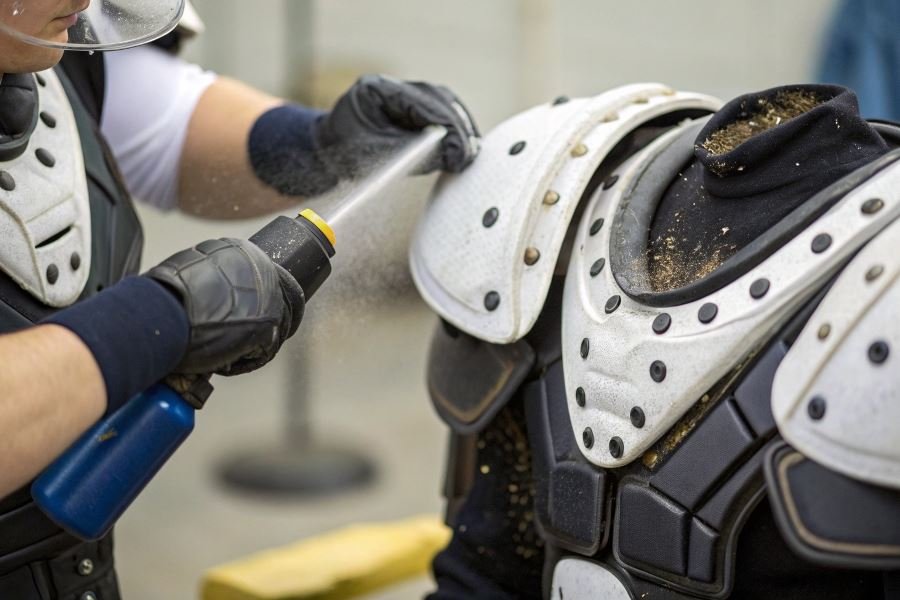
Cleaning protocol: Most modern pads feature removable liners that should be washed every 2-3 weeks during active seasons. Accumulated sweat and bacteria not only create odor but can degrade materials faster.
| Component | Maintenance Action | Frequency |
|---|---|---|
| Padding | Check for compression | Monthly |
| Straps/Buckles | Inspect for wear | Before each use |
| Shell | Examine for cracks | After significant impacts |
| Liners | Wash (follow manufacturer instructions) | Bi-weekly |
Replacement timing varies by usage intensity and quality, but most high-level players should consider new shoulder protection every 2-3 seasons. Youth players experiencing growth spurts may need more frequent replacements to maintain proper fit.
Personalized protection matters
The difference between off-the-rack and properly fitted shoulder protection can be the difference between playing confidently and playing cautiously.
Professional fitting isn’t just for the pros. Many specialty retailers like Dick’s Sporting Goods offer fitting services where trained staff can measure your frame and recommend appropriate sizes and models.
Custom options have become increasingly accessible. Douglas offers personalized padding configurations based on position-specific impact patterns. For hockey players, CCM provides custom molding services that create a perfect anatomical match to your shoulder structure.
The rise of 3D scanning technology has revolutionized personalization. Some manufacturers now offer digital mapping of your shoulder anatomy to create truly bespoke protection that addresses individual vulnerabilities while maximizing mobility where you need it most.
Remember that proper fit evolves with your body. What worked perfectly last season might need adjustment as your muscle mass changes or your playing style evolves. The best protection is the one that feels like it was made specifically for you—because increasingly, it can be.