
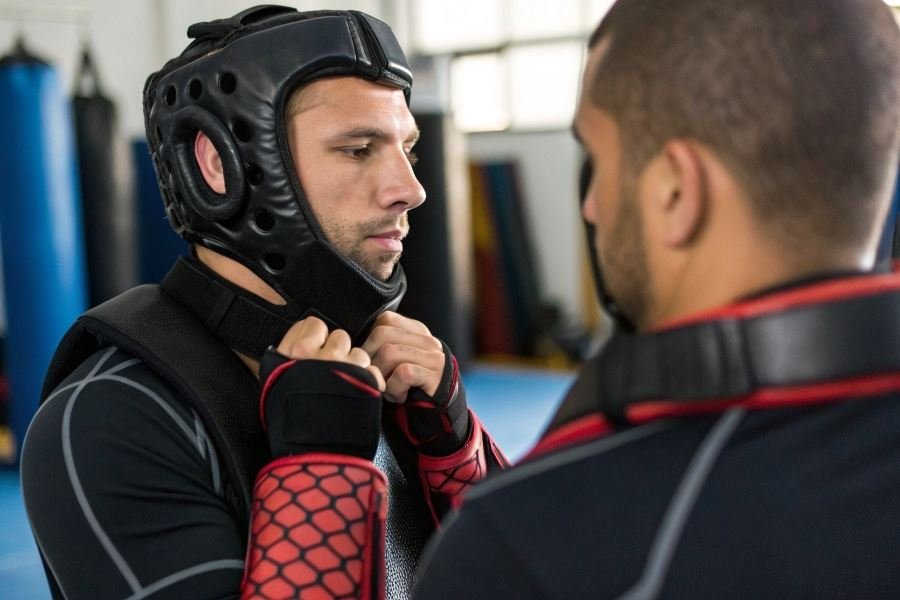
Ever wondered why NFL players look like they’re wearing futuristic armor around their necks? It’s not just for show—it’s what keeps them in the game.
When the difference between victory and a season-ending injury comes down to milliseconds of impact, proper neck protection isn’t just equipment—it’s insurance for your athletic future. Athletes across disciplines have discovered that protecting this vulnerable area is as crucial as any training regimen.
The neck’s vulnerability across sports
Football players face crushing tackles that can generate forces exceeding 100G—enough to cause serious cervical trauma. But they’re not alone. Motocross riders experience whiplash during jumps and crashes, hockey players risk board collisions, and even soccer players face neck injuries during aggressive headers and falls.
The statistics are sobering: neck injuries account for approximately 7% of all sports-related traumas, with many leading to permanent disability when left unprotected.
From sprains to catastrophic: What’s at stake
The spectrum of neck injuries ranges from manageable to life-altering:
- Muscle strains: Common but recoverable
- Cervical sprains: Potentially season-ending
- Nerve impingements: Can cause lasting numbness
- Vertebral fractures: Career-threatening or worse
“The right neck protection doesn’t just prevent injury—it preserves athletic potential.”
Protection options: Finding your fit
Today’s market offers specialized solutions for every sport:
- Neck rolls: The football standard, absorbing impact from multiple directions
- Cervical collars: Providing stability for recovery and prevention
- HANS devices: Racing’s answer to high-speed impacts
- Foam collars: Lightweight options for sports requiring mobility
The evolution of materials has transformed protection from bulky restrictions to ergonomic designs that move with athletes while still providing critical support.
Choosing the right protection means understanding both your sport’s specific risks and your personal playing style—a decision that could literally save your neck.
Key Factors for Optimal Neck Protection in Sports
When athletes step onto the field, court, or ice, their focus should be on performance—not vulnerability. Neck protection serves as a crucial shield against potential injuries that could sideline your athletic pursuits or, worse, lead to life-altering consequences.
Selecting appropriate neck protection for sports involves navigating through various options designed for specific activities and risk levels. How to choose neck protection for sports depends largely on understanding the unique demands of your sport and your personal comfort requirements. The right gear strikes that perfect balance between safety and performance without compromising either.
Sport-Specific Requirements Matter
Different sports present vastly different neck injury risks:
Contact Sports Demand Robust Protection
Football, hockey, and rugby players face direct impacts that can cause whiplash, compression, or even catastrophic spinal injuries. For these athletes, comprehensive neck rolls or collars with impact-absorbing materials like high-density foam are essential.
Non-Contact Sports Need Targeted Support
Sports like cycling, skiing, or motorsports require protection against sudden movements rather than direct impacts. Lighter, more flexible neck braces that limit extreme extension while allowing necessary mobility prove most effective here.
| Sport Type | Recommended Protection | Key Features |
|---|---|---|
| Football/Hockey | Full neck roll | Impact absorption, full coverage |
| Motorsports | Cervical collar | Hyperextension prevention, rigid support |
| Cycling/Skiing | Lightweight brace | Flexibility, wind resistance |
| Combat Sports | Padded guard | Strike protection, quick removal |
Material Quality Determines Longevity
The composition of your neck protection directly influences both safety and lifespan.
Impact-Absorbing Materials
Look for multi-density foams that progressively absorb force—softer outer layers for comfort and firmer inner cores for protection. Poron XRD and D3O technologies represent the cutting edge in impact management.
Exterior Durability
Outer shells made from ballistic nylon or Cordura resist abrasion during falls or contact. Quality stitching with reinforced stress points prevents premature failure exactly when protection is most needed.
Comfort Dictates Consistent Use
Even the safest neck protection becomes useless if discomfort leads to non-compliance.
Anatomical Fit
The best protectors feature:
- Contoured designs that follow natural neck curvature
- Multiple adjustment points for personalized fit
- Size-specific options (not one-size-fits-all)
Mobility Considerations
Protection shouldn’t restrict essential movement. Test your gear by:
- Performing sport-specific movements before purchase
- Ensuring vision isn’t compromised when looking in all directions
- Confirming compatibility with other protective equipment
Temperature Management
Moisture-wicking liners and ventilation channels prevent overheating during intense activity, making continuous wear more comfortable during extended sessions.
Safety Certifications Provide Assurance
Never compromise on verified protection standards.
The most reliable neck protection carries certifications from recognized testing bodies:
- CE certification (European standard) ensures minimum safety requirements
- SFI Foundation approval for motorsports equipment
- NOCSAE standards for football and lacrosse protection
Always verify that certification labels aren’t counterfeit by checking manufacturer websites for verification methods.
Remember that certification requirements evolve as research advances. Equipment certified under outdated standards may not provide optimal protection against injuries understood through more recent biomechanical research.
Your neck protection represents a critical investment in your athletic longevity. Prioritize protection that meets your sport’s specific demands while providing the comfort needed for consistent use and the durability to maintain its protective qualities season after season.
Securing Your Game with Smart Neck Protection
The Protection-Performance Balance
Finding that sweet spot between safety and mobility is the ultimate challenge in neck protection. The best gear disappears when you’re playing but shows up when you need it most. High-impact sports like football and hockey demand robust protection with technologies like D3O® that stay flexible until impact. Meanwhile, activities like cycling benefit from lighter options that prioritize range of motion while still guarding against whiplash.
Pro tip: Test your neck protector through your sport’s full motion range before competition day. That perfect balance feels like the gear was custom-made for your movements.
Many athletes report that properly fitted neck protection actually enhances performance by promoting better posture and reducing fatigue from constantly supporting the head during intense activity. As Under Armour research shows, even minimal neck support can reduce muscle strain by up to 15% during extended training sessions.
Keeping Your Protection in Prime Condition
Neck protection isn’t a set-it-and-forget-it piece of equipment. These critical safety components require regular maintenance to perform when it counts.
Most synthetic materials in modern neck guards need cleaning after 3-5 uses to prevent bacterial buildup and material degradation.
Follow this maintenance schedule for optimal protection:
| Maintenance Task | Frequency | Notes |
|---|---|---|
| Visual inspection | Before each use | Check for cracks, tears, or compression |
| Hand washing | Weekly or after 3-5 uses | Mild soap, air dry completely |
| Deep cleaning | Monthly | Follow manufacturer guidelines |
| Compression test | Quarterly | Press foam – should return to shape quickly |
| Full replacement | Every 1-2 seasons or after impact | Earlier for youth equipment |
Remember that neck protection materials naturally degrade over time. Even without visible damage, the protective capabilities diminish after repeated impacts or extended use. Most manufacturers recommend replacement every 1-2 seasons for optimal protection.
Sport-Specific Protection Recommendations
Different sports create unique neck vulnerability patterns. Here’s what works best across the athletic spectrum:
For contact sports (football, hockey, lacrosse): Invest in comprehensive collar systems with both front and rear protection. The Shock Doctor models with dual-density foam provide excellent protection without restricting communication on the field.
For motorsports and cycling: Look for neck braces that distribute impact forces across the shoulders. The carbon fiber options from Leatt offer superior protection-to-weight ratios for high-speed activities.
For combat sports: Focus on designs that protect the vulnerable trachea while allowing for quick head movement. Wrestling and MMA athletes benefit from low-profile neoprene guards that stay in place during grappling.
The intensity of your participation should directly influence your protection level. Weekend warriors need quality protection just as much as professionals – perhaps more so due to varying skill levels in recreational leagues.
Your neck protection is the guardian of your mobility and future athletic potential. By selecting sport-appropriate gear, maintaining it properly, and replacing it when necessary, you’re making an investment that pays dividends far beyond the playing field.