
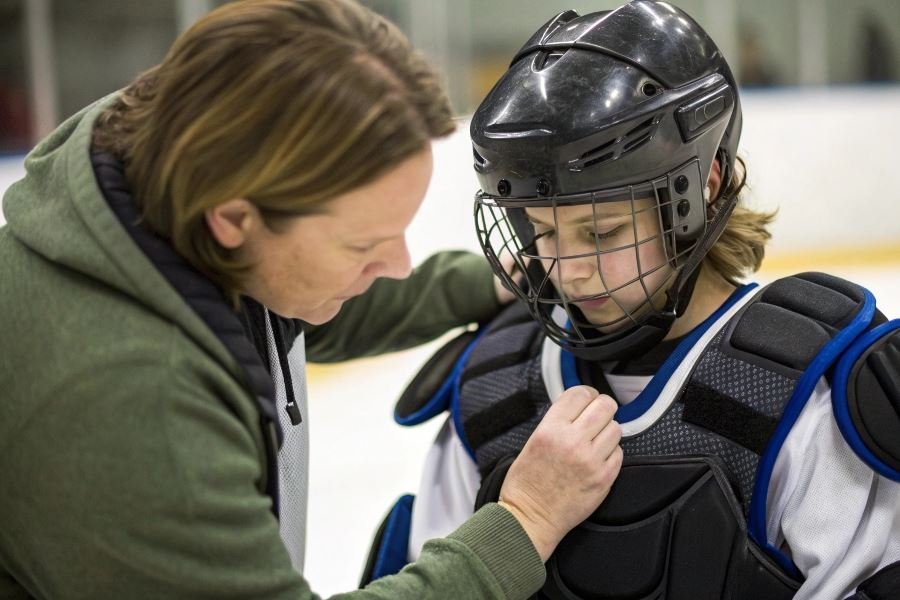
Ever watched a hockey player take a bone-crushing hit against the boards and wondered how they get up and keep skating? The answer lies partly in what you can’t see beneath the jersey—sophisticated shoulder protection engineered for the specific demands of each position on the ice.
Hockey shoulder pads represent the critical difference between playing with confidence and playing with fear. Unlike recreational gear, professional-grade shoulder protection doesn’t just cushion impacts—it redistributes force, maintains mobility, and provides position-specific protection that can mean the difference between a minor bruise and a season-ending injury.
The anatomy of modern shoulder protection has evolved dramatically since the primitive padding of hockey’s early days. Today’s elite shoulder pads feature multi-density foams, carbon fiber reinforcements, and anatomically-mapped protection zones. The sternum plate protects vital organs, while adjustable bicep guards and floating shoulder caps allow for customized fit without sacrificing mobility.
Position dictates protection needs. Defensemen require robust rear shoulder caps and extended spine protection for absorbing forechecking forwards and blocking shots. Centers need balanced protection with enhanced mobility for face-offs and two-way play. Wingers benefit from asymmetrical designs offering greater protection on their board-side shoulder, while goalies use specialized chest protectors with reinforced collarbone and arm channels.
“The right shoulder pads don’t just prevent injuries—they transform how confidently you can play your position,” notes former NHL defenseman Brian Campbell, who credits position-specific gear with extending his 17-year professional career.
Understanding these position-specific features isn’t just equipment minutiae—it’s essential knowledge for maximizing both protection and performance on the ice.
Position-Specific Shoulder Pads: Tailored Protection on Ice
When you watch elite hockey players glide across the ice, you’re witnessing a symphony of specialized equipment working in perfect harmony with their bodies. At the core of this protection system are shoulder pads—not uniform pieces of equipment, but highly specialized armor designed for specific battlefield roles on the ice.
Hockey shoulder pads: protection features for different positions on the ice represent one of the most nuanced equipment choices players make. The forward crashing the net, the defenseman absorbing slapshots, and the goalie contorting to make impossible saves—each requires dramatically different protection profiles that balance mobility against impact resistance.
Forward Mobility: Speed Meets Protection
Forwards prioritize mobility above all else. Their shoulder pads typically feature:
- Segmented shoulder caps that move with the body during quick directional changes
- Lighter spine protection focusing on critical areas while reducing weight
- Narrower profile designs that minimize interference with stick handling
The CCM Jetspeed line exemplifies this philosophy with its anatomical fit that allows forwards to maintain their shooting mechanics without restriction. Elite forwards often sacrifice some protection density for the ability to execute those lightning-quick wrist shots that goalies never see coming.
Defensemen Armor: Built for Battle
Defensemen shoulder pads are the tanks of hockey protection, featuring:
- Reinforced shoulder caps with higher-density foam for shot-blocking
- Extended bicep guards that protect against slashes and cross-checks
- Thicker back plates designed to absorb impacts against the boards
The Bauer Supreme defensive models incorporate additional padding in high-impact zones without sacrificing necessary range of motion. When a defenseman steps in front of a 100+ mph slapshot, that extra half-inch of protection makes all the difference.
Goaltender Systems: Complete Coverage
Goalie shoulder protection exists in a category of its own:
- Integrated chest and arm protection forming a unified blocking surface
- Reinforced collarbone shields preventing puck penetration to vulnerable areas
- Floating shoulder caps that maintain protection during extreme stretching movements
| Position | Protection Priority | Mobility Level | Key Features |
|---|---|---|---|
| Forward | Medium | High | Lightweight, segmented design |
| Defenseman | High | Medium | Reinforced impact zones, extended coverage |
| Goalie | Maximum | Specialized | Full integration with chest protector |
The Vaughn Velocity goalie chest protectors demonstrate how specialized this equipment has become, with arm floaters that allow for paddle-down saves while maintaining complete protection coverage.
What separates truly elite position-specific shoulder pads isn’t just protection—it’s how that protection disappears from the player’s consciousness during play. The best defenseman shoulder pads absorb punishing hits while allowing the perfect outlet pass. Forward pads enable that extra half-second of stick handling brilliance. Goalie systems make impossible saves possible.
The evolution of position-specific protection continues to advance, with manufacturers now using impact-mapping technology to place protection exactly where each position needs it most—proving that in hockey, protection isn’t just about safety, it’s about performance.
Maximizing Protection: The Art of Selecting and Maintaining Hockey Shoulder Pads
Hockey shoulder pads are your armor on the ice. Whether you’re a forward taking hits along the boards, a defenseman clearing the crease, or a goalie facing slapshots, proper protection isn’t just about comfort—it’s about staying in the game. Let’s dive into how to select, maintain, and know when it’s time to upgrade your shoulder protection based on your position and playing style.
Position-specific fitting techniques that actually work
Finding the perfect fit for your shoulder pads isn’t one-size-fits-all—it’s position-specific engineering at its finest.
Forwards need mobility without sacrificing protection. Your shoulder pads should:
- Cover your shoulders completely while allowing full arm extension
- Sit snugly against your chest without restricting breathing
- Allow you to comfortably stick-handle without the pads riding up
Defensemen require robust protection with strategic mobility. Your fit should:
- Feature extended shoulder caps that protect against board battles
- Include reinforced spine and sternum protection
- Allow enough mobility to deliver powerful checks and shots
Goalies need specialized shoulder floaters that:
- Extend higher on the collarbone and neck area
- Provide maximum coverage without restricting butterfly movements
- Include extra padding in the chest and arms for shot-blocking
The perfect fit means your shoulder pads should move with you, not against you. When trying them on, mimic your on-ice movements—take shots, reach for pucks, and simulate checking motions.
Maintenance practices that extend protective lifespan
Your shoulder pads take a beating so you don’t have to. Proper maintenance preserves both protection and performance.
After every use:
- Remove pads from your bag immediately to prevent bacteria growth
- Air dry completely before storing (never use direct heat sources)
- Wipe down plastic components with a damp cloth
Monthly maintenance:
- Deep clean fabric components following manufacturer guidelines
- Check all straps, buckles, and Velcro for wear
- Inspect padding for compression or breakdown
Pro tip: Antimicrobial sprays designed for sports equipment can significantly reduce odor and extend the life of your shoulder pads.
Recognizing replacement signals by position
Even the highest quality shoulder pads have a lifespan. Knowing when to replace them can prevent injuries and improve performance.
| Position | Average Lifespan | Warning Signs | Priority Areas |
|---|---|---|---|
| Forward | 2-3 seasons | Compressed bicep padding, loose chest plate | Shoulder caps, sternum protection |
| Defense | 2-3 seasons | Cracked plastic components, flattened shoulder caps | Spine protection, shoulder caps |
| Goalie | 3-4 seasons | Deteriorated foam, reduced shock absorption | Chest protector, collarbone area |
Universal replacement indicators include:
- Visible cracks in plastic components
- Significant compression of foam that doesn’t rebound
- Loose or broken straps that can’t be repaired
- Exposed padding beneath the outer shell
Youth players experiencing growth spurts may need replacements more frequently as proper sizing is crucial for effective protection.
Remember that high-level players using equipment from brands like Bauer or CCM might see different wear patterns based on their playing style and frequency. Power forwards who frequently engage in physical play should inspect their equipment more regularly than finesse players who avoid contact.
Your shoulder pads are an investment in your safety and longevity in the sport. Treat them accordingly, and they’ll return the favor by keeping you in the game when the checking gets tough.