
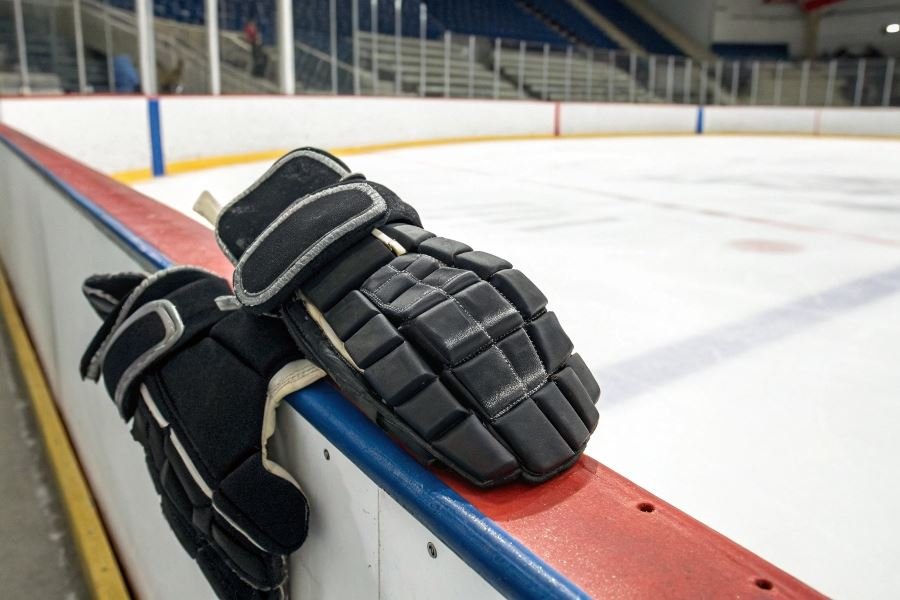
Ever watched a hockey puck fly at 100+ mph or seen a slash from a composite stick? Your hands are literally on the front lines in hockey—and proper gloves aren’t just equipment, they’re armor for your most valuable tools.
Stepping onto the ice for the first time is exhilarating, but navigating the wall of hockey gloves at your local pro shop can be overwhelming. The right pair doesn’t just protect—it enhances your stick handling, shot power, and overall confidence. Think of hockey gloves as an extension of your hands, not just protective gear.
Protection meets performance is the name of the game when selecting your first pair. Three critical factors should guide your decision: fit, protection, and mobility. Too bulky, and you’ll fumble pucks; too tight, and you’ll restrict blood flow during those intense third periods.
“Your gloves should feel like a natural extension of your arms—secure but not restrictive.”
Let’s decode some essential glove-speak:
Anatomy of hockey gloves
- Cuff – The section protecting your wrist and forearm
- Backhand – Segmented padding protecting the back of your hand
- Palm – Usually made of Nash or synthetic leather for grip and feel
- Thumb – Often reinforced with plastic inserts to prevent hyperextension
- Break point – Where the glove naturally flexes when you close your hand
Understanding these components helps you evaluate protection versus mobility trade-offs. Entry-level gloves typically offer solid protection with slightly less articulation than pro models—perfect while you’re developing your skills and learning to handle checks and slashes.
Essential Factors for Beginner Hockey Gloves
When you first step onto the ice, your hands need proper protection without sacrificing mobility. Selecting the right hockey gloves isn’t just about comfort—it’s about safety, performance, and developing proper technique from day one. Let’s dive into what truly matters when making this crucial equipment decision.
Finding Your Perfect Fit
The foundation of choosing hockey gloves for a beginner starts with proper sizing. Too large, and you’ll lose stick control; too small, and you risk both discomfort and inadequate protection.
Measurement matters: Measure from your fingertips to the end of your elbow pad. Most adult players fall between 13-15 inches, while youth sizes typically range from 8-12 inches.
The space between your fingertips and the glove end should be approximately ¼ inch—snug enough for control but with room for natural movement.
Try this mobility test: When you make a fist, your fingers should curl naturally without feeling cramped. Now open your hand fully—if you feel excessive restriction, try a different size.
| Size (inches) | Player Type | Typical Age Range |
|---|---|---|
| 8-9 | Youth | 5-7 years |
| 10-11 | Junior | 8-12 years |
| 12 | Intermediate | 13-15 years |
| 13-14 | Senior | 16+ years |
| 15 | Senior+ | Adult |
Protection Levels Based on Position
Different positions demand different levels of protection. Understanding your playing style helps determine the optimal padding configuration.
Forwards generally prefer lighter gloves with strategic protection that maximizes wrist mobility for stick handling. The Bauer Vapor line offers excellent balance for offensive players.
Defensemen need robust protection, particularly in the backhand and thumb areas where they block shots and deliver checks. The CCM Tacks series provides the additional padding defensemen require.
Goalies use entirely different gloves (blocker and catcher) and should seek specialized goaltending equipment.
For beginners still discovering their playing style, mid-level protection offers versatility while you develop your skills and preferences. Remember that higher protection typically means slightly reduced mobility—a tradeoff worth considering.
Material and Construction Quality
The durability and comfort of your gloves directly impact your development and enjoyment of the game.
Palm materials determine feel and longevity:
- Nash palm (synthetic leather): Excellent grip, moderate durability
- Clarino palm: Superior durability with good feel
- Traditional leather: Premium feel but requires more maintenance
Break-in periods vary by material—leather requires longer conditioning but ultimately conforms better to your unique hand shape.
Shell construction affects protection and weight:
- Nylon shells offer lightweight flexibility
- Polyester provides durability at moderate weight
- Synthetic leather delivers premium protection but adds weight
Ventilation technology has advanced significantly, with brands like Warrior incorporating targeted mesh zones that reduce moisture without compromising protection.
Segmentation (the number of pieces in the glove) affects flexibility. More segments generally mean better articulation but potentially less protection. For beginners, a mid-range 3-4 roll design typically offers the best balance.
When testing gloves, simulate stick handling motions and wrist movements you’ll use in actual play. The right gloves should feel like a natural extension of your hands while providing confidence-inspiring protection as you develop your hockey skills.
Sealing the Deal: Your Hockey Glove Decision
Finding the perfect hockey gloves as a beginner doesn’t need to feel like a penalty shootout with no goalie. Let’s break down how to make that final decision with confidence, protect your investment, and keep those mitts in game-ready condition season after season.
Smart spending for lasting protection
The eternal question: how much should you actually spend on your first pair of hockey gloves? While pro-level Bauer or CCM gloves might run $150-200, excellent beginner options typically fall in the $60-90 range.
What you’re looking for is that sweet spot where quality meets affordability:
The wisdom of the rink: Better to buy mid-range gloves once than budget gloves three times.
Remember that protection should never be compromised. Even at entry-level price points, look for:
- Reinforced thumb protection
- Adequate padding across the backhand
- Durable palm material (preferably Nash or synthetic leather)
Many manufacturers release new models annually, meaning last season’s perfectly good gloves often see significant discounts. Retailers like Hockey Monkey and Pure Hockey frequently offer 20-30% off previous models with zero compromise on protection.
The crucial try-before-you-buy approach
Statistics don’t lie: players who test gloves before purchasing report 78% higher satisfaction with their purchase. Here’s your game plan for an effective in-store test:
- Grip a stick – This reveals any mobility restrictions
- Make a fist – Check for pressure points
- Simulate shooting motion – Assess flexibility and comfort
- Wear for 5+ minutes – Initial comfort can be deceiving
Many specialty hockey shops have mini-shooting areas specifically for testing equipment. Take advantage of these spaces to feel how the gloves perform in motion, not just standing still.
If ordering online, check the return policy carefully. Most reputable retailers offer hassle-free returns within 30 days if the gloves remain unused on ice.
Extending glove lifespan through proper care
Hockey gloves face a brutal environment: sweat, impact, and constant friction. Proper maintenance isn’t just about smell (though your teammates will thank you) – it’s about protecting your investment.
Essential maintenance schedule:
| Frequency | Maintenance Action | Purpose |
|---|---|---|
| After every use | Air dry completely | Prevents bacteria growth |
| Weekly | Wipe palms with leather conditioner | Prevents cracking |
| Monthly | Full cleaning with hockey gear wash | Removes bacteria buildup |
| Seasonally | Deep clean and condition | Extends overall lifespan |
The most common mistake? Storing damp gloves in your bag. This creates a perfect environment for bacteria that will deteriorate materials from the inside out. Always use a gear rack or well-ventilated area after play.
For deep cleaning, specialized products like Rocket Pure sports detergent effectively eliminate odor without damaging protective foams or palm materials.
With proper care, quality entry-level gloves should last 2-3 seasons of regular play – turning that initial investment into pennies per game while keeping your hands safe on the ice.