
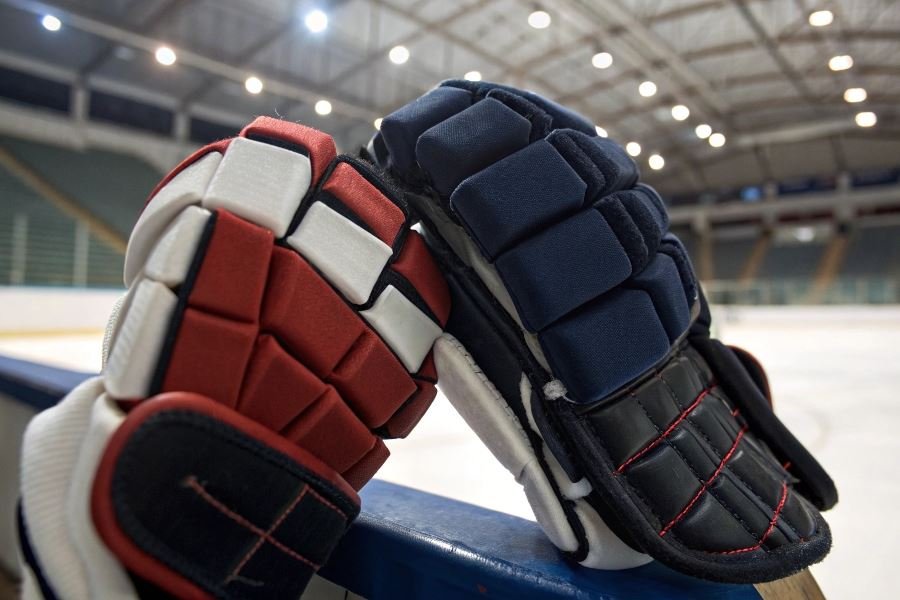
Ever watched a pro hockey player snipe a top-corner goal with surgical precision? That wasn’t just skill—it was equipment working in perfect harmony with talent. The unsung hero? Properly fitted hockey gloves.
When you’re battling along the boards or receiving a bullet pass, your gloves are your connection to the game. Think of them as the interface between your intentions and actions on the ice. Too big, and you’re essentially playing with oven mitts. Too small, and you’re sacrificing both protection and mobility—a dangerous compromise in a sport where sticks and pucks move at lightning speeds.
Hockey glove sizing follows a straightforward measurement system, typically ranging from 12 to 15 inches for adults. This measurement represents the distance from your fingertips to the end of your elbow pad. The industry standard isn’t arbitrary—it’s designed to ensure your wrists remain protected while maintaining optimal stick control.
The consequences of poorly fitted gloves extend beyond discomfort. Players with oversized gloves often develop bad stickhandling habits as they compensate for the lack of feel. Meanwhile, undersized gloves can leave wrists exposed to slashes and impacts, potentially leading to injuries that could sideline you for weeks.
“The right glove size is the difference between feeling the puck and fighting your equipment.” – NHL equipment manager
Finding your perfect fit isn’t just about comfort—it’s about unlocking your full potential on the ice while keeping your hands safe for seasons to come.
Measuring for the Perfect Hockey Glove Fit
Finding hockey gloves that fit like they were custom-made for your hands can transform your game. The right gloves offer that sweet spot between protection and mobility, allowing you to handle your stick with precision while keeping your hands safe from slashes and impacts. Let’s dive into the science of determining the correct size of hockey gloves using three foolproof measurement methods that will elevate your equipment game.
The Hand Measurement Technique
The most direct approach to finding your perfect glove size involves nothing more complicated than a measuring tape and your hand. Here’s how the pros do it:
- Extend your hand flat, palm facing up
- Measure from the base of your palm (where your wrist bends) to the tip of your middle finger
- Round to the nearest inch
Conversion guide:
- 7 inches = 12″ gloves
- 8 inches = 13″ gloves
- 8.5 inches = 14″ gloves
- 9 inches = 15″ gloves
This method gives you a baseline measurement that works across most major brands like Bauer, CCM, and Warrior. Remember that your dominant hand might be slightly larger, so measure both hands and go with the larger size if there’s a difference.
The Finger-to-Elbow Method
For those seeking professional-level precision, the finger-to-elbow measurement offers exceptional accuracy:
- Stand with your arm slightly bent (as if holding a stick)
- Measure from the tip of your middle finger to the middle of your elbow
- Subtract 1 inch from this measurement
This technique accounts for your unique arm proportions and mimics your natural playing position. It’s particularly valuable for players with longer-than-average fingers or shorter forearms who find standard sizing charts problematic.
“The finger-to-elbow method changed how I fit players,” notes one equipment manager for a professional team. “It’s especially helpful for younger players experiencing growth spurts.”
Navigating Manufacturer Sizing Charts
Different brands have subtle variations in their sizing philosophy. A 14″ glove from one manufacturer might feel different from another’s:
| Brand | Sizing Notes | Fit Characteristics |
|---|---|---|
| Bauer | Offers Vapor (tapered), Supreme (anatomical), and Nexus (classic) fits | Vapor runs slightly snug in the fingers |
| CCM | JetSpeed (tapered), Tacks (anatomical), and RibCor (classic) | JetSpeed provides more wrist mobility |
| Warrior | Alpha (tapered) and Covert (anatomical) | Alpha offers more volume in the backhand |
When using sizing charts, consider these manufacturer-specific nuances:
- Check if the brand measures from the heel of the palm or the wrist
- Note whether measurements are in inches or centimeters
- Consider the glove’s break-in period (some models expand up to 5% with use)
Pro tip: Many manufacturers now offer digital sizing tools on their websites where you can input your measurements for a personalized recommendation.
The journey to finding perfectly-sized hockey gloves might take some experimentation, but these measurement methods provide a scientific starting point that will get you remarkably close to glove perfection from the first try.
Seal the Deal: Finding Your Perfect Hockey Glove Fit
Finding hockey gloves that fit like they were made for your hands isn’t just about comfort—it’s about performance, protection, and playing your best game. Let’s dive into the final steps of securing gloves that will serve you well on the ice.
The in-store fit test playbook
Before committing to a pair of hockey gloves, put them through these essential fit tests:
-
Make a fist while wearing the gloves. Your fingertips should lightly touch the end of the finger gussets without feeling cramped.
-
Grip a stick to test mobility. You should feel secure control without restriction in your wrist movement.
-
Flex and extend your fingers fully. If you feel resistance or pinching, try a different size.
-
Check the wrist cuff by rotating your hand. It should stay in place without digging into your wrist or sliding up your forearm.
-
Tap the padding against a hard surface. Quality gloves will absorb the impact without you feeling significant shock.
The perfect hockey glove should feel like an extension of your hand—protective yet responsive enough to handle the puck with precision.
Youth sizing: Room to grow without compromising safety
When purchasing gloves for younger players, consider these growth-conscious strategies:
The one-inch rule: Allow approximately one inch of extra room at fingertips—enough space for growth but not so much that stick control is compromised.
Adjustable wrist systems: Look for models from brands like Bauer or CCM that feature adjustable wrist closures to accommodate growth.
Mid-season assessment: Mark your calendar for a mid-season fit check. Youth hands can grow surprisingly quickly during a single season.
Specialized solutions for unique hand dimensions
Standard sizing doesn’t work for everyone. Consider custom or specialized options when:
- Your hand measurements fall between standard sizes
- You have disproportionately long fingers or wide palms
- You’re dealing with previous hand injuries requiring extra protection
- You play a position with unique demands (goalies, for example)
Pro-level customization: Brands like Warrior and True offer semi-custom programs where you can specify padding thickness, palm material, and cuff length.
Anatomical considerations: Players with arthritis or hand conditions might benefit from gloves with enhanced padding in specific areas.
Comparison of specialized hockey glove options
| Feature | Pro Stock | Custom Order | Modified Retail |
|---|---|---|---|
| Cost | $150-300 | $200-400+ | $100-200 |
| Lead Time | Immediate (if available) | 4-8 weeks | 1-2 weeks |
| Customization Level | Medium | High | Low-Medium |
| Durability | Excellent | Excellent | Good |
| Best For | Unique hand proportions | Specific protection needs | Minor modifications |
Remember that even the most expensive gloves won’t perform well if they don’t fit properly. A mid-range glove with perfect fit will serve you better than a top-tier model that’s the wrong size.
The ultimate test comes on the ice—after your first few practices with new gloves, reassess the fit. Most retailers offer exchange policies if you discover fit issues during initial use. Your hands are your connection to your stick—give them the protection and mobility they deserve with properly fitted hockey gloves.