
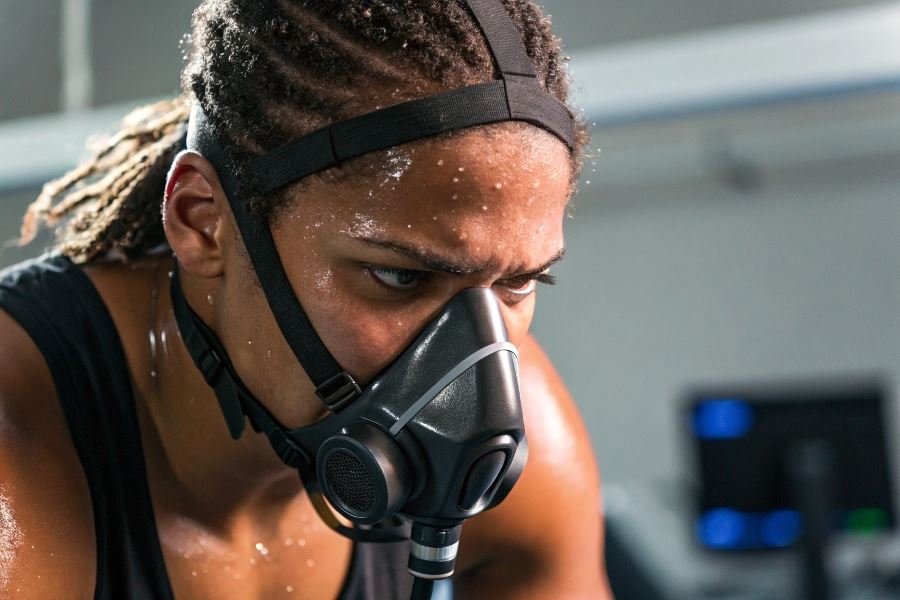
Ever wondered how elite athletes prepare for competitions at high elevations? Imagine training your lungs to do more with less oxygen—that’s exactly what altitude training masks promise.
Training masks are specialized respiratory devices designed to restrict airflow during exercise, simulating the reduced oxygen conditions experienced at high altitudes. By creating controlled hypoxic (low-oxygen) conditions, these masks challenge your respiratory system to adapt and become more efficient—all while you’re training at sea level.
The concept of respiratory restriction training isn’t new. Military pilots in the 1940s used primitive breathing apparatus to prepare for high-altitude flights. By the 1990s, Olympic athletes were sleeping in altitude chambers and training at mountain facilities to gain competitive advantages. The modern consumer-friendly training mask emerged around 2009, making this once-elite training method accessible to everyday athletes.
When you train with these masks, your body undergoes fascinating adaptations. Your lungs work harder to pull in oxygen, strengthening respiratory muscles. Meanwhile, your cardiovascular system responds by potentially increasing red blood cell production and improving oxygen utilization. Your body essentially learns to do more with less available oxygen—a valuable adaptation whether you’re sprinting across a finish line or powering through the final minutes of a championship game.
The real magic happens at the cellular level: your muscles develop enhanced mitochondrial density and efficiency, becoming better at extracting and using the oxygen that does reach them. It’s like upgrading your body’s engine to run on less fuel while maintaining—or even improving—performance.
The Science Behind Breathing Barriers: How Training Masks Work
When you see athletes training with those intimidating facial contraptions that make them look like Bane from Batman, you’re witnessing the growing popularity of respiratory training devices. These specialized masks create a controlled environment that challenges your respiratory system in ways that simulate aspects of high-altitude training. The principle of operation behind training masks for high-altitude training involves creating breathing resistance that forces respiratory muscles to work harder, potentially leading to adaptations that could benefit performance.
The Respiratory Resistance Revolution
Training masks function by adding resistance to your normal breathing pattern, essentially making your respiratory muscles work overtime. Think of it as adding weights to your breathing – your diaphragm and intercostal muscles must generate greater force to move the same volume of air. This increased workload targets the often-overlooked respiratory musculature.
What happens physiologically? When you strap on a device like the Training Mask 3.0, your inspiratory muscles face immediate challenges:
- Increased recruitment of accessory breathing muscles
- Greater diaphragmatic strength development
- Enhanced intercostal muscle endurance
- Potential improvements in respiratory muscle coordination
Research published in the Journal of Sports Science Medicine suggests that consistent respiratory muscle training may increase respiratory muscle strength by 17-55% and endurance by up to 38% with regular use.
Altitude Simulation or Respiratory Training?
Let’s clear up a common misconception: training masks do not truly replicate high-altitude conditions. Here’s why:
| True Altitude Training | Training Mask Effects |
|---|---|
| Decreased partial pressure of oxygen | Normal oxygen concentration with restricted flow |
| Lower oxygen saturation in blood | Temporary oxygen reduction during heavy exertion |
| 24/7 exposure to hypoxic conditions | Effects only during mask usage |
| Triggers EPO production and increased RBC count | Limited hematological adaptations |
The key difference lies in the mechanism. At actual high altitudes (8,000+ feet), the air contains less oxygen molecules per breath. Training masks don’t change oxygen concentration – they simply restrict how much air you can inhale per breath. This distinction is crucial for understanding their potential benefits and limitations.
Your Body’s Response: The Physiological Cascade
When you don your training mask for that hill sprint session, your body launches into a series of compensatory responses:
- Heart rate elevation: Studies show increases of 7-10 beats per minute compared to the same workload without a mask
- Blood oxygen fluctuations: Temporary decreases in SpO2 (blood oxygen saturation) during intense efforts
- Heightened perceived exertion: RPE (Rating of Perceived Exertion) typically increases by 1-2 points on the Borg scale
“The primary adaptation appears to be respiratory-specific rather than systemic,” notes Dr. Daniel Bubnis in his research on respiratory training devices.
These physiological responses create a training stimulus that primarily targets breathing efficiency rather than triggering the comprehensive adaptations seen with traditional altitude training camps. The practical benefit? You might develop greater respiratory muscle endurance that helps maintain performance during the later stages of competition when respiratory fatigue typically sets in.
Understanding these mechanisms helps athletes make informed decisions about incorporating these devices into their training regimens – recognizing both their potential benefits for respiratory muscle development and their limitations in replicating true altitude adaptations.
Mastering the Mask: Training Protocols and Reality Check
Smart progression strategies that work
Training masks aren’t plug-and-play fitness gadgets—they demand methodical implementation. The most effective protocol begins with short, low-intensity sessions: start with just 10-15 minutes of wearing the mask during light cardio at 50-60% of your max heart rate. This initial adaptation phase typically lasts 1-2 weeks.
As your respiratory muscles strengthen, gradually increase both duration and intensity. A research-backed progression might look like:
| Week | Duration | Intensity | Frequency |
|---|---|---|---|
| 1-2 | 10-15 min | 50-60% MHR | 2-3x/week |
| 3-4 | 15-30 min | 60-70% MHR | 3-4x/week |
| 5-8 | 30-45 min | 70-80% MHR | 3-5x/week |
| 9+ | 45-60 min | 75-85% MHR | 3-5x/week |
Interval training shows particularly promising results with masks. Try 2-minute high-intensity bursts followed by 1-minute recovery periods, gradually increasing the work-to-rest ratio as you adapt.
Performance gains backed by science
The research on training masks reveals several legitimate benefits when used correctly:
Respiratory muscle endurance significantly improves with consistent mask training. A 2016 study in the Journal of Sports Science Medicine demonstrated a 15% increase in respiratory muscle strength after just 6 weeks of structured mask training.
Ventilatory threshold improvements allow athletes to maintain higher intensities before experiencing respiratory fatigue. This translates to better performance during the critical final stages of competition.
Training masks also show modest improvements in VO2 max—though not to the degree of actual altitude training. The physiological stress triggers adaptations in oxygen utilization efficiency at the cellular level.
Perhaps most impressive is the psychological toughening effect. Athletes who train with masks consistently report improved mental fortitude when facing respiratory discomfort during competition.
The reality check: limitations and myths
Despite their benefits, training masks come with important limitations every athlete should understand:
They don’t replicate true altitude training. While masks restrict airflow, they don’t reduce oxygen percentage like genuine altitude does. The Elevation Training Mask creates resistance to breathing, not hypoxic conditions.
Contraindications exist for several populations:
- Those with respiratory conditions like asthma or COPD
- Individuals with cardiovascular issues
- Anyone experiencing dizziness or unusual fatigue during use
The biggest misconception? That masks can replace altitude training camps. They can’t. The physiological adaptations from true altitude exposure—increased red blood cell production and enhanced oxygen-carrying capacity—simply don’t occur with mask training alone.
Another limitation is the potential for compensatory breathing patterns. Some users unconsciously develop shallow, rapid breathing that undermines the intended training effect. Proper coaching can help avoid this pitfall.
Training masks work best as a supplementary tool within a comprehensive training program—not as a magic shortcut to elite performance. When implemented strategically with realistic expectations, they can provide meaningful respiratory training benefits that translate to improved performance in your chosen sport.