
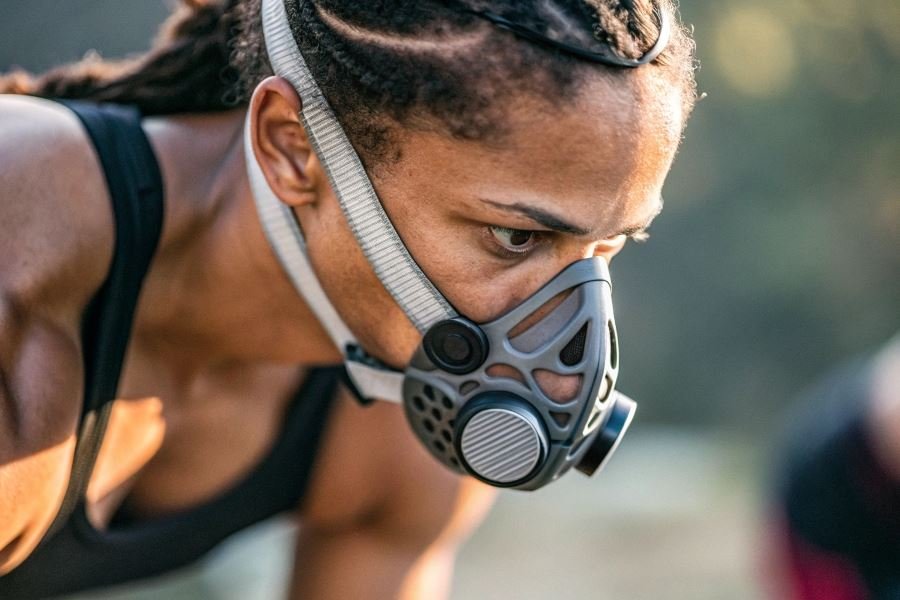
Ever watched an elite athlete training with what looks like a Bane-inspired face mask and wondered what on earth they’re doing? These curious devices—endurance training masks—have exploded onto the fitness scene, promising to transform ordinary workouts into high-altitude training sessions without leaving sea level.
Endurance training masks (also called elevation or altitude masks) are specialized breathing devices designed to restrict airflow during exercise. They come in various forms, from simple neoprene masks with adjustable valves to sophisticated electronic systems that precisely control oxygen intake. The most popular models feature interchangeable resistance caps that simulate elevations from 3,000 to 18,000 feet.
The journey of these masks began in military and specialized athletic training circles before gaining mainstream attention when Olympic athletes started incorporating them into their regimens around 2012. What was once considered fringe equipment has now become a common sight in gyms across the country.
But what’s the science behind the mask? These devices operate on the principle of respiratory muscle training (RMT), creating resistance that forces your breathing muscles—primarily the diaphragm and intercostals—to work harder. This isn’t actually simulating altitude (your oxygen percentage remains unchanged), but rather creating a form of strength training for your respiratory system.
Key types of training masks include:
- Valve-based masks: Featuring adjustable resistance valves
- Electronic masks: Offering programmable breathing patterns
- Elevation simulation masks: Designed to mimic specific altitude conditions
The underlying theory suggests that by strengthening these respiratory muscles, you’ll enhance oxygen utilization efficiency when the mask comes off—potentially boosting endurance performance where it counts: on race day.
The Science Behind Breathing Barriers
Respiratory Muscle Revolution
When athletes push their limits, every physiological advantage matters. Training masks have emerged as powerful tools in the endurance athlete’s arsenal, creating controlled breathing resistance that transforms ordinary workouts into respiratory boot camps. These devices force your breathing muscles—primarily the diaphragm and intercostals—to work significantly harder during exercise, much like adding weights to strength training.
The fundamental concept behind endurance training masks: benefits and effectiveness centers on simulating high-altitude conditions without leaving sea level. By restricting airflow, these masks create hypoxic-like conditions that challenge your respiratory system to adapt and become more efficient. Research published in the Journal of Sports Science and Medicine demonstrates that after six weeks of consistent training with respiratory resistance devices, participants showed a 15-20% increase in respiratory muscle strength.
Oxygen utilization improvements represent perhaps the most significant physiological benefit. When your body adapts to working with less available oxygen during masked training sessions, it develops enhanced oxygen extraction capabilities. Your muscles essentially learn to do more with less, improving mitochondrial density and efficiency in energy production pathways.
Adaptation Magic Happens Here
The body’s response to consistent mask training reveals fascinating physiological adaptations that extend well beyond just stronger breathing muscles:
- Increased lung capacity and respiratory volume
- Enhanced diaphragmatic strength and endurance
- Improved ventilatory threshold
- Greater resistance to respiratory fatigue
These adaptations don’t happen overnight. According to sports physiologists, meaningful respiratory system changes typically begin after 3-4 weeks of consistent training with proper progression in resistance levels.
| Adaptation | Timeframe | Measurable Outcome |
|---|---|---|
| Respiratory muscle strength | 3-4 weeks | 15-20% increase in maximum inspiratory pressure |
| Ventilatory efficiency | 4-6 weeks | 8-12% improvement in breathing economy |
| Oxygen utilization | 6-8 weeks | 5-7% increase in VO2 max in some studies |
| Respiratory endurance | 8+ weeks | Up to 30% longer time to respiratory fatigue |
Performance Metrics That Matter
The scientific literature on respiratory training devices shows several measurable outcomes that translate directly to performance gains:
A landmark study in the International Journal of Sports Physiology and Performance tracked elite cyclists using Training Mask 2.0 devices over an eight-week period. The masked training group demonstrated a 7% improvement in power output at ventilatory threshold compared to just 2% in the control group. This translates to maintaining higher intensities before hitting the “breathing wall” that forces athletes to slow down.
Blood lactate clearance rates also show meaningful improvements with consistent mask training. When your respiratory system works more efficiently, you can maintain aerobic metabolism longer, delaying the onset of lactate accumulation that contributes to muscle fatigue.
Perhaps most compelling are the time-to-exhaustion metrics. Multiple studies show that athletes training with respiratory resistance devices consistently demonstrate 15-20% longer performance times at high intensities after 8-12 weeks of training. This endurance boost represents the culmination of all physiological adaptations working together—stronger breathing muscles, better oxygen utilization, and improved metabolic efficiency.
Mastering the Mask: Training Protocols and Smart Integration
Finding your optimal training sweet spot
Endurance training masks deliver their most impressive benefits when used with precision and purpose. The research shows that interval training produces standout results—alternating between 2-minute high-intensity bursts at 85-90% max heart rate while wearing the mask, followed by 1-minute recovery periods without it. This approach maximizes adaptation while preventing excessive fatigue.
For beginners, start conservatively with just 15-20 minutes of masked training twice weekly. Advanced athletes can push to 30-45 minute sessions 3-4 times weekly, but never use the mask for more than 50% of your total training volume. This balanced approach prevents overtraining while still triggering the desired physiological adaptations.
The magic happens when you match resistance levels to your goals:
- Moderate resistance (3000-6000ft simulation): Ideal for building base endurance
- Higher resistance (9000-12000ft simulation): Best for peak performance phases
- Variable resistance: Most effective for comprehensive respiratory development
The timing of masked sessions matters significantly—research suggests implementing them during the base-building phase of your training cycle, at least 8-12 weeks before key competitions.
When masks might not be your best training partner
Training masks aren’t universally beneficial. Those with asthma, COPD, cardiovascular conditions, or pulmonary hypertension should consult healthcare providers before use. Even healthy athletes should recognize several important limitations:
“The mask is a tool, not a miracle. It complements smart training but doesn’t replace it.” – Dr. Michael Joyner, Mayo Clinic exercise physiologist
Performance decrements are inevitable during masked training—expect 10-15% reduced power output and significantly higher perceived exertion. This makes masks inappropriate for sessions focused on race-specific pacing or maximum power development.
| Condition | Risk Level | Recommendation |
|---|---|---|
| Asthma/COPD | High | Avoid or use only with medical clearance |
| Hypertension | Moderate | Monitor BP closely, use lower resistance |
| Healthy athletes | Low | Start gradually, monitor recovery |
| Youth athletes | Moderate | Not recommended under age 18 |
Additionally, masks can impair proper hydration during workouts and may increase breathing mechanics compensation that could reinforce poor patterns if overused.
Integrating masks into your training arsenal
The most successful implementation comes from strategic integration rather than random application. Consider these evidence-based approaches:
-
Periodization is paramount – Incorporate masked training primarily during base and build phases, removing them entirely 2-3 weeks before competition.
-
Pair with complementary modalities – Masks work synergistically with altitude training, respiratory muscle training devices like PowerLung, and targeted core stability work.
-
Progressive adaptation protocol – Begin with 10-minute sessions at low resistance, adding 5 minutes weekly while gradually increasing resistance levels.
-
Monitor recovery markers – Track resting heart rate, sleep quality, and perceived fatigue. Increased morning heart rate >5 BPM signals potential overreaching.
-
Cycle implementation – Most effective protocol: 3 weeks using masks, 1 week without, repeated throughout training blocks.
The most successful athletes treat masks as specialized tools rather than everyday training companions. When properly integrated, they become powerful catalysts for respiratory strength, psychological toughness, and ultimately, endurance performance.