
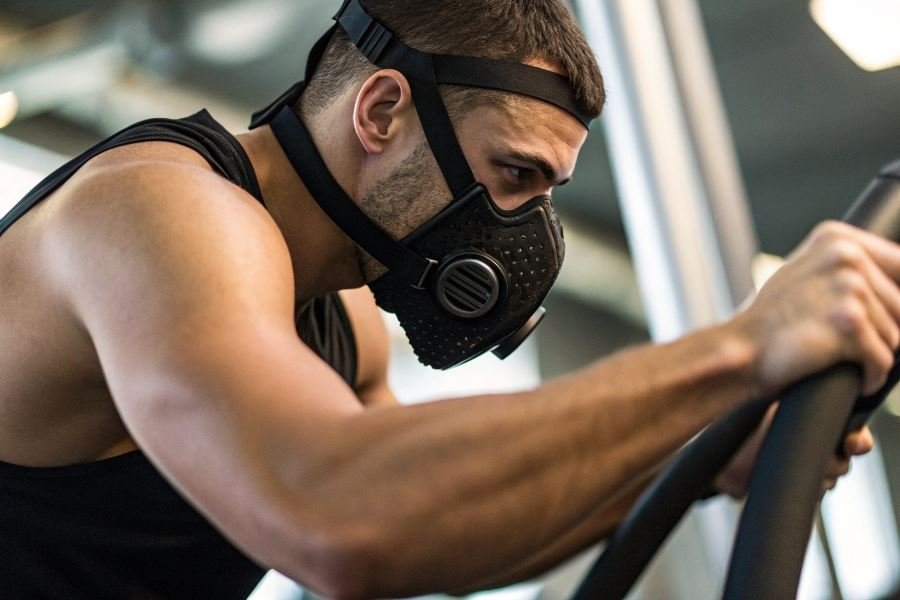
Ever watched an elite athlete train with what looks like a Bane-inspired face mask and wondered what the hype is all about? Training masks have exploded onto the fitness scene, promising everything from enhanced endurance to superhuman lung capacity. But separating fact from fiction is crucial before you strap one of these devices to your face during your next workout.
Training masks (sometimes called elevation or altitude masks) are specialized breathing devices designed to create respiratory resistance during exercise. Unlike their name might suggest, they don’t actually simulate altitude by reducing oxygen—they make your breathing muscles work harder by restricting airflow. Think of them as “dumbbells for your diaphragm,” challenging your respiratory system to become more efficient over time.
The science behind these masks centers on respiratory muscle training (RMT). When your breathing muscles face consistent resistance, they adapt by becoming stronger and more efficient—similar to how your biceps respond to curls. Research published in the Journal of Sports Science Medicine shows that targeted respiratory training can improve breathing efficiency and potentially enhance athletic performance in certain scenarios.
“The key isn’t just wearing the mask—it’s understanding how to integrate it strategically into your training program.”
However, let’s set realistic expectations. Training masks won’t transform you into an Olympic athlete overnight. The benefits are specific and targeted: improved respiratory muscle strength, potentially better breathing efficiency, and possibly enhanced recovery between high-intensity intervals. They won’t replicate true altitude training or dramatically increase your VO2 max as some marketing claims suggest.
For maximum results, start with brief 10-15 minute sessions at the lowest resistance setting, gradually increasing as your respiratory muscles adapt. Your training journey with these masks should be progressive, patient, and purposeful.
Essential Techniques for Training Mask Mastery
Finding Your Perfect Fit
The journey to respiratory strength begins with proper mask fitting. Different training masks require specific adjustment techniques to create the ideal seal without causing discomfort. For the popular Elevation Training Mask, position it firmly against your face, ensuring the neoprene edges create a complete seal around your nose and mouth. The straps should be tight enough to prevent air leakage but not so tight that they cause headaches or skin irritation.
When learning how to properly use a training mask for maximum results, the fitting process deserves special attention. Many athletes sabotage their training by accepting a mediocre fit, which compromises the resistance levels and ultimately diminishes results. For sleeve-style masks like the Phantom Athletics models, pull the material evenly across your face and adjust from the back of your head forward.
Fit Test: Inhale sharply with the valves set to lowest resistance. If you feel air entering from the edges rather than through the valves, readjust until the seal improves.
Breathing Patterns That Transform Performance
Mastering specific breathing techniques amplifies the effectiveness of your mask training:
- Diaphragmatic Breathing: Focus on expanding your belly rather than your chest, engaging your diaphragm fully with each breath
- Box Breathing: Inhale for 4 counts, hold for 4, exhale for 4, hold for 4
- Pyramid Breathing: Gradually increase breath hold times, then decrease
The respiratory muscles respond dramatically to structured breathing patterns, particularly when combined with the added resistance of a training mask.
For high-intensity sessions, implement a 3:2 ratio (inhale for 3 counts, exhale for 2) to maximize oxygen uptake while maintaining control. During recovery periods, switch to a 1:2 ratio (inhale for 1, exhale for 2) to facilitate CO2 release and promote parasympathetic activation.
Progressive Adaptation Protocol
| Experience Level | Starting Resistance | Weekly Sessions | Session Duration | Progression Timeline |
|---|---|---|---|---|
| Beginner | 1000-3000 ft | 2-3 | 10-15 minutes | 4-6 weeks |
| Intermediate | 3000-9000 ft | 3-4 | 15-30 minutes | 3-4 weeks |
| Advanced | 9000-18000 ft | 4-5 | 30-45+ minutes | 2-3 weeks |
Your body requires systematic adaptation to mask training. Beginners should start with the lowest resistance setting (typically simulating 1000-3000 feet elevation) for short sessions of 10-15 minutes. The initial focus should be on maintaining normal breathing patterns despite the added resistance.
Warning: Skipping adaptation phases can lead to dizziness, hyperventilation, and diminished training quality.
After establishing comfort at your initial resistance level (typically 2-3 weeks), increase the resistance by one level while maintaining the same workout duration. Once you’ve adapted to the new resistance, you can begin extending your masked training sessions.
Advanced users can implement “resistance intervals” – alternating between higher and lower settings during a single workout to create metabolic challenges that mirror high-altitude training adaptations.
Remember that adaptation is highly individual – some athletes adapt quickly to respiratory resistance while others require extended acclimation periods. Listen to your body’s signals and adjust your progression accordingly.
By following these techniques systematically, you’ll transform your respiratory capacity and unlock performance gains that extend far beyond your masked training sessions.
Optimizing Your Training Program With Elevation Masks
Matching Masks to Workout Types
Training masks aren’t one-size-fits-all tools—they’re precision instruments that deliver different benefits across various workout styles. When integrating an Elevation Training Mask into your HIIT sessions, start with lower resistance settings (typically 3,000-6,000 ft simulation) during your work intervals, removing the mask entirely during recovery periods. This approach maximizes oxygen debt without compromising form or intensity.
For strength training, the approach shifts dramatically. Apply the mask during compound movements like squats and deadlifts where breathing control already plays a crucial role. Most athletes find success starting at 6,000 ft simulation, gradually working up to 9,000 ft as adaptation occurs. The key difference? Keep rest periods mask-free to ensure complete recovery between sets.
Endurance athletes benefit from a progressive protocol:
| Training Phase | Mask Setting | Duration | Frequency |
|---|---|---|---|
| Adaptation | 3,000-6,000 ft | 15-20 min | 2x weekly |
| Development | 6,000-9,000 ft | 30-45 min | 3x weekly |
| Performance | 9,000-15,000 ft | 45-60 min | 2-3x weekly |
Never introduce the mask during peak training weeks or immediately before competition—timing matters as much as technique.
Tracking Progress Beyond the Numbers
The metrics that matter with mask training extend beyond standard performance indicators. While heart rate variability (HRV) and VO2 max remain foundational, mask-specific metrics deserve equal attention.
Track your “mask-to-no-mask differential”—the performance gap between identical workouts with and without the device. This percentage should narrow over time, indicating improved respiratory efficiency. Most athletes see this gap decrease by 3-5% monthly during proper adaptation.
Blood oxygen saturation (SpO2) monitoring provides the clearest window into adaptation progress. Using a pulse oximeter during recovery periods reveals how quickly your body returns to normal oxygen levels. Elite performers typically return to 95%+ saturation within 60-90 seconds of mask removal, even after intense efforts.
Digital performance tracking apps like Strava or TrainingPeaks allow you to tag mask-specific workouts, creating a longitudinal view of your respiratory development that reveals patterns invisible in single-session data.
Troubleshooting Common Mask Mistakes
The difference between struggling and thriving with training masks often comes down to avoiding these critical errors:
-
Premature intensity escalation – Jumping to high altitude settings before establishing comfort at lower levels creates a counterproductive stress response. The solution? Spend at least 6-8 sessions at each resistance level before progressing.
-
Mask-dependent training – Some athletes become psychologically dependent on the mask, believing they can’t perform without it. Schedule deliberate mask-free sessions to maintain normal breathing patterns.
-
Ignoring fit issues – A mask that leaks around the edges defeats its purpose entirely. If you can hear air escaping during exhalation, readjust or consider a different size.
The most overlooked aspect of mask training is proper cleaning. Respiratory pathogens thrive in warm, moist environments—exactly what your mask becomes during workouts. Disinfect after every use.
When dizziness occurs during masked training, it’s typically not from oxygen deprivation but from carbon dioxide retention. The fix isn’t removing the mask entirely, but practicing deeper, more complete exhalations to clear CO2 buildup.
By methodically integrating these strategies, your training mask transforms from a novelty item into a precision tool for respiratory conditioning that delivers measurable performance gains across multiple fitness domains.