
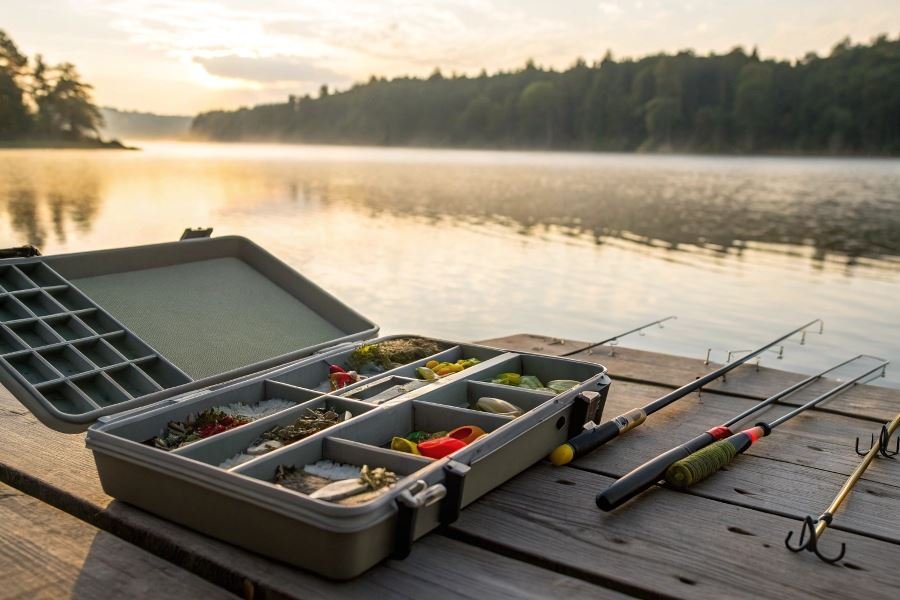
Ever stood knee-deep in water, frantically searching through a jumbled tackle box while your dream catch swims away? That moment of frustration has driven the evolution of one of fishing’s most underappreciated heroes: the multi-section fishing case.
Multi-section fishing cases are specialized storage solutions designed with compartmentalized spaces to organize various fishing gear—from delicate flies to bulky reels, fragile lures to heavy weights. They’re the difference between a chaotic scramble and a seamless cast when that trophy bass suddenly appears.
The journey from the traditional wicker creel to today’s high-tech cases tells a fascinating story. Early anglers used simple wooden boxes or canvas pouches, but by the 1950s, plastic tackle boxes with basic dividers emerged. The real revolution came in the 1970s with the introduction of Plano’s molded plastic cases featuring customizable compartments. Today’s cases incorporate waterproof seals, impact-resistant materials, and even temperature control for sensitive baits.
When selecting your perfect case companion, consider three critical factors:
- Accessibility – How quickly can you reach what you need?
- Water resistance – Will your gear stay dry during unexpected downpours?
- Durability – Can it withstand being dropped on rocks or bounced in a boat?
The best multi-section case balances organization with flexibility, allowing you to adapt to different fishing environments without carrying your entire collection. Remember, the perfect case isn’t just about storage—it’s about enhancing your time on the water.
The Game-Changing Benefits of Multi-Section Fishing Cases
Organization That Makes Sense
When you’re knee-deep in a stream at dawn, the last thing you want is to fumble through a jumbled mess of tackle. Multi-section cases for fishing gear have revolutionized how anglers access their equipment on the water. The compartmentalized design allows for logical grouping—keeping lures with lures, hooks with hooks, and tools with tools.
The advantages and disadvantages of multi-section cases for fishing gear become immediately apparent when you compare them to traditional storage options. While single-compartment tackle boxes might seem simpler, the organizational capabilities of sectioned cases dramatically reduce time spent searching for that perfect lure when fish are actively striking.
Time-saving access becomes your secret weapon with these cases. Most premium models feature transparent lids that let you identify contents without opening every compartment. The Plano Edge series exemplifies this with crystal-clear DuraView lids that resist fogging and scratching, even after years of use.
Protection That Preserves Your Investment
Let’s talk durability—because fishing gear isn’t cheap.
Your collection of hand-tied flies and precision-balanced lures deserves better than being tossed together in a bucket.
Multi-section cases excel at protecting delicate equipment through:
- Water-resistant seals that keep moisture out during unexpected downpours
- Crush-proof construction that withstands being stepped on or dropped from boats
- UV-resistant materials that prevent plastic degradation and color fading
The protection factor extends to your wallet too. When lures worth $15-30 each stay separated, hooks don’t tangle and damage each other. The Flambeau Outdoors Zerust-infused cases even emit a vapor that prevents metal components from rusting—extending the life of your expensive hooks and tools by years.
Portability That Goes Where You Go
The fishing experience has evolved beyond sitting in one spot all day. Modern anglers move frequently, tracking fish or trying different locations.
Multi-section cases shine brightest when considering transportation advantages:
| Feature | Benefit |
|---|---|
| Stackable design | Maximizes vehicle space |
| Interlocking systems | Prevents shifting during transport |
| Ergonomic handles | Reduces carrying fatigue |
| Customizable weight distribution | Balances load for longer hikes |
The Tackle Warehouse Pro Series bags integrate these cases into backpack systems that distribute weight evenly across your shoulders and back. This innovation has been particularly game-changing for shore anglers who might hike miles to reach remote fishing spots.
Lightweight yet robust materials like reinforced polypropylene provide the perfect balance between durability and portability.
For boat anglers, the standardized dimensions of many multi-section cases mean they fit perfectly into existing storage compartments. The Bass Pro Shops Extreme series features cases with non-slip bottoms that stay put even when the water gets choppy.
Whether you’re wading through streams, hiking to alpine lakes, or heading out on a deep-sea charter, the transportation advantages of well-designed multi-section cases transform what was once a logistical headache into a streamlined part of your fishing adventure.
The Reality Check on Multi-Section Fishing Cases
Let’s face it—while multi-section fishing cases offer impressive organization, they’re not without their drawbacks. As someone who’s hauled these compartmentalized companions across countless riverbanks and lakeshores, I can tell you there’s a flip side to all that organizational glory. Before you invest in what might seem like the perfect solution, let’s dive into the limitations that might make you reconsider.
When Size Actually Matters
Multi-section cases come with an unavoidable physics problem: rigid dividers and compartments add bulk and weight. A standard tackle box might weigh 2-3 pounds empty, but multi-section specialized cases often start at 5-7 pounds before you’ve added a single lure. This additional weight becomes particularly noticeable during those long hikes to remote fishing spots.
The dimensional constraints can be equally challenging. Most multi-section cases measure between 18-24 inches in length, which means they don’t always accommodate longer items like certain rod components or specialized tools. I’ve witnessed many anglers forced to carry a separate bag just for these outliers—defeating the original purpose of consolidated storage.
The Price of Compartmentalization
The financial investment in quality multi-section cases deserves serious consideration. While basic tackle boxes might run $20-40, premium multi-section cases from brands like Plano or Flambeau typically range from $75-150. For specialized waterproof models with advanced features, you’re looking at $200+ territory.
This comparison becomes even more stark when you consider alternative storage options:
| Storage Solution | Average Cost | Weight | Customization |
|---|---|---|---|
| Multi-Section Case | $75-150 | 5-7 lbs | Limited |
| Traditional Tackle Box | $20-40 | 2-3 lbs | Moderate |
| Soft-Sided Tackle Bag | $40-80 | 1-3 lbs | High |
| DIY Storage System | $15-30 | Variable | Unlimited |
When you factor in durability concerns—particularly with hinges and latches that inevitably face stress in outdoor environments—the long-term value proposition becomes questionable for casual anglers.
When Your Gear Doesn’t Fit the Mold
Perhaps the most frustrating limitation comes in the form of customization challenges. Most multi-section cases feature pre-molded compartments designed for standard-sized equipment. But fishing gear is notoriously non-standard.
That custom-tied fly collection with oversized hackles? Those specialty crankbaits with extra-long bills? The handcrafted wooden lures from your grandfather? These treasured items often become homeless orphans in the rigid world of multi-section cases.
Some manufacturers like Flambeau Outdoors offer adjustable dividers, but even these have limitations. The adjustments typically follow predetermined tracks or slots, restricting true customization. And once you’ve configured a case for specific gear, reconfiguring it for a different fishing style becomes a time-consuming puzzle.
The irony isn’t lost on serious anglers—the very organization system designed to accommodate diverse gear often struggles with anything that deviates from the norm.
For those who regularly switch between different fishing styles or frequently upgrade equipment, this inflexibility can transform your organizational solution into an organizational headache. Many dedicated anglers eventually resort to multiple specialized cases—further increasing cost, storage requirements, and transportation challenges.