
Ever watched a $300 fishing rod snap on the first cast of the season? I have—and trust me, that sickening crack wasn’t from a monster fish. It was the sound of poor off-season storage coming back to haunt me.
Proper tackle storage isn’t just about organization—it’s about protecting your investment. When anglers meticulously select premium lures, high-performance reels, and perfectly balanced rods but then toss everything into a garage corner for months, they’re essentially throwing money away. The average angler spends $1,500 annually on gear, yet many overlook the critical final step: protection when not in use.
Temperature fluctuations, humidity, UV exposure, and physical impacts silently degrade fishing equipment. Graphite rods develop microfractures, reel lubricants break down, and hook points dull—all before you even hit the water. Studies show tackle stored improperly loses up to 40% of its functional lifespan.
The invisible enemies of idle tackle
Moisture ranks as tackle’s number one enemy, causing metal components to corrode and wooden handles to warp. Even in seemingly “dry” environments, seasonal humidity changes can trigger devastating oxidation processes.
Dust and debris infiltrate reel mechanisms with surprising efficiency. What begins as a barely noticeable grit evolves into performance-killing friction that damages precision components.
Physical damage—often from items stacked on or falling against tackle—accounts for nearly 60% of preventable equipment failures. Even minor impacts can compromise rod blanks and reel seats.
Today’s protective case landscape
The tackle protection market has evolved dramatically from the days of simple rod tubes. Modern options include:
- Hard-shell cases with customizable foam inserts
- Soft-sided tackle bags with reinforced compartments
- Climate-controlled cabinets for serious collectors
- Combination systems that protect while providing portability
The best protection systems address multiple threats simultaneously while remaining practical for regular use. After all, gear that’s too difficult to access rarely leaves its case—defeating the entire purpose of owning it.
Tackle Storage Solutions That Protect Your Investment
When you’ve invested hundreds or even thousands of dollars in quality fishing gear, proper storage becomes not just a preference but a necessity. The difference between hastily tossed equipment and thoughtfully stored tackle can mean years of added life to your favorite rod and reel combinations. How to properly store tackle: choosing a case with optimal protection based on your specific equipment type requires understanding the unique vulnerabilities of each component in your arsenal.
Rod Storage: Hard vs Soft Cases
Hard rod cases offer unparalleled protection for serious anglers who frequently travel or fish in challenging environments. The Plano Airliner Telescoping Rod Case provides crush-resistant protection with adjustable length accommodations for rods up to 8 feet. These hard-shell solutions excel when:
- Traveling by air or in crowded vehicles
- Storing equipment during off-seasons
- Protecting high-end graphite or carbon fiber rods
Soft cases, meanwhile, deliver excellent protection with significantly improved portability. The Shimano Baltica Rod Sleeve weighs just 12 ounces while still offering padded protection and water resistance. These become ideal for:
- Day trips to local fishing spots
- Situations requiring frequent rod changes
- Storage in limited-space environments
The protection difference is substantial: hard cases can withstand up to 200 pounds of pressure without damage to contents, while quality soft cases typically resist only 30-50 pounds of direct pressure.
Reel Protection Strategies
Your reels represent precision instruments requiring specific storage considerations. Individual neoprene pouches provide excellent protection against dust, moisture, and impact when:
- Storing reels separately from rods
- Protecting reels with delicate drag systems
- Transporting backup reels
The Penn Reel Case features moisture-wicking interior fabric that prevents corrosion even in humid environments.
Compartmentalized cases offer a different advantage, keeping multiple reels organized in a single protective unit. The Flambeau Outdoor Zerust Reel Saver incorporates:
| Feature | Benefit |
|---|---|
| Anti-corrosion technology | Prevents rust for up to 5 years |
| Customizable foam inserts | Accommodates various reel sizes |
| Impact-resistant exterior | Survives drops up to 4 feet |
| Waterproof seal | Protects in rainy conditions |
The difference between proper and improper reel storage often becomes apparent only after several seasons—when it’s too late to reverse the damage.
Terminal Tackle Organization
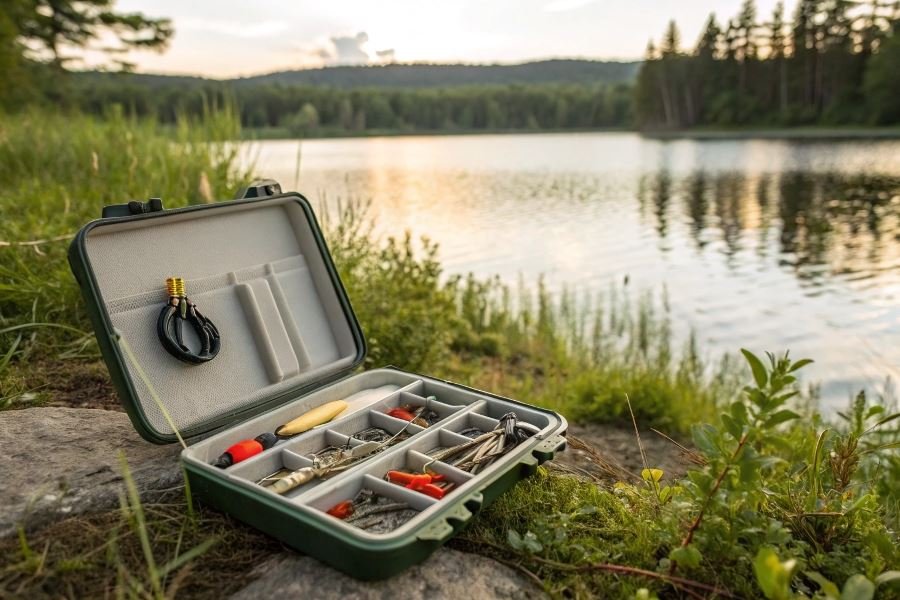
Nothing ruins a perfect fishing opportunity faster than fumbling through disorganized terminal tackle. Waterproof boxes with customizable dividers have revolutionized how anglers protect and access their hooks, weights, and lures.
The Plano Edge Series boxes feature:
- Silicone gaskets creating watertight seals
- Rust-preventing dividers with Dri-Loc technology
- Clear lids for quick visual inventory
- Customizable compartment sizes
For fly fishing enthusiasts, the Cliff Outdoors Bugger Beast provides specialized storage with magnetic anchoring systems that prevent flies from shifting during transport.
Organization efficiency matters: Studies show the average angler spends up to 15 minutes per trip searching for specific tackle items—time better spent with lines in the water.
When selecting terminal tackle storage, prioritize:
- Water resistance (minimum IPX4 rating)
- UV protection to prevent plastic lure degradation
- Divider flexibility for changing inventory needs
- Durability of latching mechanisms
Your fishing equipment represents both a significant investment and the tools that connect you to memorable experiences on the water. Protecting that investment through proper storage solutions ensures your gear remains ready whenever the perfect fishing opportunity arises.
Extend Your Tackle’s Lifespan With Proper Storage
Fishing gear represents both a financial investment and a collection of memories. That rod that helped you land your personal best? That lucky lure that never fails? They deserve better than being tossed in the garage corner. Let’s dive into the maintenance routines that will keep your tackle performing season after season.
Pre-storage cleaning protocols that matter
The single most destructive force to fishing tackle isn’t rough handling—it’s neglect. Salt, dirt, and moisture create the perfect storm for corrosion.
Start with a thorough freshwater rinse for all saltwater-exposed equipment, even if it just faced spray. For reels, remove line and spool separately, then use a soft brush to clean between gears. Rods need special attention at the guides and reel seats where salt accumulates.
The extra 15 minutes you spend cleaning after each trip adds years to your gear’s life.
Apply a light coat of manufacturer-recommended lubricant to reel bearings and moving parts. For Penn reels, their proprietary grease works wonders in preventing internal corrosion. Wipe down graphite rods with a silicone cloth to maintain their protective coating.
Critical drying time: Never rush this step. Allow 24-48 hours of air drying before storage, positioning reels and rods to allow maximum airflow around all components.
Seasonal storage considerations for changing conditions
Summer storage differs dramatically from winter protection. During active fishing seasons, tackle needs to be ready for quick deployment while remaining protected.
Summer active storage:
- Keep tackle in ventilated cases
- Use silica gel packets to combat humidity
- Position cases away from direct sunlight
- Maintain temperature below 80°F when possible
Winter long-term storage:
- Loosen drag systems on all reels
- Remove batteries from electronic equipment
- Store rods horizontally on racks rather than leaning
- Maintain consistent temperature (fluctuations cause condensation)
For multi-piece rods, separate the sections to prevent ferrule seizing. Store line spools flat to prevent memory issues, especially with monofilament.
When protection fails: Upgrading your cases
Even the best cases eventually wear out. Watch for these warning signs that it’s time for an upgrade:
| Warning Sign | Potential Consequence | Recommended Action |
|---|---|---|
| Broken latches | Accidental openings during transport | Immediate replacement |
| Compromised waterproofing | Moisture damage to contents | Upgrade to higher IP rating |
| Degraded foam inserts | Inadequate impact protection | Replace foam or entire case |
| UV-damaged exterior | Reduced structural integrity | Replace with UV-resistant model |
| Deformed hinges | Incomplete closure | Repair if possible or replace |
When selecting replacement cases, consider the evolution of your equipment. That Plano case that perfectly fit your tackle collection five years ago might not accommodate your expanded arsenal today.
Modern protective cases from manufacturers like Pelican offer customizable foam inserts, pressure equalization valves, and waterproof ratings that far exceed older models. The investment in a premium case pays dividends in equipment longevity.
Remember that proper storage isn’t just about protection—it’s about preparation. A well-maintained tackle collection means more time fishing and less time shopping for replacements. Your future self will thank you when that decade-old lure still runs true and that cherished rod maintains its perfect action for seasons to come.