
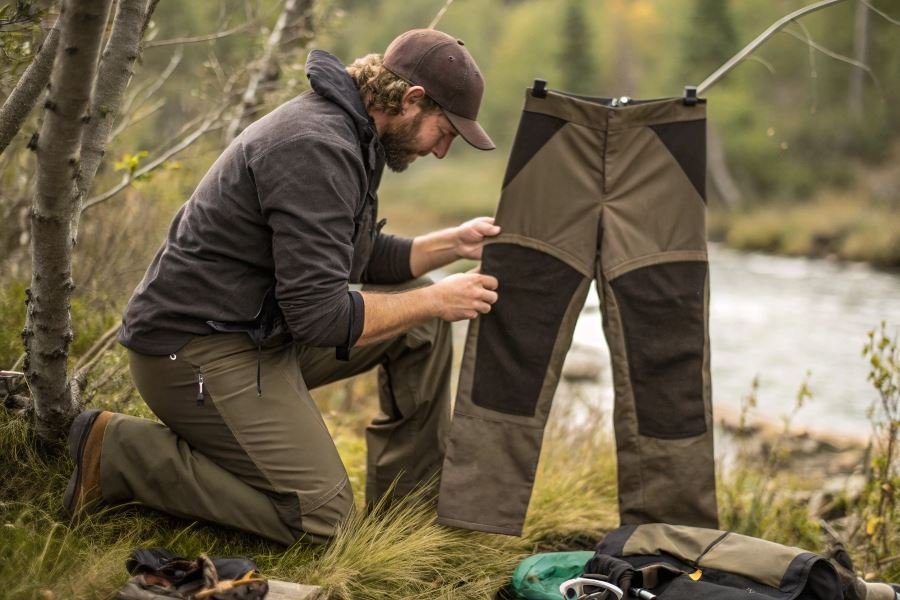
Ever stood knee-deep in a rushing stream, feeling that uncomfortable tug of too-tight pants as you reach for your fishing rod? Or perhaps you’ve experienced the frustration of excess fabric catching on branches during a crucial hunting moment? These aren’t just minor inconveniences—they’re game changers.
Finding the right pants for fishing and hunting isn’t merely about looking the part; it’s about enhancing your performance in the field. Unlike your everyday jeans or chinos, specialized outdoor pants are engineered with specific movements and environmental challenges in mind. They’re not just clothes—they’re equipment.
The technical difference matters
Fishing and hunting pants differ dramatically from regular pants in three critical ways:
- Articulated design: With pre-bent knees and gusseted crotches that allow for crouching, climbing, and sudden movements
- Technical fabrics: Offering waterproofing, breathability, and quiet movement (crucial when stalking game)
- Strategic features: Including reinforced seats, specialized pockets, and adjustable cuffs
When pants don’t fit properly, the consequences cascade beyond simple discomfort. Restricted movement can affect your casting accuracy or your ability to take that perfect shot. Too loose, and you’re fighting your own clothing while navigating difficult terrain. The right fit transforms your gear from a potential liability into a genuine asset that works with you, not against you.
Your outdoor adventures demand equipment that performs under pressure—and your pants are no exception.
Get the Perfect Fit: Mastering Outdoor Pants Measurements
Finding the right size for your outdoor gear can make or break your experience on the water or in the field. When it comes to fishing and hunting pants, proper sizing isn’t just about comfort—it’s about functionality, mobility, and sometimes even safety. Let’s dive into the essential measurements that will ensure your next pair fits like they were custom-made.
Waist Measurements: The Foundation of Fit
The waist measurement serves as your starting point when selecting the size of pants for fishing and hunting activities. Unlike casual wear, outdoor pants require special consideration for layering and movement.
Measuring technique: Stand naturally and wrap a measuring tape around your waist where your pants typically sit. For most outdoor pants, this is slightly below your natural waistline. Breathe normally—don’t suck in!
Remember that fishing and hunting often involve extended periods of sitting, bending, and crouching. Allow an extra half-inch of space for comfort during these movements.
| Activity | Recommended Waist Allowance |
|---|---|
| Fly fishing | +1 inch (for wading movements) |
| Duck hunting | +1.5 inches (for layering) |
| Upland hunting | +0.5-1 inch (for walking comfort) |
When considering cold-weather activities, factor in base layers. Sitka Gear and Simms Fishing both recommend adding approximately 1-2 inches to your normal waist measurement when planning to wear thermal underwear beneath your pants.
Inseam: Length Matters by Activity
Your inseam measurement directly impacts mobility and protection in different environments.
How to measure: Standing straight, measure from your crotch seam down to where you want the pants to end. For fishing pants, this often means:
- Wading pants: 1-2 inches shorter than regular pants to prevent dragging in water
- Boat fishing pants: Standard length with articulated knees for seated positions
- Bank fishing: Slightly longer for protection when kneeling
For hunters, terrain dictates length:
- Brush hunters: Consider pants that end just at boot top to prevent snagging
- Tree stand hunters: Longer inseams provide better coverage when seated elevated
Girth Measurements: Room to Move
The most overlooked yet crucial measurements are thigh and seat circumference. These determine whether you can comfortably climb into a boat, crouch behind cover, or navigate dense brush.
Thigh measurement: Measure the circumference of your thigh at its widest point. Most quality outdoor pants from brands like Cabela’s provide thigh measurements in their sizing charts.
Seat measurement: While standing, measure around the fullest part of your buttocks. This is particularly important for activities requiring frequent sitting or squatting.
Pro tip: The ideal hunting or fishing pants should allow you to comfortably lift your knee to waist height without restriction—a movement you’ll perform countless times during a day outdoors.
Many manufacturers now offer athletic or “active” cuts specifically designed with larger thigh-to-waist ratios for sportsmen. These provide extra room through the seat and thighs without requiring you to size up at the waist.
Remember that different materials stretch differently. Technical fabrics with 2-4% spandex or elastane content will provide more give than rigid cotton canvas. When in doubt between sizes, consider your primary activity’s movement patterns and choose accordingly.
Sealing the Deal on Your Fishing and Hunting Pants
Finding that perfect pair of outdoor pants isn’t just about comfort—it’s about performance when it matters most. Whether you’re crouched in a duck blind or wading through a mountain stream, your pants need to move with you, protect you, and never let you down. Let’s nail down those final crucial considerations to ensure your next pair becomes your favorite field companion.
The Movement Test
The dressing room try-on simply doesn’t cut it for outdoor gear. To truly test pants for proper fit and mobility:
-
Perform the squat test – Drop into a full squat and hold for 10 seconds. Feel any binding at the knees or seat? That’s a red flag.
-
Try the lunge – Step forward into a deep lunge. Your pants should move freely without resistance.
-
Reach for the sky – Raise your arms overhead. If your pants drop significantly at the waist or pull uncomfortably, reconsider the fit.
-
Sit on a bench – Many fishing and hunting activities involve periods of sitting. Make sure your pants don’t dig into your stomach or ride up excessively at the ankles.
The best pants disappear from your awareness in the field. If you’re thinking about your pants, they’re not the right pants.
Seasonal Sizing Strategy
Your body and layering needs change with the seasons, and your pants sizing should adapt accordingly:
| Season | Sizing Adjustment | Layering Consideration |
|---|---|---|
| Summer | True to size or slightly looser | Minimal; focus on ventilation |
| Fall | Size up 1/2 to 1 inch in waist | Mid-weight base layers |
| Winter | Size up 1 to 2 inches in waist | Heavy base layers or liners |
| Spring | Similar to fall | Versatile for temperature swings |
Remember that winter pants often require room for thermal underwear or base layers. Many experienced outdoorsmen purchase dedicated cold-weather pants one size larger than their warm-weather pairs.
Brand Breakdown
Not all brands size their pants the same way, and knowing these variations can save you considerable frustration:
-
Sitka Gear tends to run true to size but with an athletic cut that may feel snug for those with larger thighs
-
Columbia typically offers a more generous fit, often running slightly large
-
Simms fishing pants frequently feature a higher rise to accommodate wading movements
-
Kuiu designs with a performance fit that some find requires sizing up
-
Cabela’s house brand generally provides a relaxed fit that accommodates layers well
Pro tip: When ordering online, check the return policy first. Many outdoor retailers understand the sizing challenge and offer generous return windows for unworn gear.
For pants with adjustable features like waist cinches or articulated knees, you might be able to get away with a slightly less perfect fit. However, the crotch and inseam measurements should always be spot-on—no amount of adjustment can fix fundamentally wrong proportions.
Remember that the perfect pants aren’t just about measurements—they’re about movement, protection, and confidence in the field. When you find that ideal pair, you’ll know it not by how they look, but by how quickly you forget you’re wearing them.