
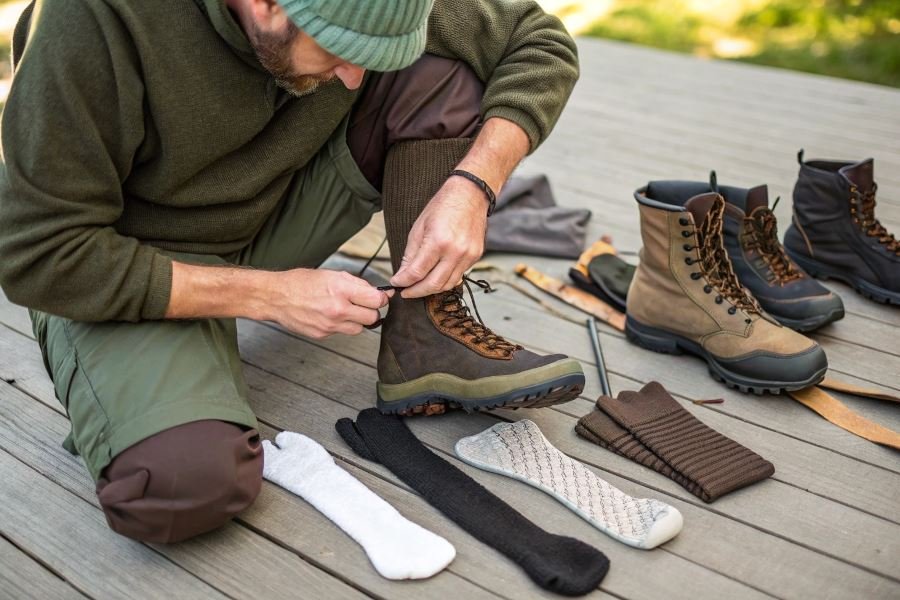
The temperature gauge reads -15°F, and you’re three miles from the nearest road. Your toes? You can’t feel them anymore. That’s when you realize your boot choice wasn’t just a gear decision—it was a survival one.
Winter hunting presents a unique battlefield where your footwear becomes your most critical ally. Unlike standard hunting scenarios, winter introduces a triple threat: bone-chilling temperatures, unpredictable moisture, and challenging terrain that transforms with every snowfall. The right boots don’t just enhance your hunt—they determine whether you can stay in the field long enough to make that perfect shot.
The invisible enemies of winter hunting
When temperatures plummet, your extremities suffer first. Blood vessels constrict to preserve core heat, leaving your feet vulnerable. Quality winter hunting boots combat this through sophisticated insulation systems that trap body heat while allowing moisture to escape. Remember: wet feet freeze faster, making waterproofing as crucial as warmth.
Beyond comfort: When boots become survival gear
The connection between proper footwear and hunting success runs deeper than comfort. Frostbite can develop in under 30 minutes in extreme conditions, turning a promising hunt into a medical emergency. Moreover, cold-compromised feet affect your stability, stealth, and stamina—all critical factors when tracking game through snow-laden forests or across frozen marshlands.
The investment calculation
Before purchasing winter hunting boots, consider your specific hunting environment. Will you be stationary in a blind or covering miles of terrain? Are you hunting in wet snow or dry powder? The most expensive boots aren’t necessarily the best—the right boots for your particular hunting style are.
Your winter hunting boots aren’t just footwear—they’re the foundation of every successful cold-weather hunt.
Critical Features That Make or Break Winter Hunting Boots
When temperatures plummet and the snow starts falling, your choice of footwear becomes the difference between an exhilarating hunt and a miserable (or dangerous) experience. The market offers countless options when considering which boots to choose for winter hunting, but understanding the technical aspects that separate exceptional boots from mediocre ones will ensure your feet stay warm, dry, and supported through the harshest conditions.
Insulation that defies arctic temperatures
The cornerstone of any winter hunting boot is its insulation system. Today’s top-tier boots utilize advanced synthetic materials like Thinsulate™ and PrimaLoft® that provide remarkable warmth without excessive bulk.
Temperature ratings matter – but understand what they mean. A boot rated to -40°F doesn’t guarantee comfort at that temperature for everyone; it indicates the boot’s theoretical lower limit under specific testing conditions. Your activity level, circulation, and personal cold sensitivity all affect your experience.
Most serious winter hunters should consider:
- 400g insulation: Active hunting in mild winter conditions (25-40°F)
- 600-800g insulation: Standard cold weather hunting (0-25°F)
- 1000g+ insulation: Extreme cold or stationary hunting (below 0°F)
Pro tip: Layer merino wool socks beneath synthetic liners for the ultimate moisture-wicking, heat-retaining combination.
Waterproofing that actually works
Nothing ruins a hunt faster than wet feet. Modern waterproofing technologies have evolved dramatically, offering protection that lasts through seasons of abuse.
The gold standard remains Gore-Tex membranes, which create a microporous barrier that blocks water molecules while allowing vapor (sweat) to escape. Competing technologies like Danner’s Danner Dry and Keen’s KEEN.DRY offer similar performance at various price points.
Look for boots featuring:
- Fully-sealed seams with waterproof tape
- Hydrophobic leather treatments
- Gusseted tongues that prevent water entry at the laces
- Moisture-wicking liners that move sweat away from your feet
Traction designed for winter’s worst
The most insulated, waterproof boot becomes worthless if you can’t stay upright on varied terrain. Winter hunting demands specialized outsole designs.
| Terrain Type | Optimal Lug Pattern | Rubber Compound |
|---|---|---|
| Deep snow | Wide-spaced, deep lugs | Soft, flexible |
| Ice and packed snow | Multi-directional siping | Arctic Grip or similar |
| Mixed terrain | Aggressive heel brake | Vibram Arctic Grip |
| Rocky areas | Self-cleaning channels | Harder durometer rubber |
Vibram’s Arctic Grip technology represents a breakthrough for ice traction, with specialized rubber compounds that grip wet ice through microscopic texture changes. Vibram continues to lead innovation in this space.
Construction built to endure seasons of abuse
The finest insulation and waterproofing mean nothing if your boots fall apart mid-season. Premium winter hunting boots feature:
Material excellence – Full-grain leather remains the gold standard for durability, though modern synthetic materials like Cordura® offer impressive tear resistance with less weight. The best boots often combine both.
Reinforcement zones – Look for rubber toe caps, heel counters, and ankle support systems that protect high-wear areas without compromising flexibility.
Welt construction – Goodyear welt or Norwegian welt construction allows boots to be resoled, extending their lifespan significantly compared to cemented (glued) soles.
Hardware that lasts – Rust-resistant metal eyelets, speed hooks, and non-freezing lacing systems ensure you can adjust your boots even in extreme conditions.
When evaluating winter hunting boots, remember that this critical gear represents an investment in both comfort and safety. The best boots balance all four elements—insulation, waterproofing, traction, and construction—to create footwear that performs reliably season after season.
Winter Hunting Boots: Your Ultimate Guide to Staying Warm, Dry, and Mobile
When temperatures plummet and the snow starts falling, your choice of footwear can make or break your hunting expedition. The right boots aren’t just about comfort—they’re about survival, stealth, and success in the field. Let’s dive into the three essential categories of winter hunting boots that deserve a spot in your gear collection.
Pac-style boots for extreme cold stands
When you’re perched in a tree stand or ground blind for hours in sub-zero temperatures, blood circulation slows and frostbite becomes a real threat. Pac-style boots reign supreme in these conditions.
Pac boots feature removable liners (typically felt or synthetic) inside a waterproof outer shell, creating a thermal barrier that traps body heat while keeping moisture out. The best models offer:
- Temperature ratings down to -40°F
- 800-1200g of insulation
- Aggressive outsoles for traction on icy surfaces
- Height of 10-12 inches to protect against deep snow
The removable liner system allows you to dry the inserts overnight at camp—a game-changer during multi-day hunts.
Top performers include the Sorel Caribou with its vulcanized rubber shell and the LaCrosse Ice King featuring 1000g Thinsulate Ultra insulation. These boots excel at stationary hunting but sacrifice some mobility for their exceptional warmth.
Rubber and neoprene boots for wet winter terrain
Wetlands and marshes don’t disappear in winter—they just become more challenging. When hunting in soggy, slushy conditions, 100% waterproof protection becomes non-negotiable.
Rubber/neoprene hybrids deliver this protection while providing substantial insulation. The neoprene (the same material used in wetsuits) creates a form-fitting, flexible boot that retains heat even when wet.
| Boot Type | Best For | Insulation Range | Weight |
|---|---|---|---|
| Full Rubber | Maximum waterproofing | 400-800g | Heaviest |
| Neoprene/Rubber Hybrid | Flexibility + waterproofing | 3-7mm neoprene | Medium |
| Insulated Rubber | All-around performance | 600-1000g | Medium-heavy |
The Muck Boot Arctic Pro with 8mm neoprene and fleece lining has become the gold standard for cold, wet conditions. For slightly milder temperatures, the Bogs Whitetail Classic offers excellent traction on slippery surfaces while maintaining complete waterproofing.
Lightweight tactical boots for active hunting
For hunters who cover significant ground—tracking game through diverse terrain or participating in drives—mobility becomes paramount. Tactical-inspired hunting boots deliver the perfect balance of insulation, support, and athletic performance.
These boots borrow technology from military footwear, featuring:
- Lightweight synthetic materials with strategic leather reinforcement
- 400-600g insulation (enough for active movement without overheating)
- Athletic midsoles with energy return properties
- Waterproof membranes like GORE-TEX or proprietary alternatives
The reduced bulk allows for a more natural gait pattern, significantly decreasing fatigue during all-day pursuits.
The Danner Vital weighs just 48 oz per pair while offering 400g insulation and full waterproofing. For slightly colder conditions, the Irish Setter Vaprtrek provides 600g of Thinsulate Ultra in a remarkably nimble package.
Remember that your hunting style should dictate your boot choice—there’s no single “perfect” winter hunting boot for every situation. Many serious hunters maintain a quiver of options, selecting the right tool for each hunt based on conditions and strategy.