
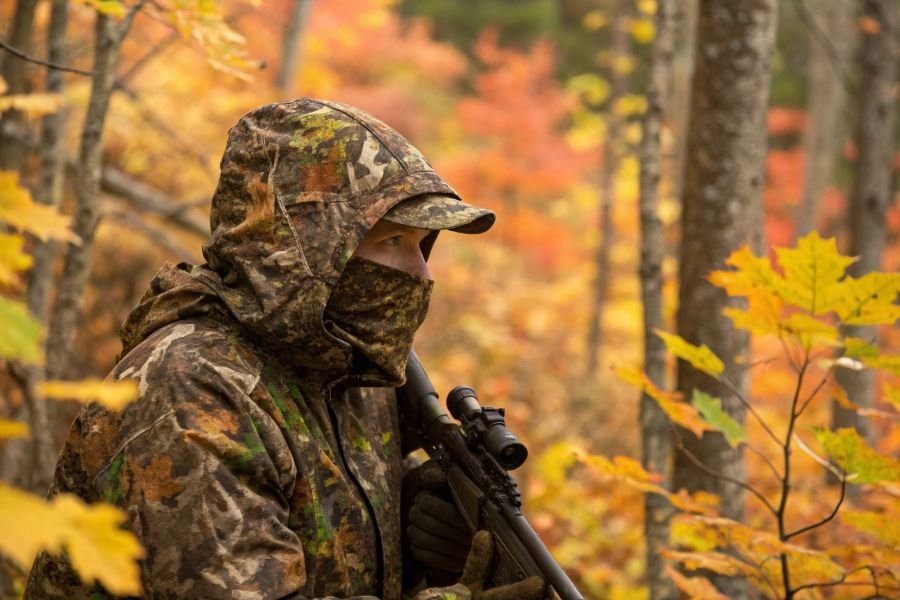
Ever wondered why some hunters consistently fill their tags while others come home empty-handed? The difference often isn’t skill or luck—it’s invisibility. A University of Montana study found that deer can detect human movement up to 50% farther away when hunters wear inadequate camouflage. Your choice of materials literally determines whether you’re predator or prey in the eyes of wildlife.
The foundation of effective hunting camouflage isn’t just about looking like a tree—it’s about understanding how animals actually perceive their environment. Unlike humans, many game species see the world through dichromatic vision (two color receptors instead of our three), making them particularly sensitive to movement and unnatural silhouettes rather than specific color patterns.
The optical illusion of successful concealment
Effective camouflage materials work by breaking up the human outline and eliminating the “shine factor” that instantly alerts wildlife. Modern hunting textiles incorporate three critical elements:
- Pattern disruption – Materials that break up the human silhouette
- Light absorption – Fabrics that prevent unnatural reflection
- Texture variation – Surfaces that mimic natural environments
Since the military first developed specialized camouflage during World War I, hunting concealment has evolved from simple earth tones to today’s hyper-realistic 3D materials with digitally-mapped patterns that fool both animal eyes and brains.
The revolution in hunting camouflage technology has been nothing short of remarkable—from the basic canvas duck blinds of the 1950s to today’s advanced photorealistic patterns created through biomimicry and computer modeling. These materials don’t just hide you; they transform you into part of the landscape itself.
Material Mastery: Environment-Specific Camouflage Fabrics
When success in the field hinges on remaining undetected, your choice of camouflage material becomes as crucial as your shooting skills. The best materials for camouflage in hunting vary dramatically depending on the environment you’re stalking through. Let’s break down the optimal fabric choices for different terrains that can make the difference between coming home with a trophy or just a good walk in the woods.
Forest and Woodland Warriors
The dense, varied environments of forests demand specialized materials that can handle branches, moisture, and temperature fluctuations while keeping you concealed.
Brushed Tricot stands as the gold standard for woodland hunting. This synthetic fabric features a soft, noise-dampening surface that won’t announce your presence when brushing against branches. Its lightweight nature makes it perfect for early season hunts when temperatures can swing dramatically.
Polyester blends offer exceptional durability while maintaining color vibrancy—critical when matching the complex patterns of woodland environments. These blends typically incorporate:
- Moisture-wicking properties to manage sweat
- UV-resistant treatments to prevent pattern fading
- Antimicrobial treatments to control scent
Cotton, particularly in heavyweight options like Carhartt’s hunting line, provides natural silence and comfort but requires proper treatment to prevent moisture retention that could lead to hypothermia in colder conditions.
Wetland and Waterfowl Specialists
Waterfowl hunting presents unique challenges—you’re often partially submerged, exposed to harsh winds, and dealing with precipitation.
Neoprene dominates the waterfowl hunting scene for good reason:
| Property | Benefit |
|---|---|
| Insulation | Maintains warmth even when wet |
| Buoyancy | Provides safety advantage in water |
| Durability | Resists punctures from reeds and brush |
| Water resistance | Keeps inner layers dry |
Waterproof laminates like those used in GORE-TEX products create the perfect outer shell for layering systems. These materials combine breathability with complete waterproofing, allowing hunters to remain comfortable during long sits in flooded timber or marsh blinds.
Many premium waterfowl patterns incorporate materials with varying texture and depth to mimic the three-dimensional appearance of reeds and marsh grass—a significant advancement over the flat prints of previous generations.
Arid and Desert Terrain Solutions
Desert hunting environments demand materials that can handle extreme temperature fluctuations, abrasive terrain, and provide concealment in sparse landscapes.
Lightweight ripstop nylon has become the go-to fabric for arid environments due to its:
- Exceptional tear resistance against cacti and rocky terrain
- Quick-drying properties when unexpected water sources are encountered
- Ability to pack down small for long treks across open country
Breathable mesh panels strategically incorporated into desert camouflage garments provide crucial ventilation during daytime heat while maintaining the pattern integrity.
Sitka Gear’s desert patterns utilize specialized UV-reflective technologies in their fabrics that mimic the way natural objects in desert environments reflect light—creating a more effective concealment than simple color matching alone.
The most effective desert hunting setups incorporate lightweight, breathable base layers with abrasion-resistant outer shells, allowing hunters to adapt to the dramatic temperature swings common in arid environments.
Choosing the right material for your hunting environment isn’t just about looking the part—it’s about creating every possible advantage in your pursuit. The technology behind modern hunting fabrics continues to evolve, giving today’s hunters unprecedented options for staying concealed, comfortable, and effective in the field.
Making the Perfect Camouflage Choice
When you’re perched in a tree stand at dawn or stalking through autumn underbrush, your camouflage isn’t just clothing—it’s your tactical advantage. The difference between a successful hunt and going home empty-handed often comes down to the materials wrapped around your body. Let’s cut through the marketing hype and get to what really matters.
The durability-silence-concealment triangle
Every hunter faces this fundamental tradeoff: materials that excel in one area often sacrifice in another. The most durable fabrics (like heavy-duty polyester blends) might rustle with every movement. The quietest materials (such as brushed fleece) may wear through after a single tough season. And sometimes the most effective concealment patterns come on fabrics that fail in both categories.
The hunter’s paradox: The perfect camouflage material must disappear to wildlife while standing up to nature’s punishment—all while remaining silent as a shadow.
This balancing act requires strategic decisions based on your hunting style:
| Hunting Style | Priority Material Choice | Trade-off |
|---|---|---|
| Bow hunting | Ultra-quiet brushed fabrics | Reduced durability |
| Long-range rifle | Durable synthetic blends | Some noise compromise |
| Run-and-gun turkey | Lightweight, breathable mesh | Less weather protection |
The solution? Layering systems that combine materials strategically. A silent outer layer for close encounters, with durable base layers underneath, gives you the best of both worlds without compromising your hunt.
Dressing for nature’s calendar
The forest floor in April bears little resemblance to November’s landscape. Your camouflage materials must adapt accordingly.
Early season demands lightweight, breathable fabrics with moisture-wicking properties. Sitka Gear and Kuiu have pioneered technical fabrics that manage sweat while maintaining concealment—critical when deer can smell you from hundreds of yards away.
Mid-season brings the challenge of fluctuating temperatures. Merino wool blends offer the remarkable ability to regulate body temperature while remaining deadly quiet. The natural fibers also resist odor buildup during multi-day hunts.
Late season requires insulated, waterproof materials that won’t freeze or stiffen in extreme conditions. Modern laminates from brands like Gore-Tex have revolutionized cold-weather hunting by combining silence, weather protection, and durability.
The economics of excellence
Quality camouflage represents a significant investment—premium hunting systems can easily exceed $1,000. But calculating true value requires looking beyond the price tag.
Cost per hunt is the metric that matters. A $500 system that lasts five seasons costs $100 per year. Spread across 20 hunting days annually, that’s just $5 per day—a bargain for equipment that directly impacts success rates.
The most overlooked aspect of camouflage economics is adaptability. Materials that can be effectively used across multiple seasons and hunting scenarios deliver exponentially more value. Look for:
- Modular systems with removable components
- Neutral base patterns that work in various environments
- Materials that perform across temperature ranges
The highest-quality camouflage materials also retain resale value. Unlike bargain options that quickly fade, tear, or lose waterproofing, premium materials from First Lite or Browning often maintain 50-60% of their value after several seasons.
Remember: inferior camouflage doesn’t just fail faster—it fails when you need it most, often at the precise moment that trophy buck steps into range.